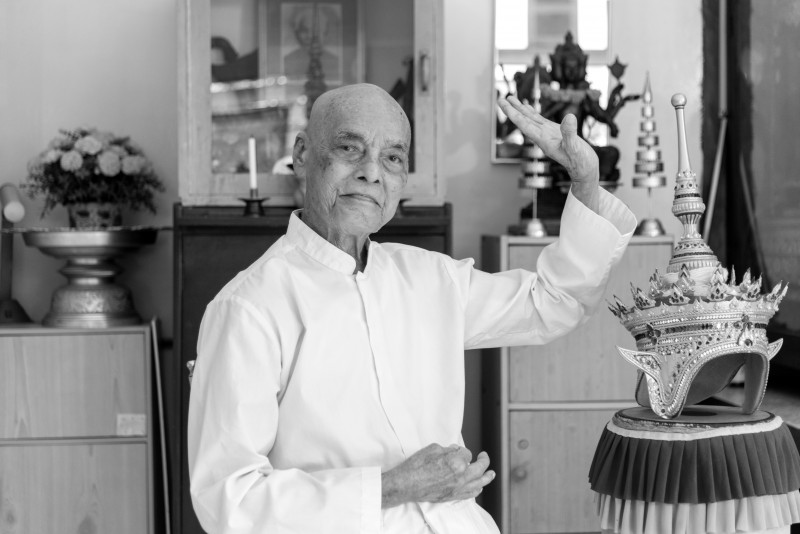
GEORGE TOWN – Every morning, the late Wandee Aroonratana, also known as Noo Wan, would wake up, face the family altar to pray, give thanks to the deities, spent time meditating and kept himself in spiritual cognisance. Even up to his nineties, he would observe these practices enforced by living his life as a Thai Menora performer and shaman.
He started practising Menora, a spiritual, dramatic art form that combines dancing, singing and storytelling, that originated from South Thailand more than 2,000 years ago. At 14, he was taught by his father, Pak Chandee – who was also a Menora performer and shaman that migrated from Songkhla to Penang – sometime between 1914 to 1916. He took over from his father in 1949 and did his last solo performance in 2002, at 80 years of age to fulfil his vow to the deities.
Menora is usually performed in Buddhist temples during auspicious days, wedding ceremonies, ritualistic healing associated with deities and when people are ordained as a monk or a Buddhist.
It is also performed by the Thai community in Kelantan and Terengganu, although it has been assimilated to incorporate many characteristics of Kelantanese Malay traditions with music accompaniment by the gendang, geduk, gedumbak, gong, canang, kesi, wooden clappers, and serunai.
In Penang, Kedah and Perlis, these performances are still conducted in Thai, still with traditional instruments such as the Ranard (traditional xylophone), Sor Au string instrument and Klui flute, among others.
Because of his dedication and efforts to teach and train the younger generation, he was awarded the Lifetime Achievement Award dedicated to knowledge transmission by the George Town World Heritage Incorporated (GTWHI) in April 2020. However, he passed away at age 98, on October 28, 2021, just a couple months shy of receiving recognition at the award ceremony held on Monday.
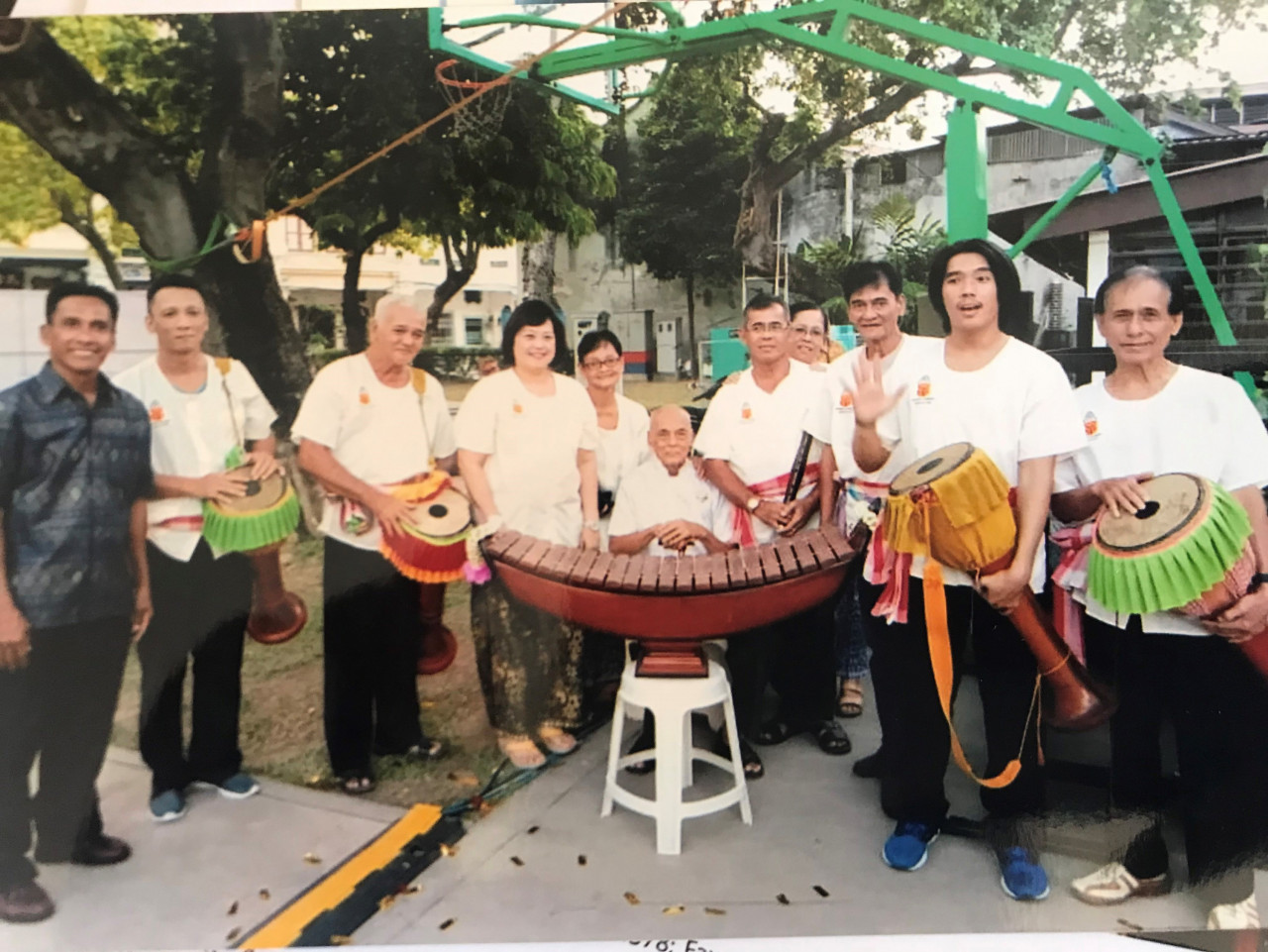
According to his son, Chairman of Penang Siamese Association, Boon Leua Aroonratana, the late Noo Wan never lost focus on the spiritual art that comes from Menora and had the desire to mentor the next generation.
Unfortunately, Boon did not pick it up because he admitted that he does not have the same level of focus as his late father. However, he is dedicated to conservation work and uplifting the Thai community instead. He now devotes his effort to documenting Thai culture and all that his father contributed to the community and temples.
“I am very proud of what my father has contributed. Not only in Menora but also in how he sought to preserve our culture and heritage. He could read, write and speak fluently in the Siamese language – I am just honoured to be able to document and get him recognised for what he has done.
“My brother was the one that was supposed to inherit the tradition from my father, but unfortunately he passed away a few years ago. Right now, his in-laws in Sungai Puyu are the ones carrying the legacy.
“Here, I strive to preserve the Thai culture because we are the minority here. So we have to work hard to safeguard our culture or else, in time to come, it will be extinct.”
Boon hopes that he will be able to host a Siamese Heritage Festival this year with the help and cooperation of the Penang state government. If it goes forward, the festival will feature Rambong, a cultural dance, Muay Boran (originally known as Toi Muay) an ancient martial art of boxing used for military defence, Thai food and cultural sports.
Boon’s works under the Penang Siamese Association also received the Cultural Continuity Recognition (Silver Status) awarded by GTWHI, however, this small community, now located at Pulau Tikus is at risk of eviction after being served a writ of summons by their new landowner in August 2014.
They refused to budge as the East India Company had, on behalf of Queen Victoria in 1845, granted the whole piece of land that originally stretched from Kelawei Road and Burmah Road, to be held in trust by the Siamese and Burmese communities in Penang.
The issue remains until today, but Boon hopes that they will not need to be evicted. Other than losing the land granted by the Queen, he believes cultural continuity will be affected when communities are separated.
Boon, now 64, with his son Chamrath Aroonratana, 22, represents the third and fourth generation living in Penang’s 200-year-old Siamese village. – The Vibes, January 9, 2022.




.jpeg)