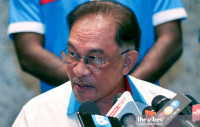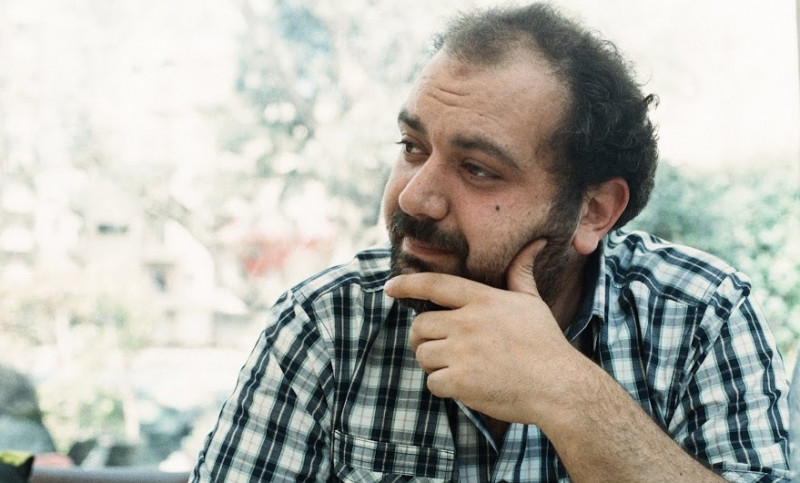
ORWA Nyrabia refuses to take no for an answer. The Syrian-born film producer, who recently had his appointment as artistic director for the International Documentary Film Festival Amsterdam (IDFA) renewed for an additional four years, has his sights locked on expanding the festival’s horizon to greater heights.
“Every year the question arises, how do we do it better?” says Nyrabia when prompted about preparations for this year’s edition which takes place from November 9 to November 20, 2022.
An outsider most of his life, making the festival as accessible as possible and providing the opportunity to hear diverse voices remains a core ethos that guides Nyrabia’s decision-making process.
“In the south, we are always critical of the way the north understands the word 'international' because when they say international, they usually mean the 15 countries of the [United Nations] Security Council.
"So, what happens when they bring in an artistic director who comes from a country like Syria? We just come in and say, that's not international. International is more than 15 countries. And we have to really work our asses off to discover the cinema, filmmakers, artists, critics, and practices of these different countries.”
Orwa Nyrabia is a guest speaker at the Golden Apricot International Film Festival (GAIFF) and spoke exclusively with The Vibes on the state of documentary filmmaking, the future of festivals, and embracing new technologies. The following exchange has been edited for length and clarity.
The Vibes (TV): The digital revolution which started 20 years ago has slowly shifted journalism and by extension, documentary practices. Do you see a new frontier in documentary filmmaking with the advent of recent technologies?
Orwa Nyrabia (ON): Technologically and in terms of the channels through which an artist is connected to an audience, there is a new frontier that needs to be examined, questioned, and used.
However, no matter the medium, the core of the creative processing of reality, to become art and return it to the real world remains the same. It is still a question of finding your authentic voice, being original in your treatment of reality, and raising questions.
Now, what we are seeing with digital media and consumerism, there is no space for questions. A new generation of audiences is being heavily trained to get what they like, rather than to be trained to accept questions or be challenged.
Here, I think we need to keep on finding creative solutions. How do you keep bringing the point of questioning reality, even when it is a short video, audio, or any form of creation?
TV: You deal with filmmakers from around the world producing documentaries on subjects like war that are often at the fringes of society. The question of ethics is a constantly shifting minefield. How do you approach this element within your work?
ON: When it comes to the practices that deal with the reality of people, memory, and history, ethics is central and absolutely important. Who sets ethics? Who decides what's ethical? What is the value system that tells us what's ethical and what isn't?
The government thinks about what is ethical differently from a dissident artist. A religious person sees ethics differently from someone less religious.
Who shapes that? And how can we do our best to be ethical, according to our own sovereign viewpoint, as artists, and as communities, and not be censored or controlled by external, powerful players who try to impose their preferences and call them ethics?
So, here's the dilemma. I think, in principle, a good artist is motivated by love and faith in what they do, in the people they are talking about, and in the questioning of the reality that they operate in.
Artists should be open to critique and they should understand that their notion of ethics will be challenged. They should be capable to keep learning and challenging their own ethical viewpoint, and not be submissive to ethical values that come from above and tell them what they should do.
Is it ethical to question your own country's history? You asked difficult questions, you will get difficult answers, my friend.
TV: I’m up to the task. I’d like to get more specific. Since you've been appointed in 2008, how have you pushed the festival towards making it more accessible? What are specific actions or directives you've taken to push the festival to meet the challenges of the current media landscape?
ON: Since I joined IDFA, I have changed the selection process and the people who advise in this stage. Connecting, creating and building a new network of film experts from around the world that are involved in different processes.
I introduced voting power to people from around the world during the selection and shortlisting process. So, they are not only drawing the artistic directors' attention to an interesting film but chipping in with a vote that will need to be supported by other colleagues that would then need the final vote, which is the artistic directors, but it is reliant on everybody having a say in this process.
I have also managed to secure and allocate a budget for subsidising the troops of filmmakers, with projects to come to the festival if it's too expensive.
~
When challenged on whether returning the festival to a physical exhibition format might exclude filmmakers from low-income countries, Nyrabia assures that every form of support would be given to participants from subsidies to application fee waivers.
On the subject of virtual festivals, Nyrabia remains unconvinced that it is the best way forward for exhibitors.
“Online access is better than nothing, but if this is somebody buying us out and telling us that we have access, no I don't. I have an immediate, very unambitious alternative through the Internet and that is not enough.
“When I grew up in a dictatorship in a terribly restricted country with an iron curtain, we had cinemas showing the oldest films from Egyptian and Indian cinema, [but] none of the new hits.
"I discovered a whole canon of cinema through bad recordings on VHS tapes that I played at home in the most terrible technical conditions. It was better than nothing. It shaped me. It made me fall in love with this art. But I had the right to have a cinema. I had the right to have a normal cultural life that is also social life.”
Nyrabia revealed that the festival has received a 20% higher number of submissions compared to 2019.
“The field is not only coming back, but it is coming back with a kick,” he says. – The Vibes, July 20, 2022