
KUALA LUMPUR – With a mere few hundred ringgit, one can be well on their way to graduating with a master’s degree or doctorate (PhD) without breaking a sweat.
Local essay mills have had an increased presence on social media lately, offering services including completing assignments, research papers, and even theses for higher education students.
The Vibes recently went undercover to shed light on the prevalence of these home-grown essay mills and students engaging in contract cheating – a phenomenon that poses a serious threat to the quality of graduates produced by both public and private institutions in Malaysia.
There is no need to do much digging; a simple search on Facebook’s classifieds section led to several providers promising to complete assignments worthy of distinctions.
Some were found to be working individually, while others professed to having teams dedicated to churning out essays and dissertations with a quick turnaround time.
While one of the services said a mini thesis can be completed in two weeks, another boasted of producing an 80-page thesis in just an hour.
The charges differ depending on the provider, topic covered, and length of the document to be submitted.
However, on average, students choosing to outsource their assignments can expect to spend a few hundred ringgit per essay.
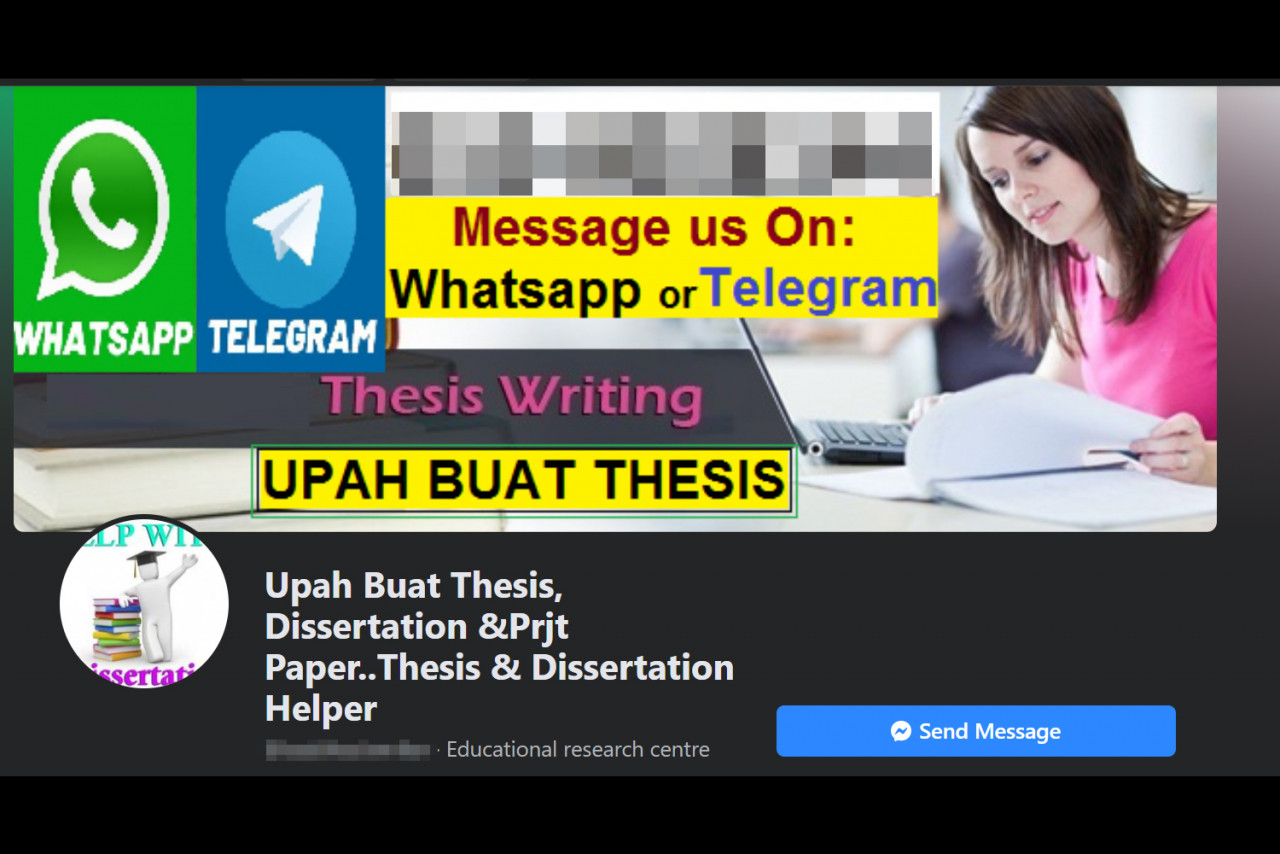
A reporter from The Vibes, posing as a student, approached a provider, who said a postgraduate thesis of 100 to 120 pages will cost between RM600 and RM750.
The provider, who was asked to produce a master’s thesis on the topic of “Bullying in cyberspace: an examination of victim demographics and behaviour of cyberbullying in Malaysian private universities”, said there is an added fee if it is a quantitative study.
“Unless you are using (a software called) Statistical Package for the social sciences for (a) quantitative paper, there’s an extra RM100 (charge).”
The provider also assured that the paper will not be flagged for plagiarism on any academic software application, such as Turnitin, as it will have a low percentage of similarities with other research material.
“All our projects are low (in similarity rates) because we use a system.”
Further Facebook searches found several other essay mills offering similar services, with some sharing testimonies of satisfied customers enrolled in the country’s most prominent universities.
More alarmingly, these mills make little effort to conceal their activities – there are those sharing images of conversations with customers, with attachments of the completed assignments.
The Vibes managed to save several screenshots, some of which show completed master’s and PhD papers for students allegedly from Universiti Malaya, Universiti Utara Malaysia, Universiti Pendidikan Sultan Idris, International Islamic University Malaysia, and Mahsa University, among others.
Some of the screenshots are shared below:

Decisive action needed
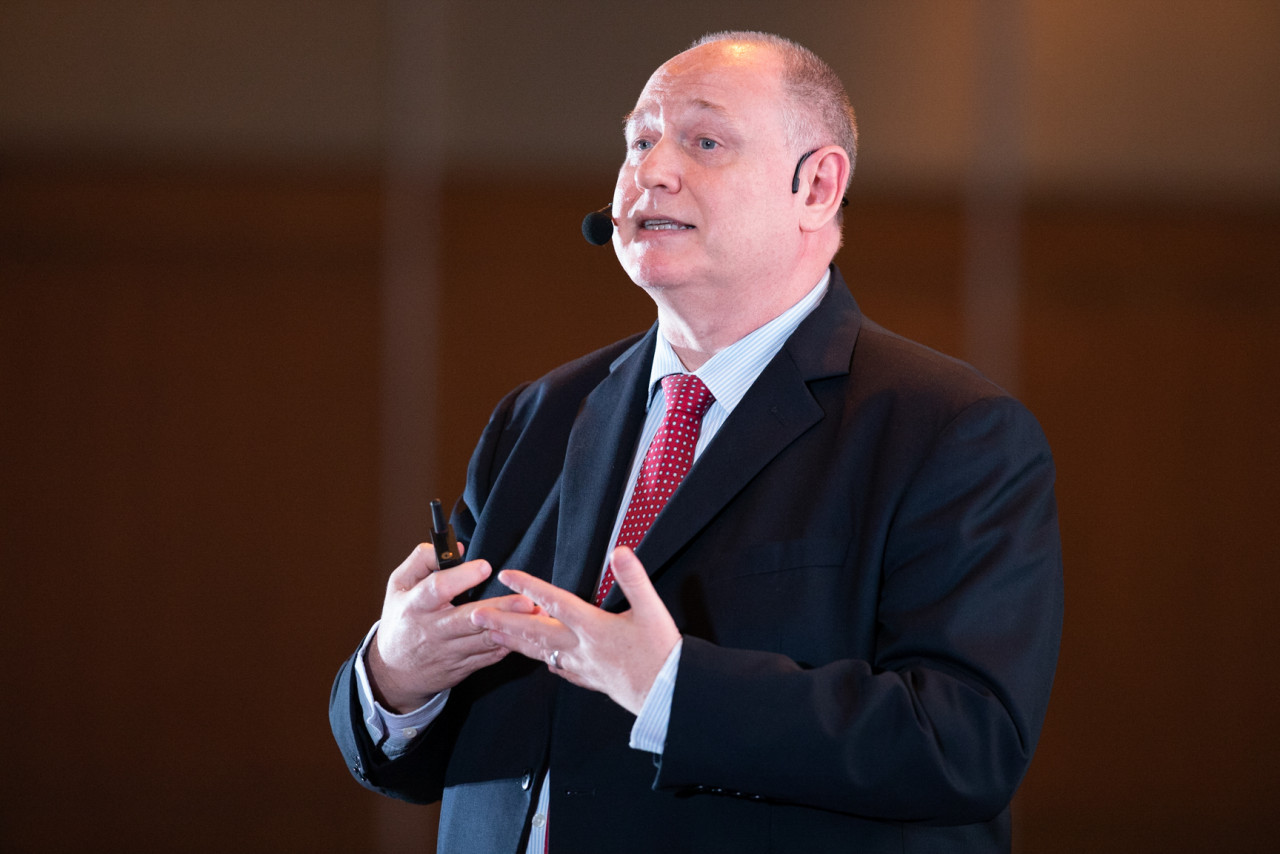
Kuala Lumpur-based educator Prof Graham Kendall said rampant contract cheating could affect the reputation of the country’s higher learning institutions if left unchecked.
“I don’t think it affects their (institutions’) integrity, unless they are complicit in allowing it or turn a blind eye to it when they know it is happening,” said the former University of Nottingham Malaysia Campus chief executive.
“If they are aware that it is happening, they should take immediate and decisive action.
“All institutions will have policies where students acknowledge that their work is their own and has not been plagiarised or is the work of somebody else.”
Kendall, who is now Good Capitalism Forum chief executive and PETRA Group senior vice-president, said appropriate action should be taken even after a student who engaged in contract cheating has graduated, to ensure the reputation of the institution is protected.
On the consequences of the government and institutions failing to address the problem, he said the nation will ultimately produce graduates who do not deserve the degrees awarded.
“Even if they comprise a small percentage of students, it raises questions about the sector as a whole.
“And if a given institution is shown to have graduated a student that had used an essay mill, it raises questions about all other students, which is unfair to the vast majority.”
He said students who graduate using an essay mill do so fraudulently; they do not possess the knowledge they claim to have, and do not deserve the degrees awarded.
“The student may get a job based on their dissertation, which they may not be qualified to do.
“There is also a financial cost. Both the government and families are funding students through universities. If they are providing funds for a student to get a degree that they do not deserve, this could be viewed as a misappropriation of funds.”
Challenges in detecting, regulating outsourced assignments
Kendall said the commissioning of essay mills is no different from regular plagiarism, as the students involved are cheating their institutions and future employers.
“They are also disrespecting their institutions and families, who may be embarrassed should they be found out. This is especially true if their families (and friends) supported them, both financially and emotionally, through their studies.”
However, unlike regular plagiarism, contract cheating is difficult to detect despite lecturers having access to tools like Turnitin.
“These can be fooled using a variety of ‘tricks’, which can easily be found by searching on the internet. There are even YouTube videos that show you how to do it.”
Kendall said although it is time-consuming and resource-intensive, one option is to follow up on a written assessment with an interview, where the student has to explain the article or essay to demonstrate that they wrote it and understand it.
“At University of Nottingham, when I was based in the United Kingdom, we used to do student projects that required programming. As well as demonstrating their software, they also had to explain how the software worked, even down to the level of a single line of code.”
Kendall noted that he is not currently aware of any legislation – either in Malaysia or elsewhere – that bans essay mills, although some academics have called for action by fellow academics, regulators, universities, students’ unions and students themselves.
He said there have been calls by the likes of Paul Greatrix, the University of Nottingham registrar, in an article written in April.
“He further notes that there have been calls for legislation changes – but, as you’ll see from his comment, there are many other stakeholders, such as regulators and student bodies.”
A change to laws governing public and private institutions might not necessarily be the best approach, he added.
“This will be too time-consuming, and we can probably be more effective by raising awareness, educating, and punishing those who are caught, and getting Education Ministry engagement to help advise institutions, draw up policies and provide assistance when required.”
He said another hurdle in legislation is that some companies operate across borders, making it problematic to pursue prosecution.
“Moreover, they often or always offer their services as ‘examples’ of what could be done, and do not endorse handing in the ‘samples’ as the completed assignment.
“Therefore, the only real recourse that universities have is to tackle the students. If this can be done effectively, then we may be able to stop these services from being used, and they will wither through lack of income.” – The Vibes, June 1, 2021
Additional reporting by Hidayath Hisham