
KUALA LUMPUR – The Education Ministry should come to terms with the fact that apart from online teaching, a different approach to learning is required during the pandemic, otherwise, teachers and students will continue to climb hills and trees just to get internet access.
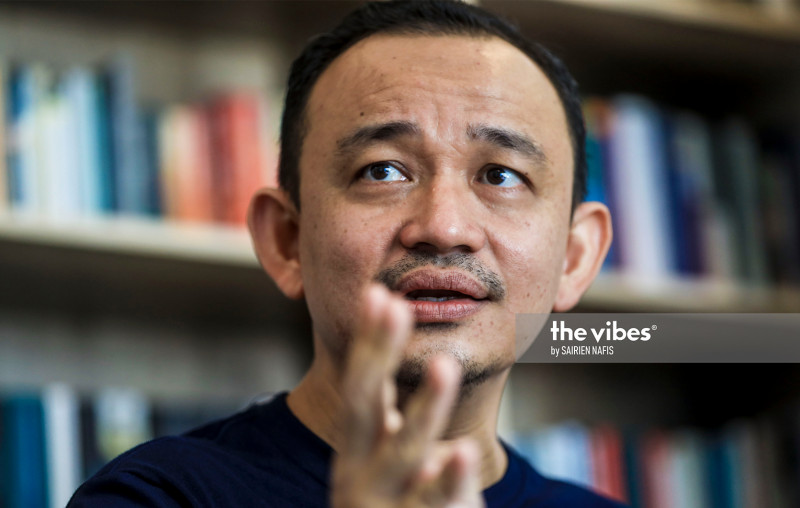
Former minister Maszlee Malik said the time is ripe to implement different approaches, given the failure of online teaching and learning and its aim to reach all segments of Malaysia’s population, especially marginalised, poor children in rural areas.
He referred to a recent Facebook post by Anuar Ahmad from the Universiti Kebangsaan Malaysia (UKM) Education Faculty, who commented on the failure of the ministry’s blanket approach, and how relying solely on home-based learning results in more students being left behind.
Anuar referred to a report published in April by the Organisation for Economic Cooperation and Development (OECD) relating to the different approaches to education taken by various countries during the Covid-19 crisis.
Studies by OECD experts showed that the three best approaches are online learning, distribution of notes and worksheets, and educational television.
Of these approaches, the best is still online learning, but its effectiveness depends on the quality of internet access for every educator and student, and the latter group must be equipped with devices to attend classes.
Maszlee said Malaysia cannot succeed completely in its online approach due to the constraints it faces in terms of a lack of devices.
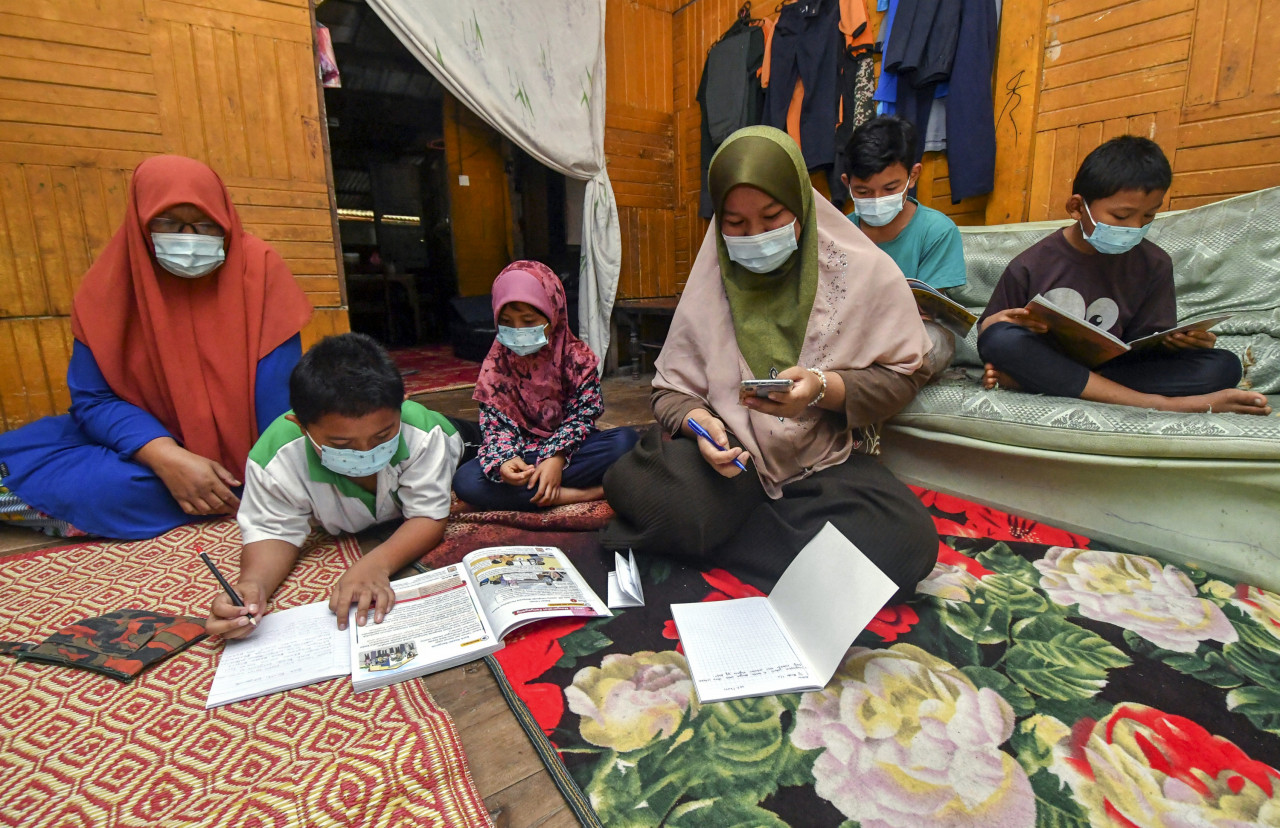
Based on a ministry report in April last year, 36.9% of students do not have direct access to devices, leaving 1.85 million deprived of the right to an online education. Many share devices with their parents or siblings.
A study by the National Union of the Teaching Profession and UKM revealed that most Malaysian parents and educators are not ready to implement home-based teaching and learning.
“Following this line of thinking, it is inappropriate for officers from district education offices and state Education Departments to monitor educators.
“It will widen the existing gap in education, result in the mistreatment of children and parents, and place a burden on teachers,” said Maszlee, adding that the ministry should look into the second and third approaches proposed by OECD.
“Distribute notes, manuals and worksheets, and maximise the use of radio and TV.
“The ministry should not rely only on DidikTV, which has been passed on to a private company to manage, but it should also work with RTM to create government-owned education TV and radio, which must coordinate with the home-based teaching and learning system.”
Other suggestions for better outcomes in learning during the pandemic include answering students’ questions via mobile phone, and checking exercises and interacting with parents through an appropriate and effective medium.
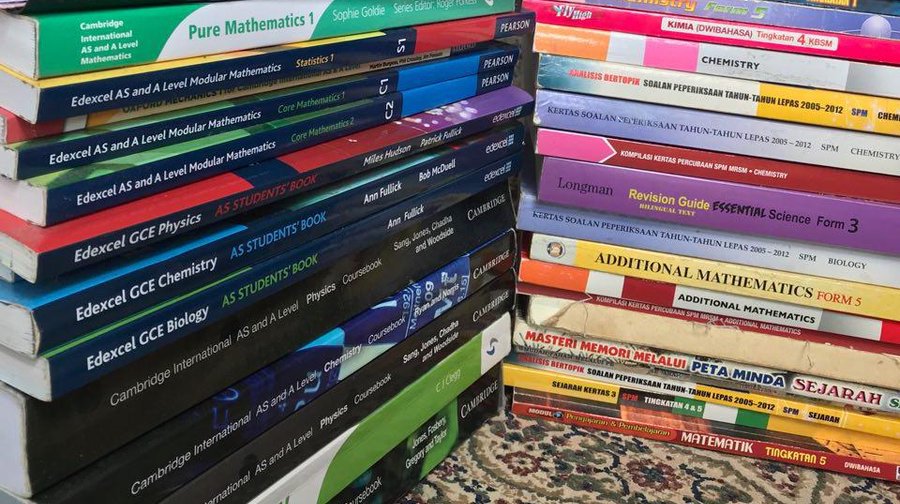
Maszlee said the current learning pedagogy needs an upheaval, as depending on textbooks is outdated.
“There are so many other resources available to students, but there is a crying need to resolve the lack of laptops and computers.
“Most poor students, in both rural and urban areas, borrow their parents’ phones, and according to the OECD report, the use of mobile phones is in fourth place for home-based online learning.”
He said another area of weakness is the dilemma faced by rural students, as not only do they lack devices, but they also have little or no internet access, with the more inaccessible areas of East Malaysia being a prime example.
“These schools have fewer students, and the Health Ministry should grant them permission to operate at the normal level.
“The surprise is, these schools remain closed despite the fact that they are located hundreds of miles away from red zones.
“Putrajaya shut these schools in a blanket decision, and they (students) are the most affected and left behind.”
Maszlee said bold decisions must be taken to prevent these children from becoming dropouts.
“Power and autonomy to decide the best approach to online learning should be passed to the schools, and we should adopt unconventional approaches to save these children’s education.
“Our stubbornness in refusing to listen to expert advice and continuing a failed approach will lead to a lost generation of children and leave their future in shambles.” – The Vibes, July 11, 2021