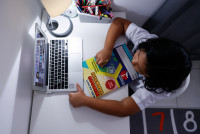
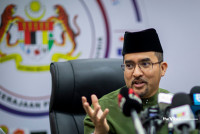
KUALA LUMPUR – The implementation of face-to-face classroom learning and home-based teaching and learning on a rotational basis aims to restore student morale, said Senior Education Minister Datuk Radzi Md Jidin.
“When schools reopened in March this year, parents and the community saw that the situation was safe, but it became chaotic after school hours and there were problems of congestion.
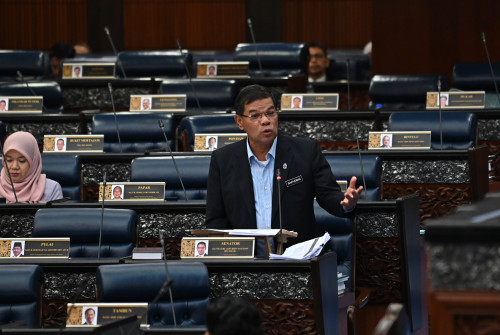
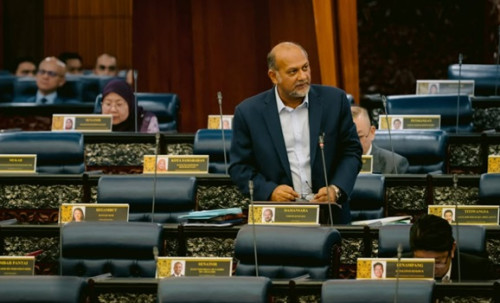
“We then sat to discuss the best approach, especially taking into account the Delta variant, and decided to reduce the number of students by half,” he told the Dewan Rakyat sitting here today.
He was responding to a supplementary question from Sim Tze Tzin (PH-Bayan Baru) on details of the implementation of rotated face-to-face classes and home-based learning during the question time.
The Education Ministry had earlier said that face-to-face schooling on weekly rotations would limit the number of students in classrooms and help reduce the risk of Covid-19 infection in schools.
Radzi said this would also help teachers monitor compliance with standard operating procedures among students, as only half would be present at any time.
Meanwhile, he said the ministry would also provide a manual on rotational learning and teaching as a guide for headmasters, teachers, students, parents, and guardians to ensure its smooth implementation when schools open from October 3.
Replying to a supplementary question from Datuk Seri Abdul Azeez Abdul Rahim (BN-Baling) on the admission of students, especially from rural areas, to fully residential schools, Radzi said entry would be based on the Special School Admission Assessment (PKSK) following the abolition of the Primary School Assessment Test.
He said, apart from focusing on academic aspects, PKSK also takes into account the potential and abilities of students for admission to residential schools.
Meanwhile, during the question-and-answer session, Education Deputy Minister II Datuk Mohamad Alamin said that the ministry was formulating a comprehensive policy for the recruitment of students to residential schools that would prioritise those with potential from underprivileged families. – Bernama, September 23, 2021