By Fariz F. Tyebjee
MANY are aware of the Australian military presence in Butterworth and their involvement in the country, but most are unaware of the historical and strategic factors which brought the Australian military here, and why it still has a presence in the country.
In line with its obligations to the Commonwealth it became Australian policy during the Cold War to aid in the defence of Southeast Asia to stem the spread of communism.
Together with Britain and New Zealand; Australia played a role in the defeat of the communists during the emergency.
Even after the emergency was officially declared over in 1960 Australian and New Zealand troops continued to be deployed along the Malaysia/Thai border on security sweeps.
During WW2 Australian troops fought alongside British, New Zealand, Malay and Indian troops to stem the tide of the Japanese who captured Malaya and Singapore in a matter of weeks.
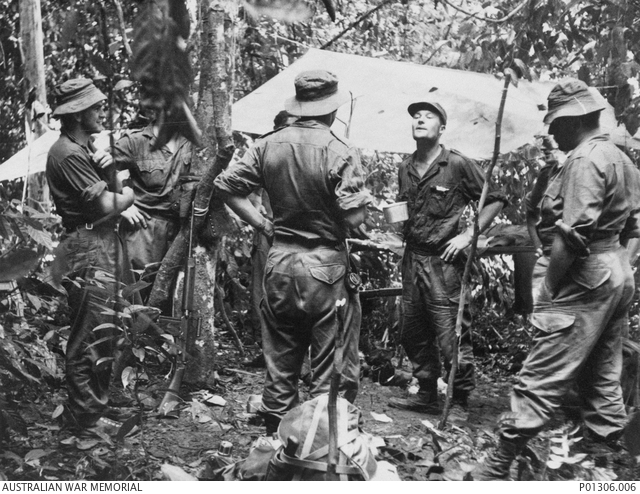
Australian troops in the Malayan jungle during the Emergency – Pic from Australian War Memorial
In the immediate post war period Australia was part of the Anglo-New Zealand-Australia-Malaya area (ANZAM) arrangement which was formed in 1948 to cater for the defence of Malaya.
To replace ANZAM, the Anglo-Malayan Defence Agreement (AMDA) arrangement was created- comprising Australia, Britain and New Zealand- following the formation of the Federation of Malaysia in 1963. It lapsed in 1971 and what came next was the Five Power Defence Arrangement (FPDA).
Intended to fill the vacuum created by Britain's East of Suez 1971 withdrawal (as a cost savings measure and to focus on commitments to the North Atlantic Treaty Organisation) Australia, New Zealand and the United Kingdom (ANZUK) tripartite force was created in 1971. It disbanded in 1974.
RMN once commanded by RAN officers
Several years prior when the Malaysian government decided against the appointment of another Royal Navy (RN) officer to head the embryonic Royal Malaysian Navy (RMN) it turned to Australia.
From 1958 to 1967 the RMN was commanded by three Royal Australian Navy (RAN) officers. Australian assistance also included providing personnel on loan to serve as ship commanders, staff officers and support personnel.
During a period when the RMN faced a severe shortage of trained personnel great reliance was placed on RAN officers and other ranks to help formulate operational, training and maintenance syllabuses more relevant to the RMN's requirements.
As part of a defence aid package announced by Australia in March 1964 several former RAN Landing Craft Personnel (LCP) 1-15s and Landing Craft Mechanised 1-5s (LCM) were transferred.
Other forms of assistance included 18 former Royal Australian Air Force (RAAF) Sabre Mk.32s transferred to the RMAF, while 11 Squadron was jointly commanded by Squadron Leader Charles Quek (RMAF) and Squadron Leader J. Y. Owens (RAAF).
Training slots were also offered to Malaysian officers and other ranks at various Australian training establishments.
Following the handover of Butterworth to the RAAF on July 1,1958 a 9,000 foot runway, hangars and other facilities were constructed with Australian funding.
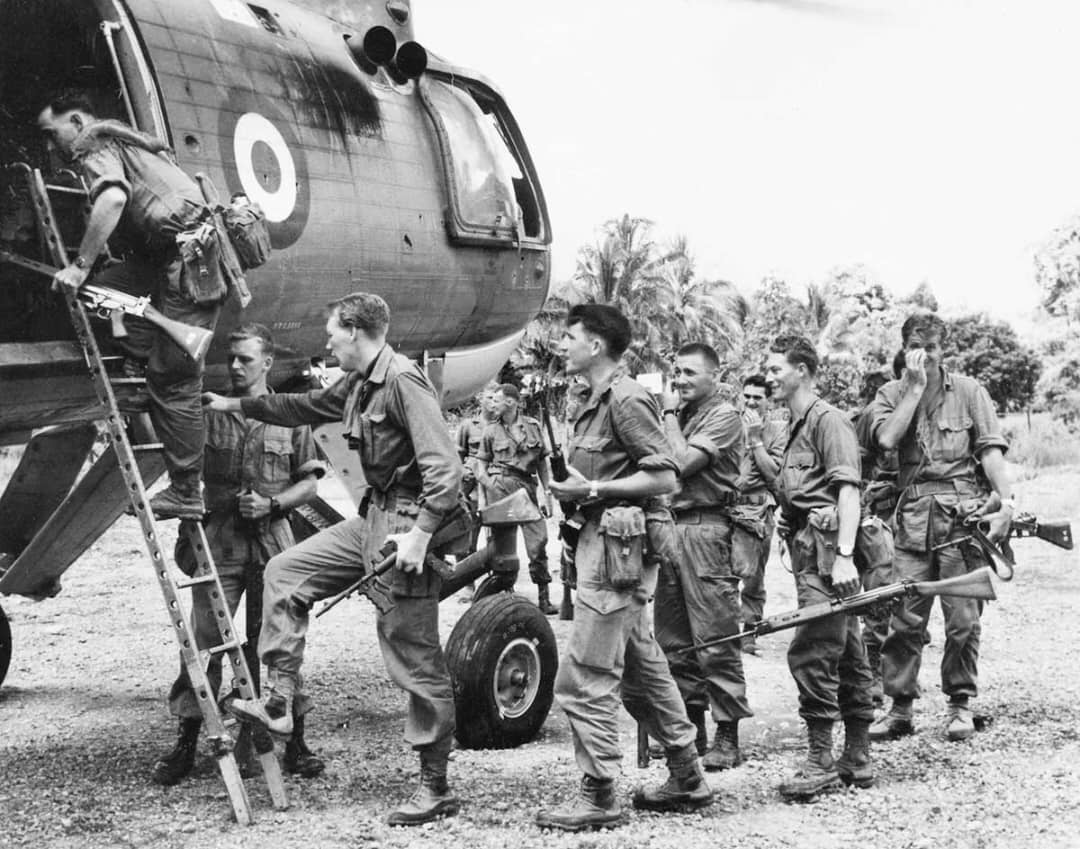
Australian troops in Borneo during the Confrontation – Pic from the National Museum Australia
As part of the Commonwealth Strategic Reserve the RAAF's 78 Wing - comprising 2 and 3 Squadron which respectively operated the Canberra and CA-27 Sabre - the 14 Mobile Control and Reporting Unit were deployed to Butterworth.
The permanent deployment of RAAF units at Butterworth ushered in a new era in the Malaysian/Australian defence relationship - Australia replacing Britain as Malaysia's main defence partner.
During the Confrontation, a pair of CA-27s was placed on Alert 5 to intercept Indonesian fighters.
A detachment of CA-27s from 77 Squadron were also deployed to Labuan and took over the role from RAF 20 Squadron Hunters of defending Malaysian airspace.
Another role 77 Squadron was tasked with was to attack targets in northern Sumatera, part of Plan Addington which involved the RAF and RAAF hitting Indonesian targets in the event of Indonesians air raids on Malaysia.
Bloodhound missiles deployed
To protect Butterworth from possible air attacks the RAAFs 111th Light Air Defence Battery with its Bloodhound missiles was deployed.
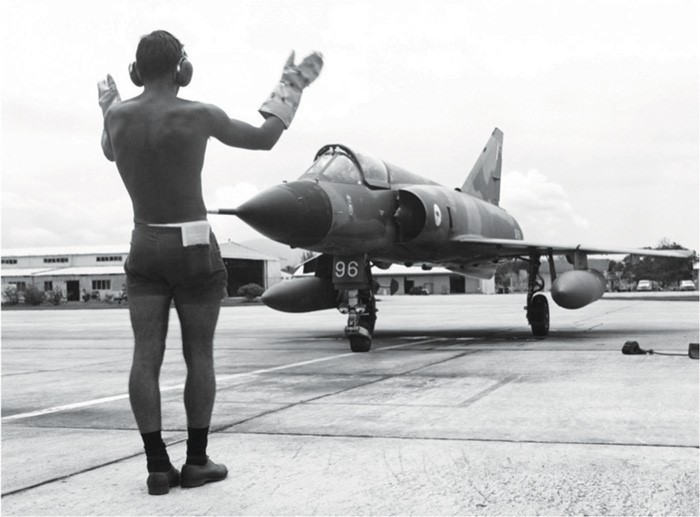
The first RAAF Mirage 111 squadron to deploy to Butterworth was 75 Squadron in May 1967. Having returned to Australia in 1967 to convert to the Mirage 111, 3 Squadron returned to Butterworth in 1969 as part of Operation Thoroughfare.
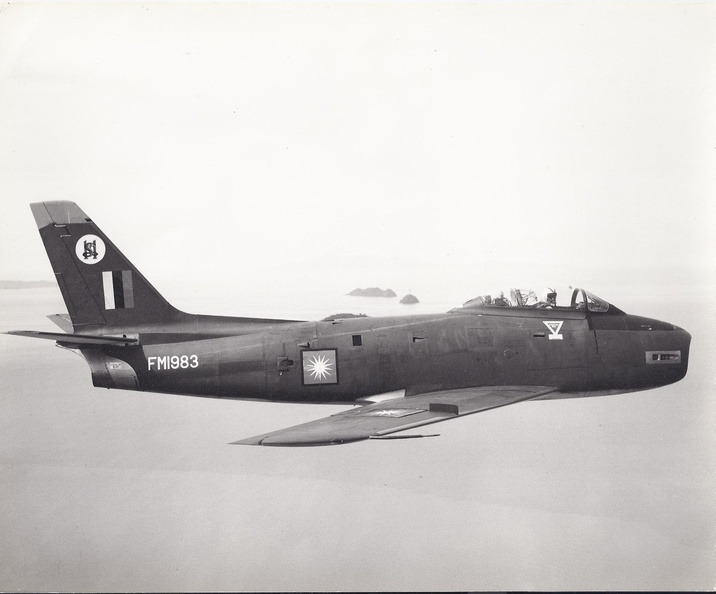
A former RAAF CAC Avon Sabre which was transfered to the RMAF – Pic from War Thunder.com
Another squadron which returned to Australia to convert to the Mirage 111 was 77 Squadron in 1969 but unlike 3 Squadron it never returned to Butterworth.
Comprising newly delivered DHC-4 Caribous that were delivered to Australia from Canada via Butterworth the RAAF Transport Flight Vietnam (RTFV) was formed at Butterworth in July 1964 and later deployed to South Vietnam. At its height RAAF Butterworth was home to some 1,200 Australians and provided employment opportunities to some 1,000 Malaysians.
The base not only supported RAAF deployments in the region - including as a transport hub for operations in South Vietnam - but helped the RMAF.
Ownership of Butterworth was transferred to the Malaysian government in 1970 by which time the RMAF was already operating S-61A-4 Nuris and Alouette IIIs at the base.
Both air arms were based at separate parts of the base and had their own hangars and dispersal areas.
Shared facilities included a Sergeant's and Officer's Mess, a Navy, Army and Air Force Institutes (NAAFI) facility, a swimming pool, the RAAF hospital, golf club and a yacht club (located outside the base).
There was also a school for RAAF children opened in 1962.
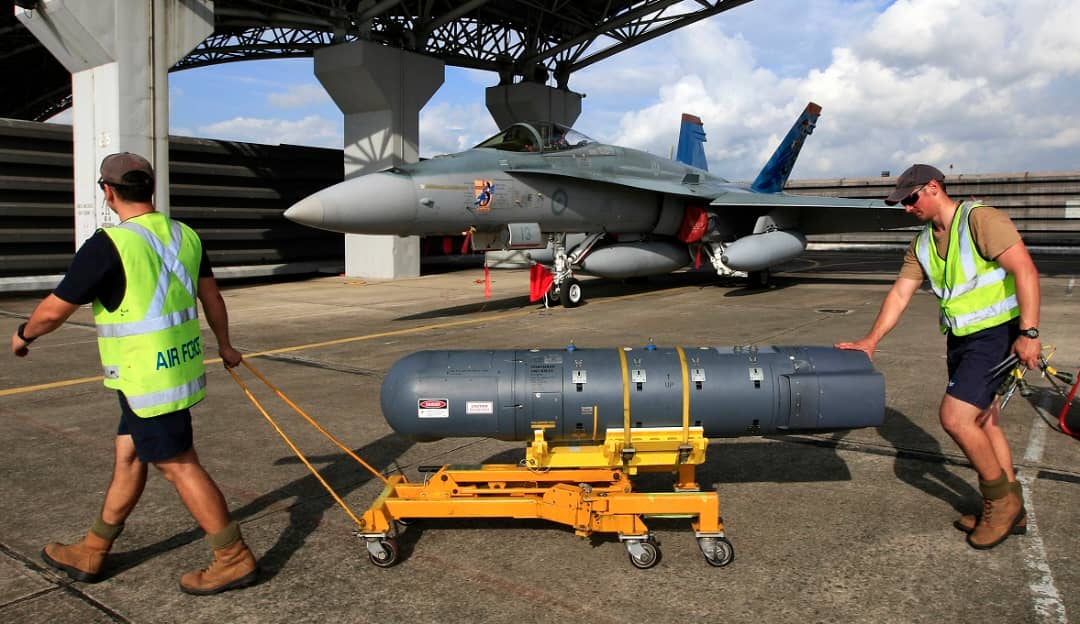
A RAAF Hornet at Butterworth during Exercise Bersama Padu 2010 – Pic from Defence News
In addition to F-111s and P-3s another RAAF aircraft regularly seen at Butterworth were 707-338Cs tasked with flying personnel and their dependents to and from Australia.
Until the role was taken over by RMAF Nuris in 1982 SAR taskings were the responsibility of a pair of RAAF UH-1Hs belonging to the Transport Support Flight (TSF).
The first Butterworth based Mirage 111 Squadron to return to Australia was 75 Squadron in 1981, followed by 3 Squadron in 1986.
The last Mirage 111s to be based at Butterworth were operated by 79 Squadron which was reformed to fill in the gap created by 3 Squadron's return to Australia.
In addition to former 3 Squadron Mirage 111s, 79 Squadron also operated a single DHC-4 Caribou at Butterworth.
After a flypast comprising F/A-18As, P-2s and F-111Cs, Butterworth was officially handed over to the RMAF on June 30, 1988.
The following month, 10 79 Squadron Mirage 111s departed Butterworth for Australia via Paya Lebar and Bali.
The RAAFs 478 (Maintenance) Squadron by that time had stood down (in 1983) and facilities such as Radio RAAF Butterworth and the RAAF Hospital ceased operations the previous year.
Source of comfort for Malaysia
The RAAF fighter presence at Butterworth was a source of comfort for Malaysia during a time of Cold War uncertainties and when Malaysia's focus was the threat posed by communist insurgents in both West and East Malaysia.
Comprising Malaysia, Britain, Singapore, Australia and New Zealand the Five Power Defence Arrangement (FPDA) was formed in 1971 and provides a consultative framework within which members can decide how to respond in event of an external attack on Malaysia or Singapore.
The FPDA officially came into effect on October 31,1971 with Britain's Far East Command having dissolved the previous day.
According to the FPDA's charter: "In the event of any form of armed attack externally organised or supported, or the threat of such an attack against Malaysia or Singapore the Governments would immediately consult together for the purpose of deciding what measures should be taken jointly or separately in relation to such attack or threat”.
Although not publicly mentioned the FPDA was also intended to act as a platform to safeguard Malaysia and Singapore from the possibility of renewed aggression from Indonesia and also as a confidence building measure for Malaysia and Singapore.
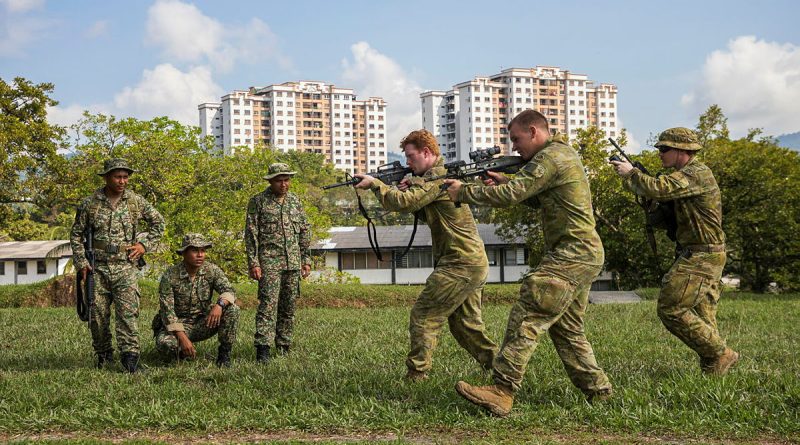
Members of Rifle Company Butterworth during a training session in Malaysia – Pic from landandsea.com
Annual air exercises commenced in 1972 and in 1980 exercises were expanded to include land and sea exercises.
At the diplomatic level and in terms of assets committed Australian involvement was pivotal in keeping the FPDA relevant, especially during the period when Britain was focused on Europe and the Middle East and could only commit token assets for FPDA exercises.
The fall of South Vietnam in 1975, the Vietnamese invasion of Cambodia in 1979 and the Soviet military presence in Cam Rahn Bay and Da Nang in the 1980s were major sources of regional concern and increased the importance of the FPDA towards the security of Malaysia and Singapore.
In line with providing Malaysia and Singapore with a sense of security the idea was that the FPDA and the presence of the Australian and New Zealand military (RAAF fighter squadrons in Malaysia and a New Zealand infantry battalion in Singapore) in both countries would deter would be aggressors.
The FPDA also served as a vital platform for defence cooperation involving all 5 members and enabled Malaysia and Singapore to concentrate on economic development and in Malaysia's case on internal security against communist insurgents"
Declared operational on September 1, 1971, as Headquarters Integrated Air Defence System (HQIADS) it was re-designated Headquarters Integrated Area Defence System in 2001.
It is located at Butterworth and remains the only part of the FPDA which has a command structure.
Headed by an RAAF Air Vice Marshal, HQIADS has a Singaporean deputy and a tri-service staff drawn from all member nations.
Although RAAF aircraft are no longer permanently based at Butterworth the base still has an ADF presence and plays host to visiting RAAF AP-3Cs that conduct surveillance missions in the Indian Ocean and the South China Sea under Operation Gateway, as well as RAAF aircraft which regularly deploy to Malaysia for exercises or on transit stops.
Whilst on patrol over the Straits of Melaka in 1997 an RAAF AP-3C from Butterworth was alleged by the Indian Navy (IN) to have flown near the INS New Delhi, on its way to Langkawi for the LIMA exhibition.
RAAF Butterworth today is home to 19 Squadron (formerly the 324 Combat Support Squadron and before that RAAF Support Unit Butterworth); 92 Wing Detachment Alpha (part of the Surveillance and Response Group headquartered at RAAF Edinburgh); the Australian army's 2nd/30th Training Group; the Joint Health Command and the Australian Defence Force Investigative Service.
Under the command of the 2nd/30th Training Group, Rifle Company Butterworth was originally formed to protect the base from communist attacks and today comprises regular and reserve personnel who deploy to Malaysia for training.
Evacuation hub
The base was utilised as a hub for the evacuation of Australians from Cambodia in 1997 and as a forward logistics base in 2004 for post-Tsunami disaster relief operations carried out by Australia in Acheh.
Both countries signed a Status of Forces Agreement (SOFA) in 1999 to cover immigration, customs and jurisdictional issues.
Australian sourced equipment supplied to Malaysia includes hardened shelters and storage facilities at Gong Kedak and Gemas (sourced from Spantech) and aircraft sun shelters at Butterworth.
Funded by the Australian government a Operation in Built Up Area facility was inaugurated in October 2017.
- A series of bilateral exercises involving the MAF and ADF - Mastex, Southern Tiger; Haringaroo (formerly Scorpion and involving the Australian Rifle Company Butterworth), Kokoa/NightTiger and Dawn Tiger - have been held since 1974.
Held in Australia; Ex-Dusk Tiger was an exercise conducted between the 11th Special Service Regiment and the Australian Special Air Service Regiment.
- In June 2008 RMAF fast jets were seen in Australian skies for the first time when 6 Hornets participated in Pitch Black.
Supported by a 20 Squadron KC-130H the Hornets flew a total of 4 day and 4-night sorties with air-to-air refuelling being provided by an RAAF 707.
An RMAF KC-130H also participated and provided air to air refuelling to RAAF and USN F/A-18s.
A Hornet later took part in the static display at the RAAF Darwin Open Day event.
- RMN ships regularly conduct passing exercises (PASSEX) with RAN ships in the Straits of Melaka.
- The RMN has on several occasions participated in Kakadu a multi-lateral exercise hosted by Australia.
- The Australian military regularly deploys assets to participate in the air and maritime segments of LIMA.
- A RMAF officer was seconded to School of Air Traffic control in East sale in 2015.
- In the 1990's a group of RMN officers (including a future RMN chief) trained at HMAS Platypus and were awarded their dolphins.
An RMN Commander also assisted in the development of the RAN Reserve and Recruit Training syllabus during a posting to HMAS Cerberus.
- Over the years RAAF pilots have attended Pulls-G centrifuge courses conducted by the RAAFs Institute of Aviation Medicine at the RMAFs centrifuge facility.
- An RMAF pilot who was on a training course at RAAF Pearce was killed in a PC-9 crash in May 1991.
- RAAF instructors have been attached to the RMAF's Flight Training Centre 1 and officers from the Royal Australian Armoured Corps (RAAC) have been attached to the Malaysian army's Armour Directorate.
- As the RMAF's C-130 simulator had no modules to simulate conditions likely to be encountered in Afghanistan crews were sent to Australia to spend time on the RAAF's C-130 simulator at RAAF Richmond.
- Assistance in the search for MH370 was provided by Australia who also agreed to bear most of the costs associated with the search effort in the 'southern corridor'.
Aircraft from various countries involved in the search effort in the 'southern corridor' were hosted at RAAF Pearce.
- In 1980 an RAAF 12 Squadron Chinook undertook what was described as the longest helicopter flight in aviation history.
The Amberley based helicopter flew to Malaysia and lifted a crashed Nuri from its crash site at Gunung Korbu to Subang. – March 4, 2025
The writer has long had an interest in military and geo-strategic affairs and has been a contributor to a number of publications.