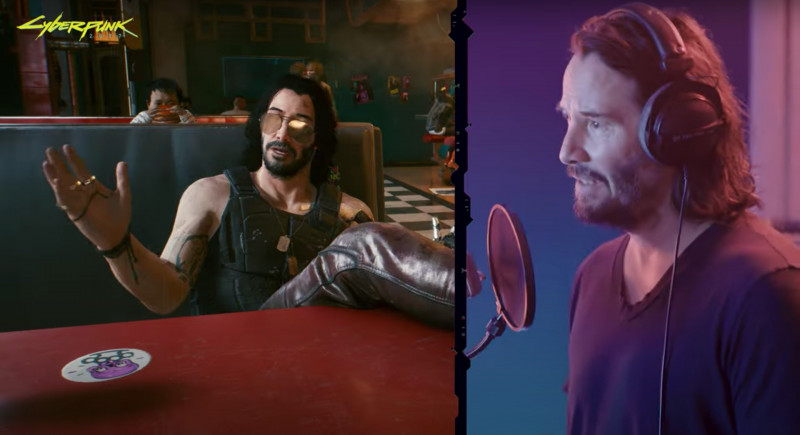

DOZENS of hours into ‘Cyberpunk 2077’, the most anticipated game of the year, I’ve been double-crossed, hacked into the brains of enemies, solved crimes in virtual reality, used all manner of weapons to brutally kill my opponents – all while trading barbs with a droll Keanu Reeves.
The ageless action star and icon of the science fiction subgenre that lends the game its name was a major selling point in the game’s publicity campaign. Many games have celebrity participation, but nothing to this degree.
Deploying a major Hollywood star is a symbol of the game’s excess; game developer CD Projekt Red’s (CDPR) commitment to going big.
Speaking of scale, the game takes place in a sprawling, vertically expansive, neon-soaked dystopian metropolis. Visually and aurally impressive, you as the gamer are living in an amalgamation of science-fiction tropes mined from films such as ‘Blade Runner’, ‘Strange Days’, ‘The Matrix’, among others.
CDPR’s last major release was 2015’s ‘The Witcher 3: Wild Hunt’, which has been widely acclaimed as a high watermark in gaming. It has continued to sell tremendously well and has been buoyed by the success of Netflix's adaptation.
‘Cyberpunk’ continues that lineage of mature storytelling and strong character work. This time shot through the lens of a deeply cynical corporate-owned alternate future.
The action is satisfying and varied, with many ways to get through a combat encounter. Stealth, guns blazing and everywhere in between is all too possible.
Unfortunately, despite some of the soaring successes, there are several rather glaring issues – to say the least.
For one, the game is virtually unplayable on the base models of the Playstation 4 and Xbox One, to the point that it was pulled from the Playstation store. For Xbox, a performance warning was added to the store page and refunds have been made available.
Social media and YouTube are loaded with clips showing off Cyberpunk’s various performance shortcomings and bugs.
Not to mention features and options that were promised, but are ultimately undercooked, such as the rather lifeless NPCs (non-player characters) and rather odd police interactions.
All which amounts to a beautiful looking world that is not exactly living and breathing.
On my mid-range PC, with tweaked settings, the game plays reasonably well and looks breathtaking at times, though short of the eye-melting beauty that only the most powerful machines owned by the top 1% are capable of.
There are still bugs aplenty. They range from immersion-breaking visual goofs to game-breaking disruptions that necessitate the occasional reloading of a saved file.
Fortunately, CDPR has been able to deliver patches at a consistent pace, though should a game of such a high cost (RM1.3 billion) be released in such a flawed state?
'Cyberpunk' most likely should have been held back for at least another three months to iron out these issues. Though it would likely still have been underwhelming on the most popular consoles.
But the realities of being a publicly-traded company and being the recipient of death threats (yes, death threats) likely forced their hand.
In the weeks following the release, CDPR has had many emergency investors and developer meetings to address the negative public reception post-release. Though the game has reportedly sold 13 million copies, the refund situation has hurt the company’s previously rock-solid stock price.
‘The Witcher 3’ likewise had a rocky launch, though it successfully recovered into one of the most beloved games of the last generation. Time will tell if ‘Cyberpunk’ will reach the same level of regard.
From Modern War to Cold War
A few hours later, and I’m skydiving into a fictional Eastern European free-fire zone with three friends from halfway around the world. I know that there will be much yelling and inter-team sniping as we pursue the elusive ‘dub’ (dub = W = win).
Released in February, as a free addendum to the well-received ‘reboot’ of 'Call of Duty: Modern Warfare' from November 2019, 'Warzone' has been a consistently popular battle royale (BR).
In fact, if any game can be deemed as having “won” the attention of lockdown afflicted gamers, it was probably 'Warzone', with the possible exception of 'Among Us'.
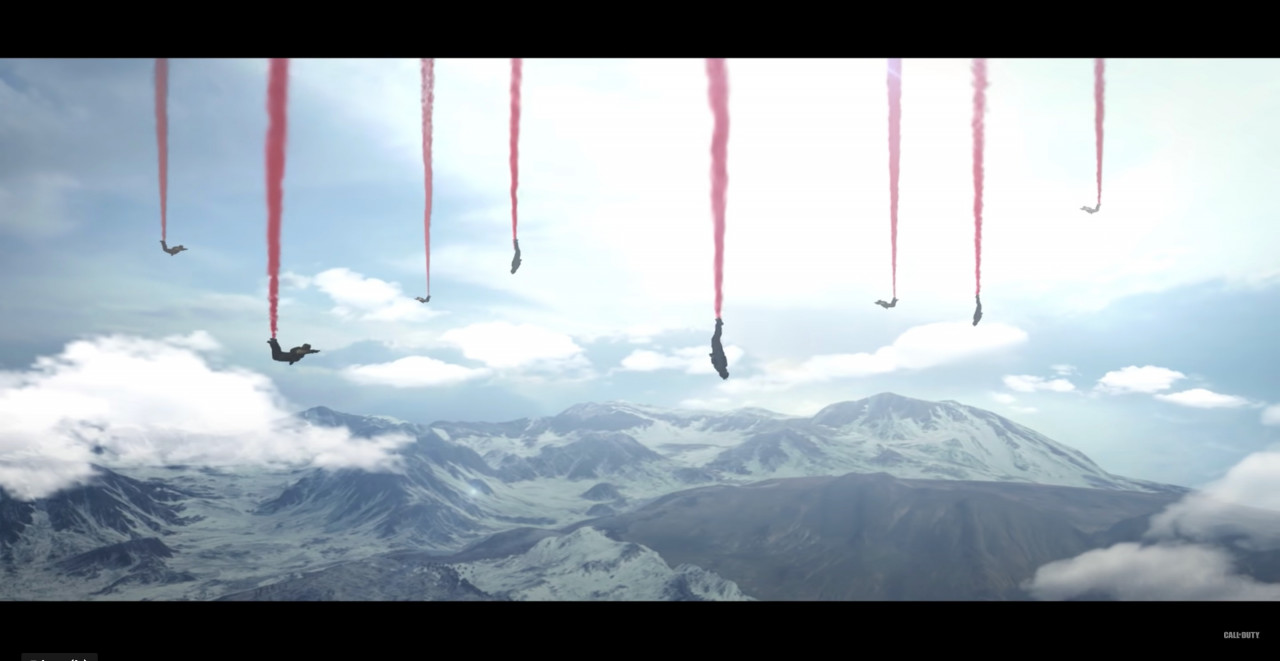
The BR subgenre – named after the cult Japanese thriller from 2000 – involves a large number of ill-equipped players dropping into a single big map to battle it out. The last team, or last man, standing wins.
It has in recent years become one of the most popular formats for multiplayer shooters.
Other notable BRs include 'Player Unknown’s Battlegrounds' (PUBG), 'Apex Legends' and 'Fortnite'. The latter is one of the most popular games in the world, though some gamers are put off by its cartoonish aesthetic and the idiosyncratic building mechanic.
'Warzone' – having the name recognition of the venerable 'Call of Duty' (CoD) franchise – already had a large install base. It’s relatively casual play style lends itself to mass appeal.
There’s also always an appetite for shooters in present-day settings; despite how many times the average shooter fan has handled M4s, AKs and MP5s.
But 'Warzone’s' decision to go free-to-play (following the footsteps of 'Fortnite', 'Apex', among others) is a move in keeping with the games-as-service model that the gaming industry is embracing.
Instead of selling a complete front-to-end experience, major companies like Activision-Blizzard, Epic Games, and Electronic Arts can release a game with the expectation that it will be updated with new content consistently.
The continuous drip of new content means that there will always be a team working on the game. While in years gone by, game developers would scale down dramatically after the release of a title.
On the negative side, with these updates come the occasional major bugs that then necessitates another update. Gamers have by and large come to expect these issues, but that doesn’t stop tens of millions from logging on every day.
'Warzone' has 150 players – from around the world – on a single map with vehicles and all manner of geometry. It's a departure from traditional CoD gameplay that has always been about quick matches of close-quarters combat on smaller maps.
But CoD finds itself at a bit of a crossroads. It has long been a franchise defined by annual standalone releases, with a new version coming out like clockwork every year since 2005’s ‘Call of Duty 2’.
As per usual, a new version would come out in time for the end-of-year holiday season, be played throughout the year, before being supplanted by the latest version.
However, 2019’s ‘Call of Duty: Modern Warfare’ – after a fallow period for the series – was incredibly well-received. ‘Warzone’s’ massive success on top of that made fans wonder whether Activision-Blizzard would change their release pattern.
Why rock the boat, when success has been achieved?
Lo and behold, this past November saw the release of ‘Call of Duty: Black Ops Cold War’, another full-sized franchise instalment. It came with a single-player campaign, a multiplayer mode and a fan-favourite zombie mode.
But for many fans who had left CoD and were brought back in by ‘Warzone’, the main worry was how ‘Cold War’ would mesh with it. After all, the game had a different graphics engine and gameplay style to ‘Modern Warfare’.
Activision-Blizzard had previously announced that ‘Warzone’ would be a long-term platform that would be supported over the years.
What happened was an integration of two games in such a way that hasn’t been done before. Also changing hands was the stewardship of the game, going from Infinity Ward to Treyarch.
These two development teams typically alternate CoD releases, but have never really worked on the same title.
Despite some initial bugs when ‘Cold War’ was integrated into ‘Warzone’, earlier this month, the transition has been relatively smooth. There are some weapon imbalances and lingering bugs, but that’s generally par for the course when it comes to this game.
‘Warzone’ is as popular as ever and Activision-Blizzard is no doubt planning to repeat the process at the end of next year when Modern Warfare 2 comes out.
The only thing that can usurp ‘Warzone’ is a long spell with no fresh content, a set of massive bugs that drive away the player base, or consistent server issues that hamper performance.
What will 2021 bring?
While the Covid-19 pandemic has affected the gaming industry by forcing employees to work from home – which on its face shouldn’t be a problem – there are still negatives.
Who knows how much ‘Cyberpunk’ would have been improved had the workflow not been disrupted? The PS4 and Xbox One versions would likely still be compromised, but maybe there would be fewer general bugs.
Because it is a singleplayer experience – though a multiplayer component has been announced for some point in the future – there will be plenty of opportunities for it to regain its lustre. At least that’s what CDPR should hope for to regain the trust of gamers.
‘Warzone’ despite its bugs and occasional performance issues has been a major success this year and the only thing that can usurp its throne would likely have to be another first-person shooter.
Its biggest rival in the genre, the Battlefield series, suffered a major stumbling block with its last major release – 2018’s Battlefield V. It will need to have a turnaround to win back its audience and challenge CoD.
Unspoken is the fact that independent game developers, used to operating with barebones staff and working from home even before the pandemic, are just as productive as ever.
As more people turn to gaming, not everyone will be inclined to the big and bombastic blockbusters. It is more than likely that a surprise game will come out of nowhere and win over the hearts of gamers around the world. – The Vibes, December 31, 2020