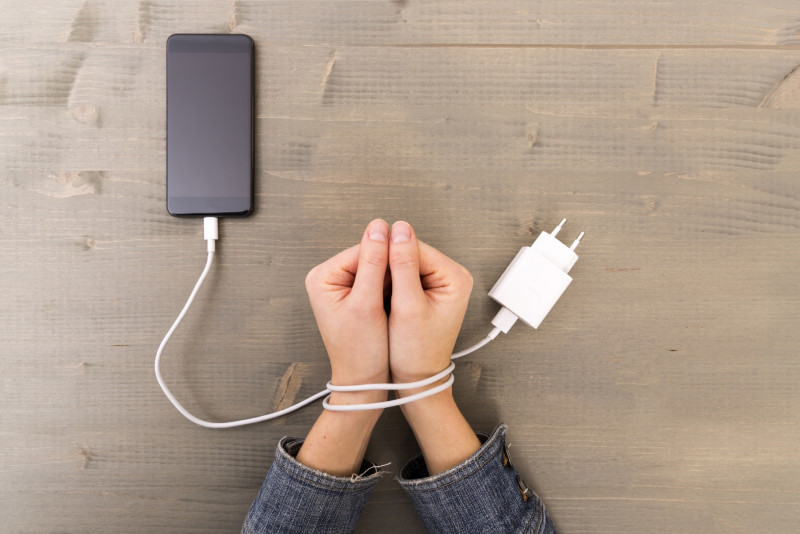
SCIENTISTS from Monash University, Melbourne have been investigating nomophobia – "no mobile phone phobia" – or the fear of being without your mobile phone. The condition affects many more people than you might think, and could prove dangerous for our health and well-being.
Published in the journal, International Journal of Environmental Research and Public Health, the study polled 2,838 participants on their usage habits, as well as their psychological attachment to their smartphone.
Conducted in Australia – a country that counts 109.6 mobile-cellular subscriptions per 100 inhabitants (compared to 103.5 per 100 inhabitants worldwide) – the study found that 99.2% of participants reported some form of nomophobia, or some degree of fear of not having their smartphone with them.
In detail, while more than eight in 10 volunteers were experiencing a mild to moderate level of nomophobia, no less than 13.2% of the sample were considered to be suffering from severe nomophobia.
"Nomophobes" and dangerous behavior
The researchers observed that the greater the level of nomophobia experienced by participants, the more likely they were to engage in dangerous or even illegal behavior.
The scientists found that more than four in 10 participants (43%) spent more than three hours a day using their smartphone, and that high usage was directly linked to a high level of nomophobia, and a high risk of problematic dependency, prohibited use and dangerous use.
Unsurprisingly, young people age 18 to 25 had the highest levels of nomophobia, and males were around twice as likely to engage in dangerous smartphone usage than females.
The study also shows that people experiencing nomophobia were 10 times more likely to use their smartphone in a prohibited space, and 14 times more likely to use their smartphone in dangerous ways, such as while driving.
"Our results provide evidence for the notion that exhibiting a fear of being without one's mobile phone can lead to problematic dependent, prohibited or dangerous use, each factor of which may pose significant health risks, such as over-use, anti-social use or reckless and physically compromising use," the researchers conclude. – ETX Studio, January 5, 2021