
.png)
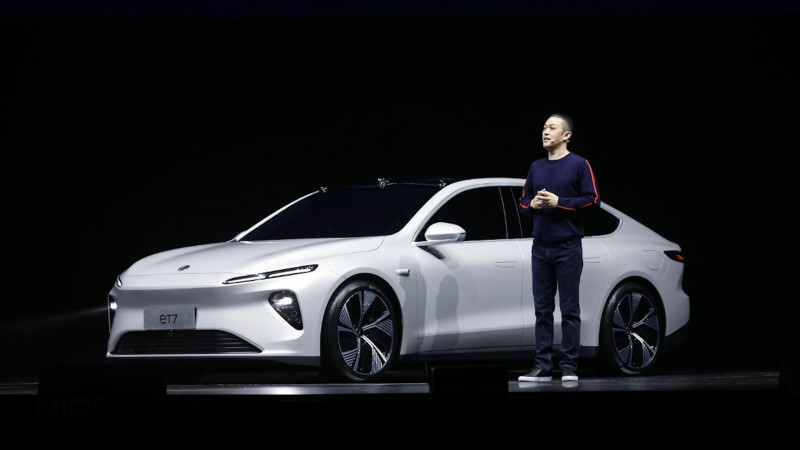
JUST a few weeks ago, Chinese electric vehicle manufacturer NIO launched a brand new luxury sedan. Its features had Tesla, Ford, General Motors and even the big European auto brands wondering why they were behind in this race to get the most intelligent electric vehicle to the consumer market.
Priced in China from US$69,000 (RM278,400), it is more expensive than the Tesla Model 3 base model which retails for US$41,100. But, the latest Tesla Model Y which is made in China retails lower at US$52,600.
So, why would the average Chinese electric car buyer look at this NIO ET7 over a lower-priced Tesla EV? Well, simple – NIO is promoting the use of battery-swapping, a technology that Tesla tested some years ago and then abandoned in early 2014. NIO today has more than 160 and growing battery-swap stations in service across China. Tesla has more than 2,500 Superchargers and 2,400 destination chargers in the country.
Plus, with its large fully charged 150 kWh battery, this NIO ET7 claims a possible 1,000-kilometre driving range. This is why this sedan shares almost the same dimensions as a Mercedes S-Class. The closest rivals to this ET7 will be the BMW i4 and the Audi e-tron GT which is on the way this 2021.
The ET7 features NIO’s latest NAD (NIO Autonomous Driving) technology including NIO Aquila Super Sensing and NIO Adam Super Computing. NAD brings a safer and more relaxing experience of autonomous driving from point A to point B, gradually covering drive modes on expressways, urban streets and parking for battery swapping.
The NIO Aquila Super Sensing features 33 high-performance sensing units, including 11.8-megapixel high-resolution cameras, 1 ultralong-range high-resolution LiDAR, 5 millimetre-wave radars, 12 ultrasonic sensors, 2 high-precision positioning units, V2X and ADMS. Aquila can generate 8-gigabyte of data per second. NIO Adam features 4 NVIDIA DRIVE Orin SoCs with a total computing power of 1,016 TOPS.
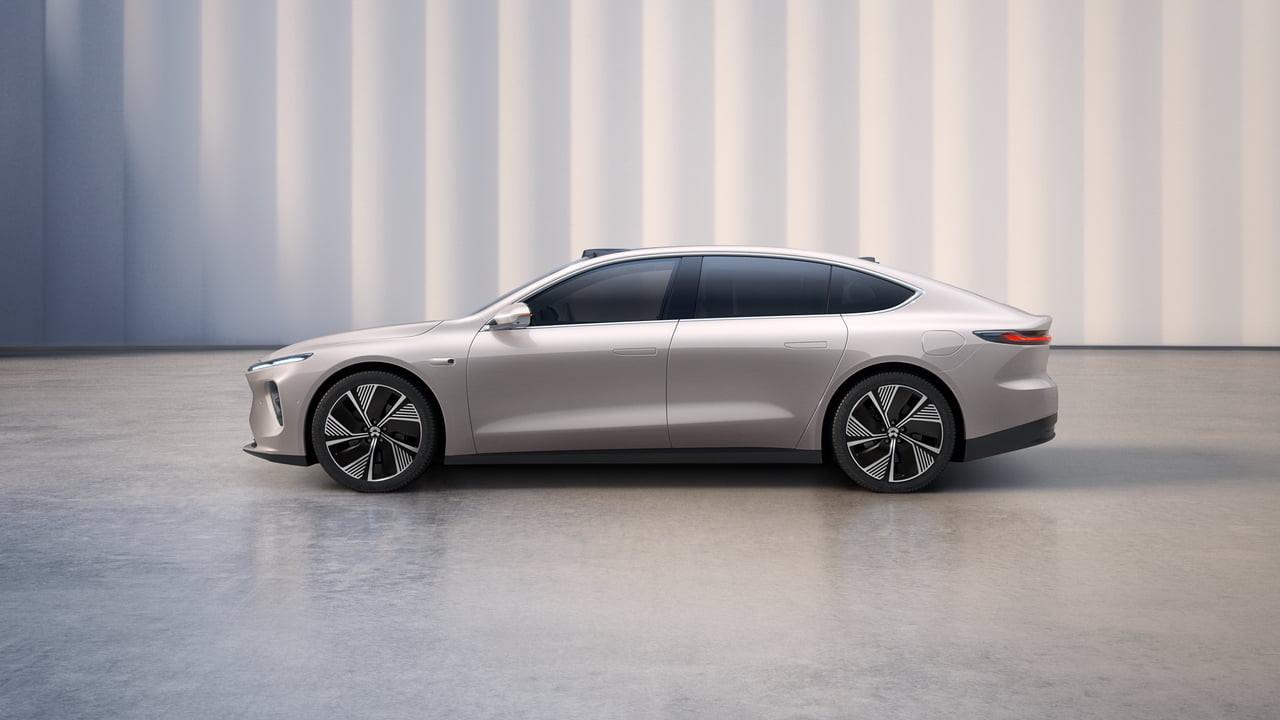
NIO ET7 dimensions
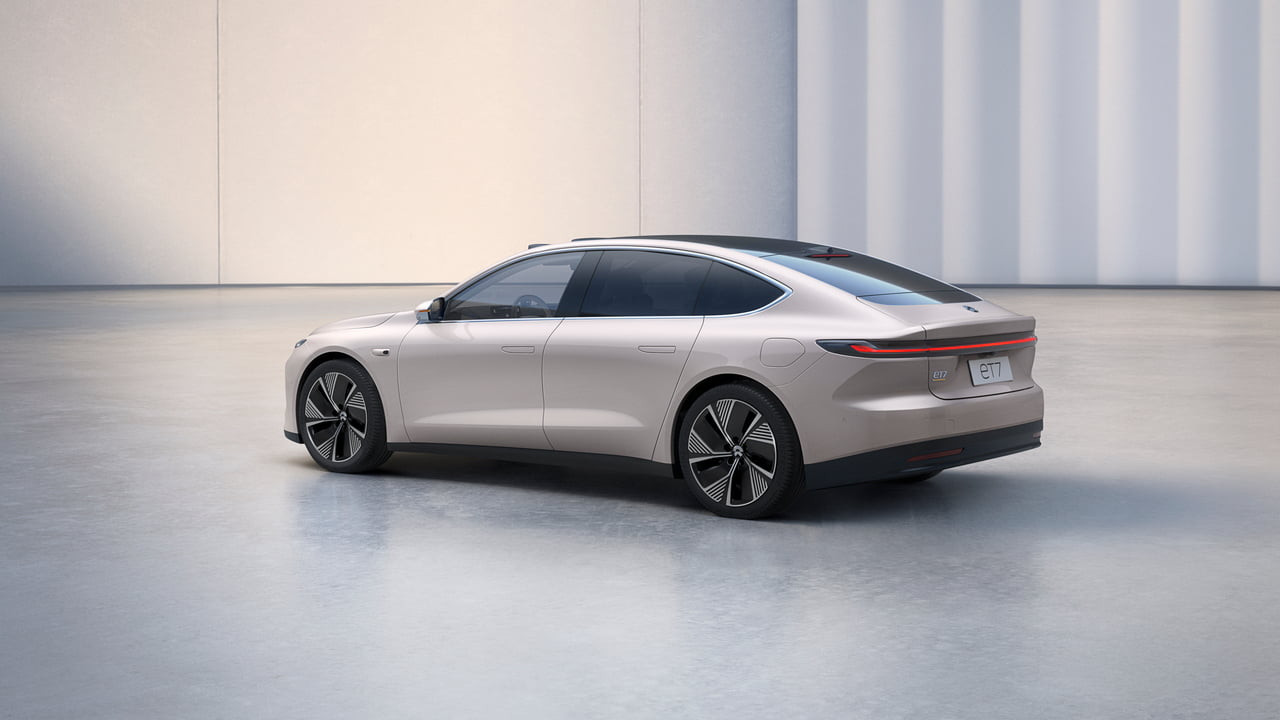
ET7 breaks the norm by integrating high-performance sensors seamlessly into the body. The ET7 is 5,098mm in length, 1,987mm in width and 1,505mm in height with a wheelbase of 3,060mm. The dual-beam LED headlights, the double-dash daytime running lights echo with the crystal-like heartbeat taillight to form a streamlined silhouette.
NIO ET7 cabin
The interior of ET7 is a further interpretation of the second living room concept with a sophisticated and cosy mobile living space. Frameless windows and soft-close doors come standard for an easy entry and exit experience.
This ET7 also marks the first application of Karuun® renewable rattan on a production model for a green and natural experience. The standard front and rear ventilated seats with massage functionality offer a reassuring and comfortable experience for every occupant.
NIO’s second-generation digital cockpit on the ET7 has enhanced its in-car mobile connectivity and communication capabilities powered by the 3rd Generation Qualcomm® Snapdragon™ Automotive Cockpit Platform.
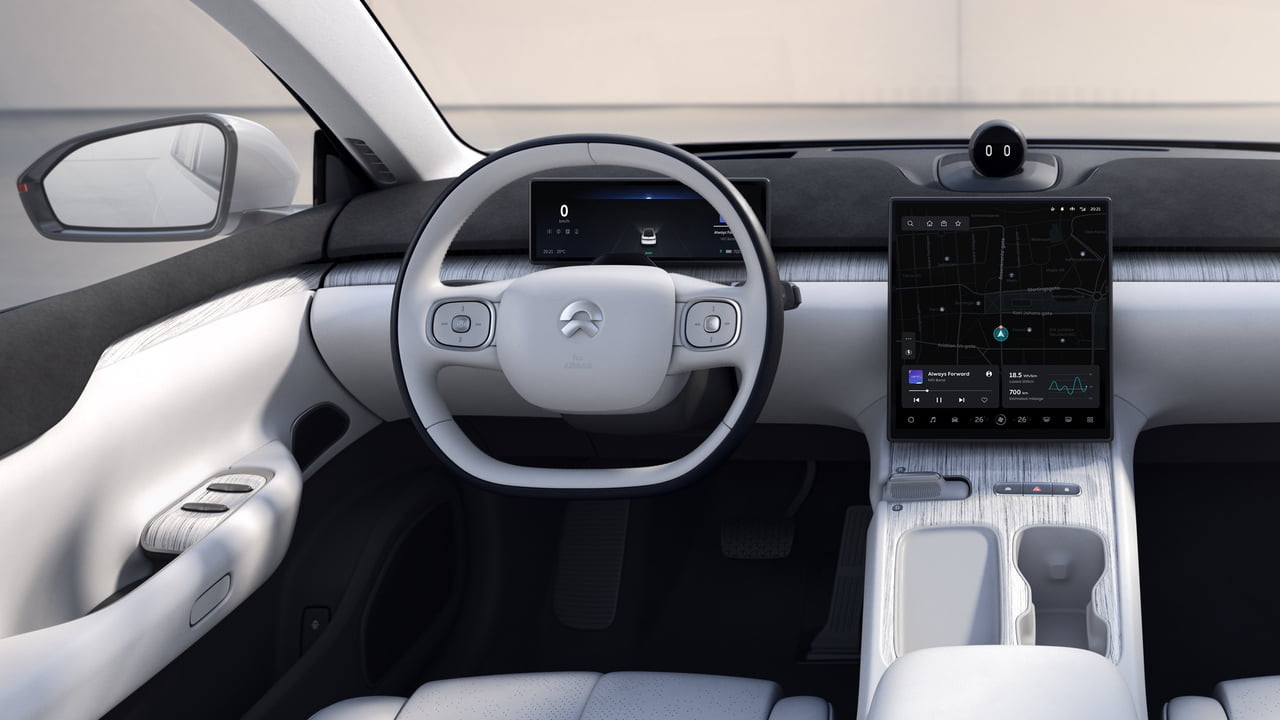

The new 12.8-inch AMOLED centre display has great resolution and contrast. NOMI, the world’s first in-car AI system, continues to evolve. The 7.1.4 immersive sound system with 23 speakers and 1,000W total output is standard on all trim levels.
There are no plans for a right-hand-drive version of this NIO ET7 soon. The demand in China alone will be high. There are plans for a European launch (which is already a left-hand drive market like China) to tackle the rise in EV ownership in the coming years. – The Vibes, January 22, 2021
This article is powered by www.dsf.my. For more automotive updates, follow DSF.my on Facebook and Instagram