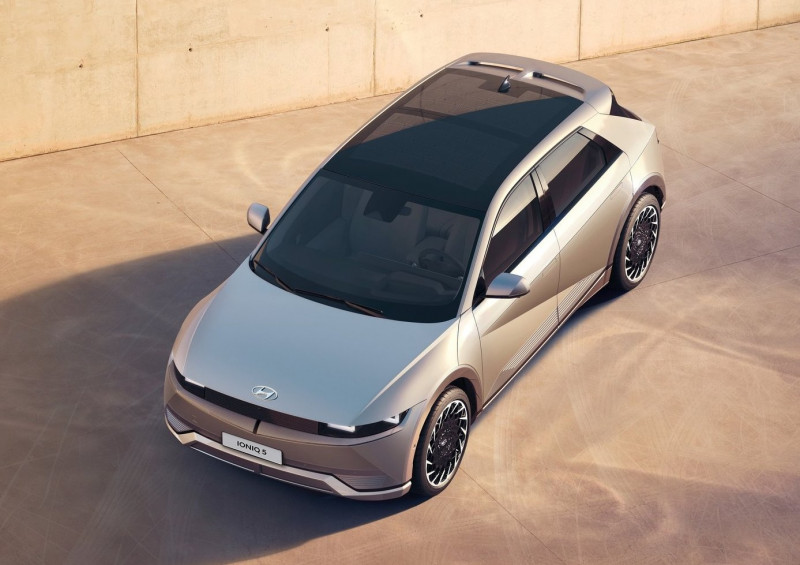

HYUNDAI Motor Company has just unveiled their all new electric vehicle that continues the IONIQ nameplate.
The IONIQ delivers around 470 to 480km range and is targeted to challenge the Volkswagen ID.4 electric vehicle, which was launched in September 2020 and has a driving range of about 520km using WLTP methodology.
It also rivals the Nissan Ariya, which was launched in July 2020 and has a best possible driving range of 610km.
This IONIQ 5 is the first model in Hyundai's new IONIQ brand dedicated to battery electric vehicles (BEV). The IONIQ 5 is built on Hyundai Motor Group's dedicated BEV architecture called Electric-Global Modular Platform (E-GMP), enabling it to have unique proportions on an elongated wheelbase.
With E-GMP, IONIQ 5 offers innovative interior design with eco-friendly materials in many touch-points, strong performance mated with ultra-fast charging and a Vehicle-to-Load (V2L) function, as well as advanced connectivity and driver assistance features that will offer the ultimate in-car experience while ensuring safety.
IONIQ 5 Looks
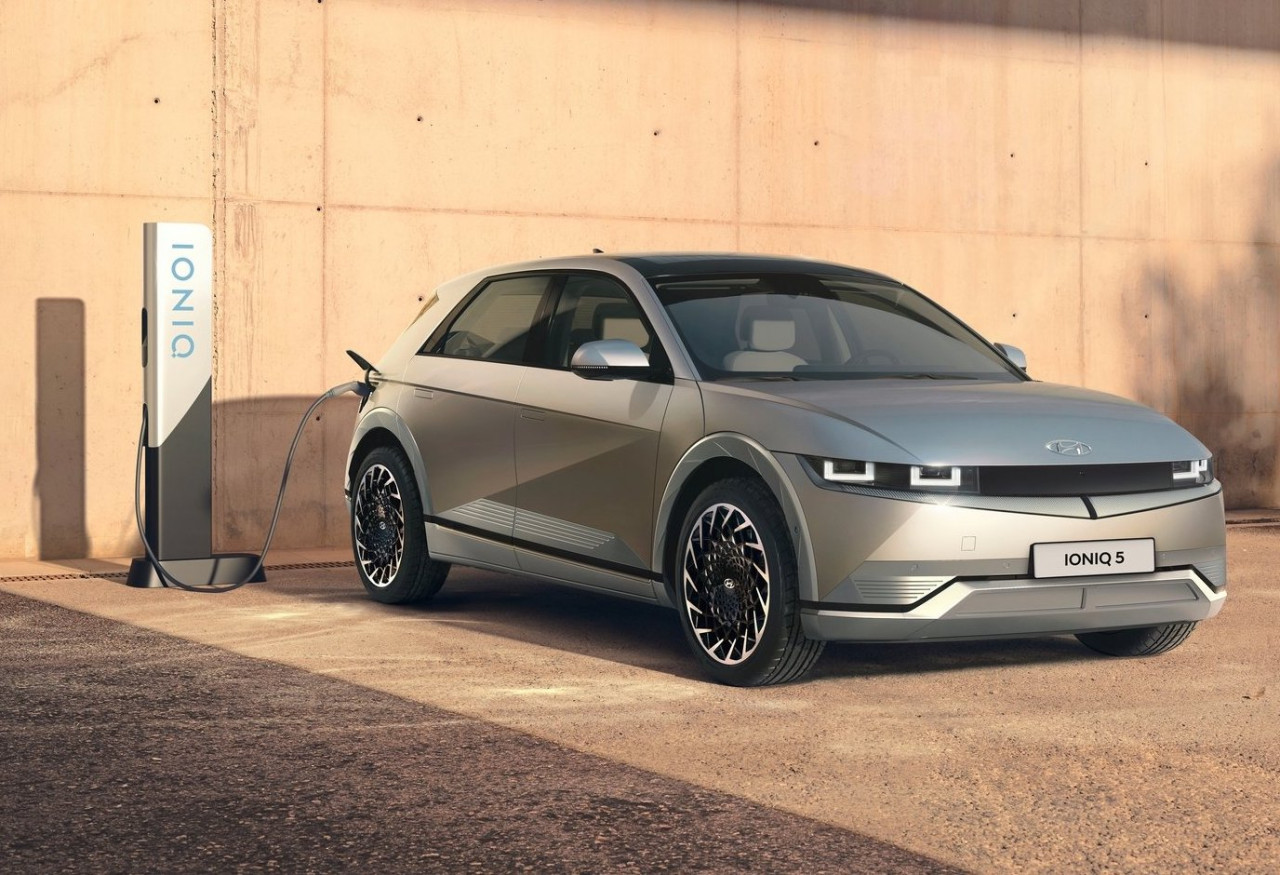
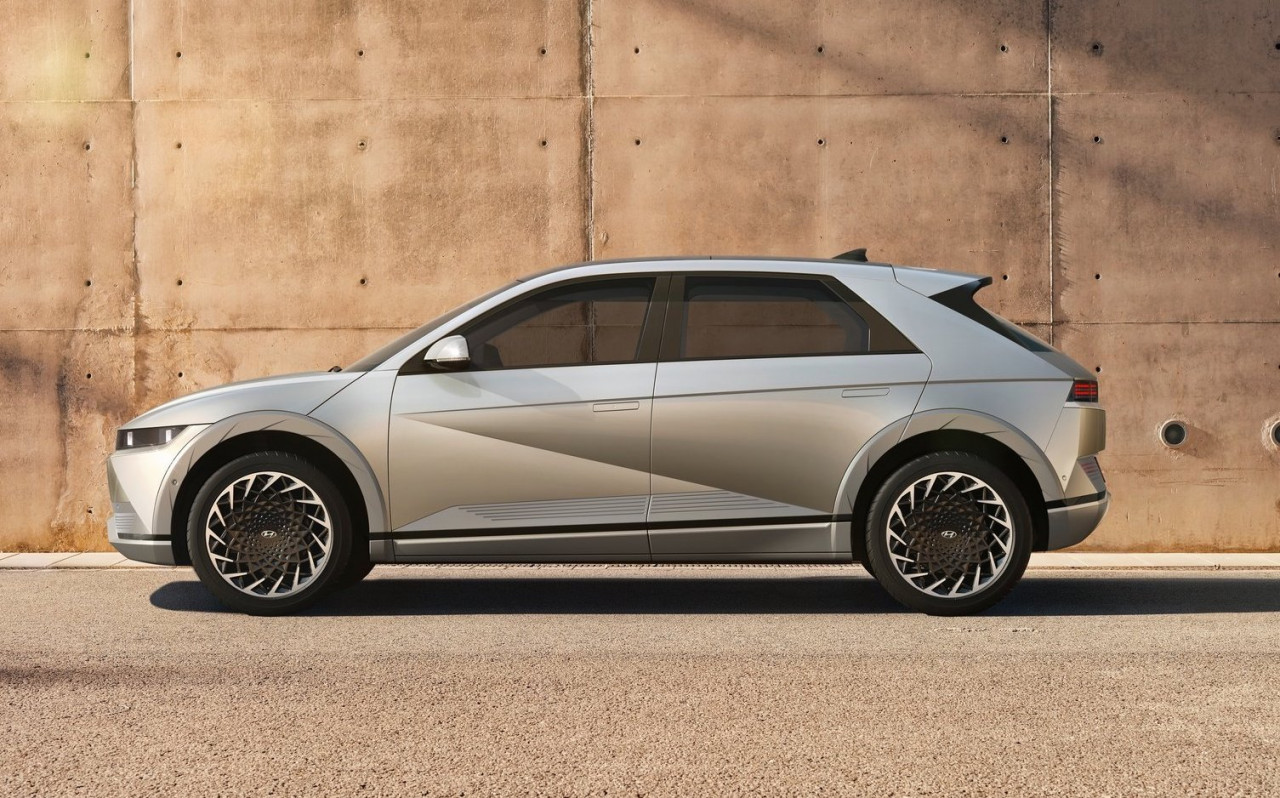
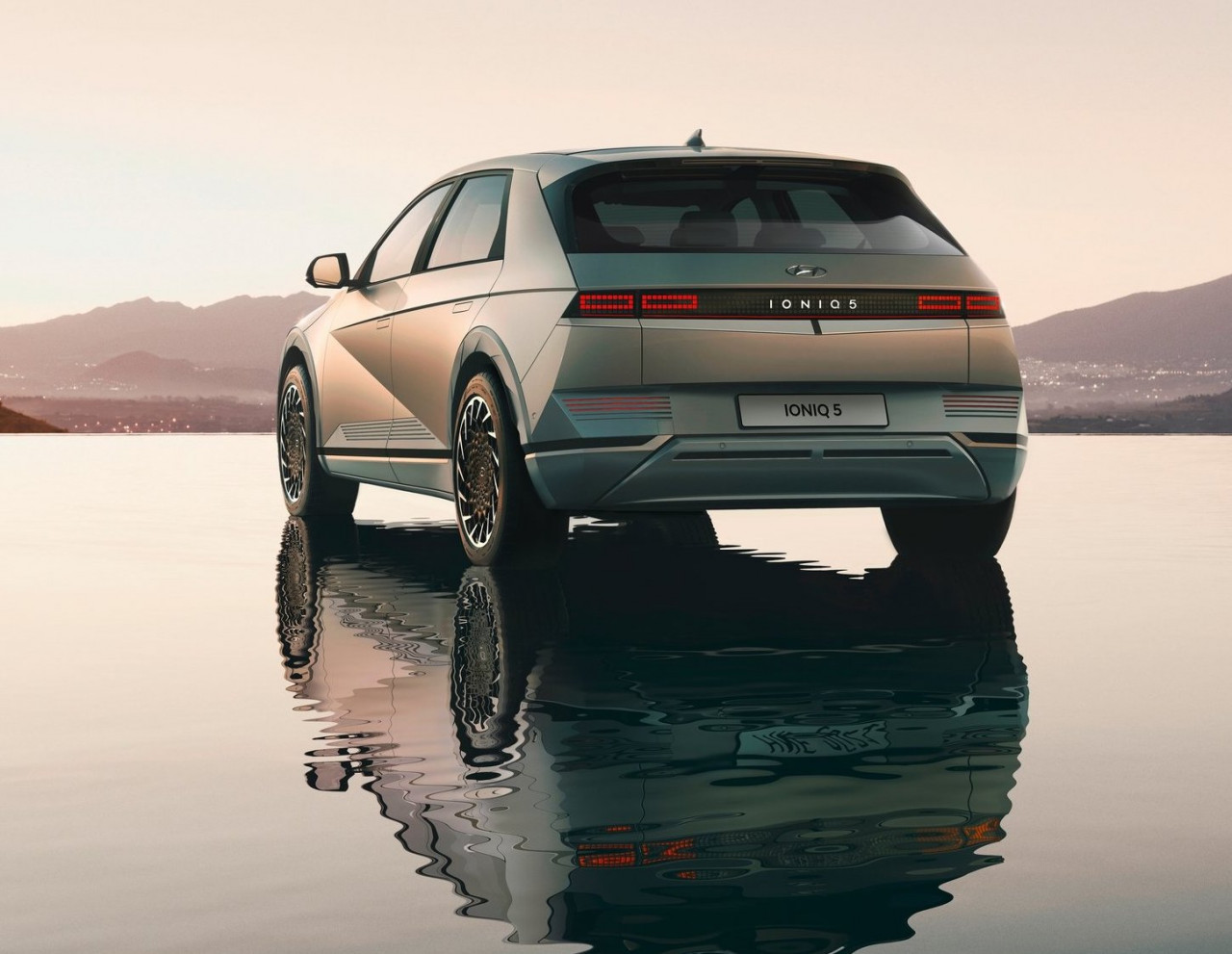
The IONIQ 5 has a 3,000mm wheelbase which translates to a spacious cabin. The front of the car is equipped with Hyundai's first clamshell hood that minimizes panel gaps for optimal aerodynamics. The front bumper is defined by an eye-catching V-shape incorporating distinctive daytime running lights (DRLs) that provide an unmistakable light signature unique to IONIQ 5.
These small pixel-like clusters also appear at the rear of the vehicle. On the sides, auto flush door handles provide clean surface styling and enhanced aerodynamic efficiency.
IONIQ 5 Cabin
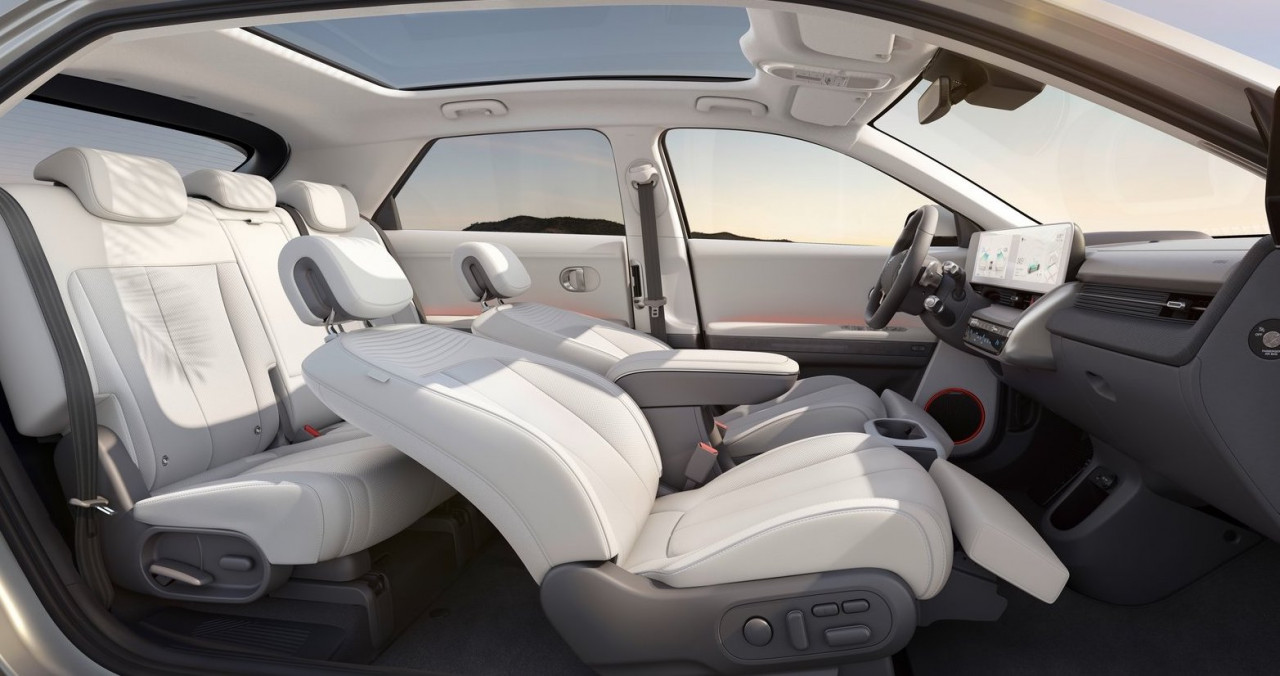
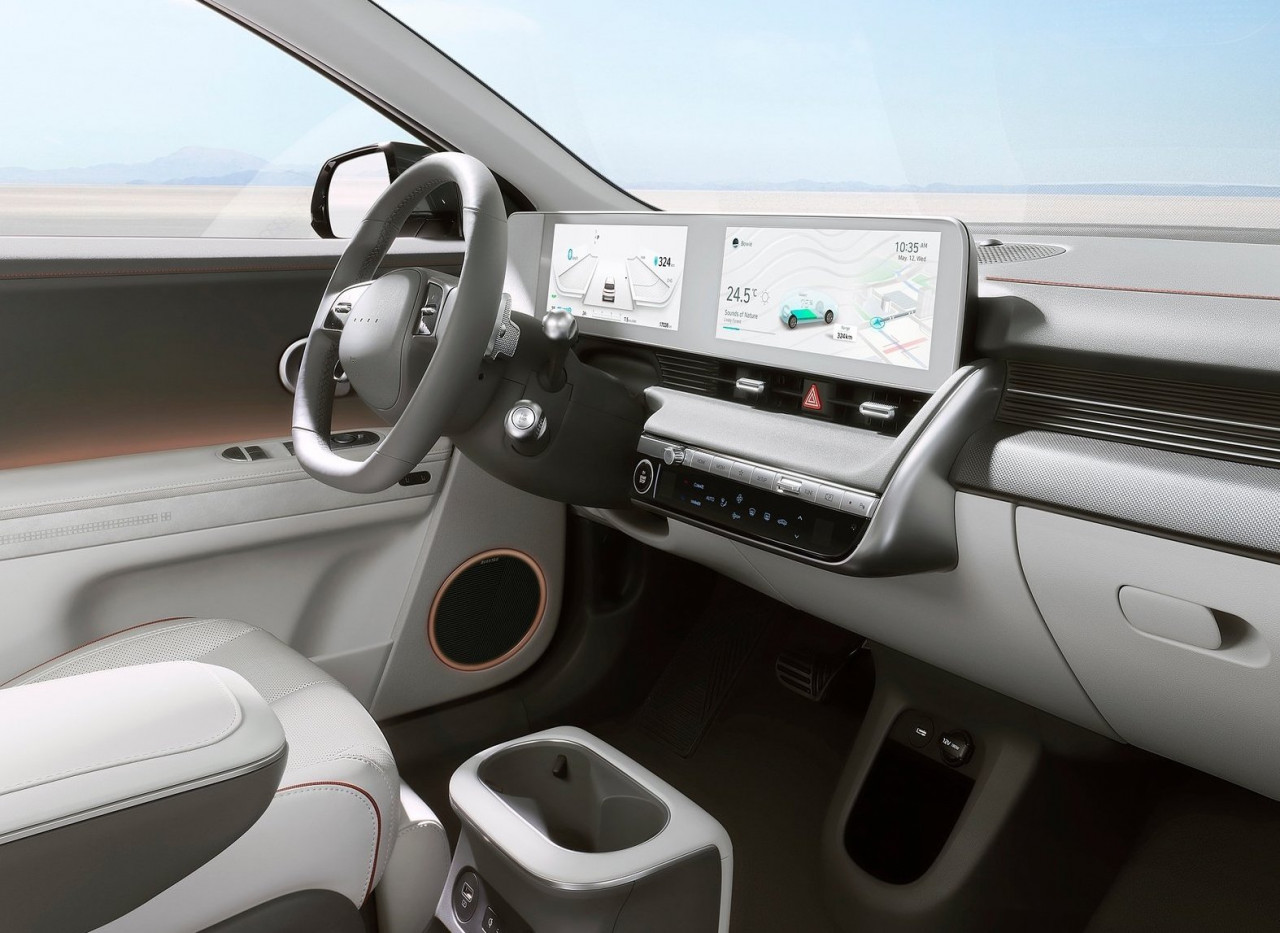
The simplistic and classy 'Living Space' interior features a moveable center console that can slide back as much as 140mm. The ‘Universal Island’, along with the flat floor is where the batteries are stored, which allows passengers to have better freedom of movement inside.
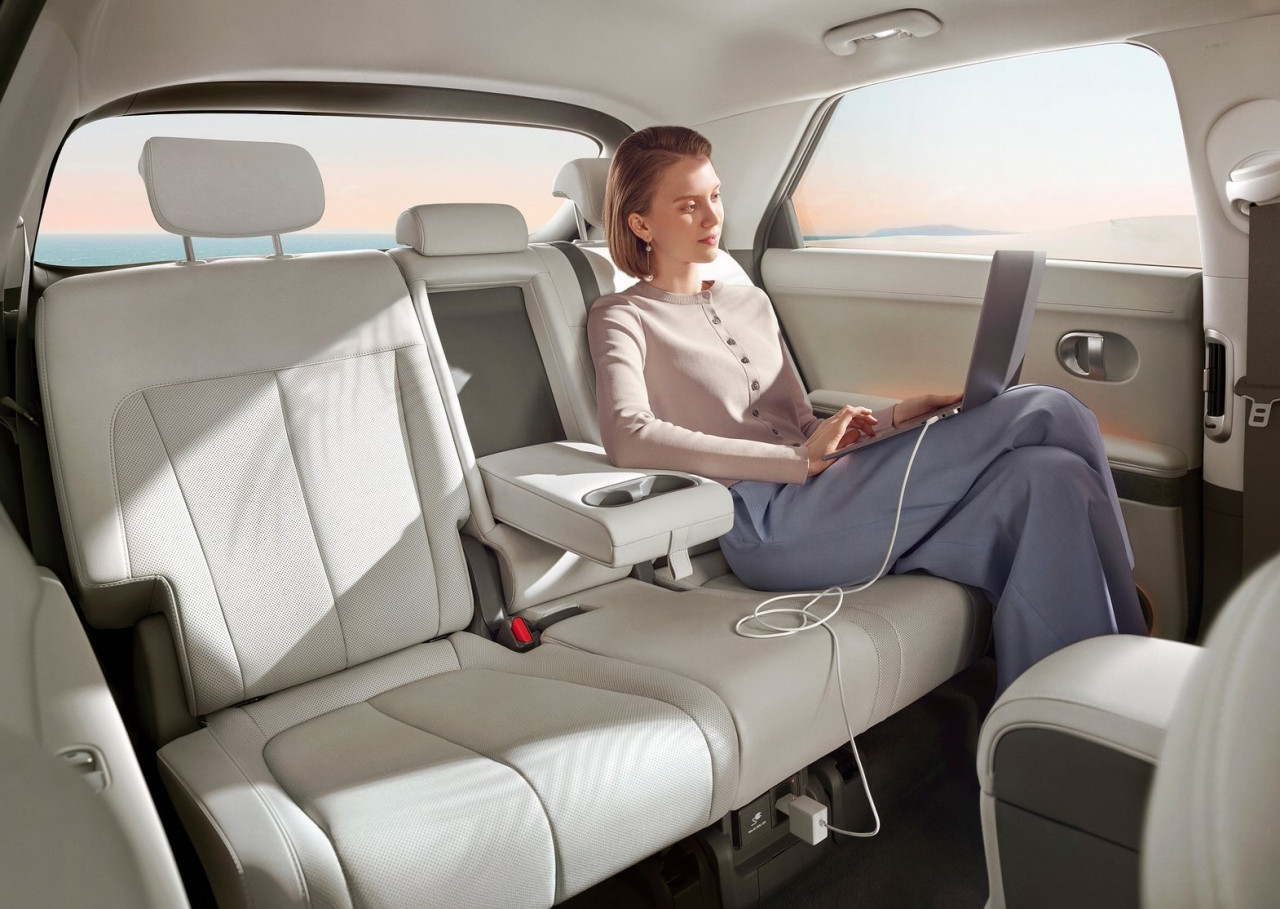
The IONIQ 5 is also equipped with electronically adjustable front seats. The seats recline to the optimum angle, offering a weightless feeling for the occupant. Hyundai reduced the thickness of the front seats by 30%, providing more space for those seated in the second row.
Many of its interior touch-points, like the seats, headliner, door trim, floor and armrest use eco-friendly, sustainably sourced materials, such as recycled PET bottles, plant-based (bio PET) yarns and natural wool yarns, eco-processed leather with plant-based extracts, and bio paint with plant extracts.
Customers can choose from nine exterior colors, including five nature-inspired hues exclusive to IONIQ 5. The interior has three color options.
IONIQ 5 Drivetrain
The IONIQ 5 will be sold with a range of power electric (PE) configurations to fit the mobility needs of every customer, with no compromises on performance.
Customers can select from two battery pack options, either 58 kWh or 72.6 kWh, and two electric motor layouts, either with a rear motor only or with both front and rear motors. All PE variations provide outstanding range and deliver a top speed of 185km/h.
At the top of the electric motor lineup is an all-wheel drive (AWD) option paired with the 72.6-kWh battery, producing a combined power output of 225-kWh and 605 Nm of torque. This PE configuration can go from 0 km/h to 100 km/h in 5.2 seconds.
When equipped with two-wheel drive (2WD) and 72.6-kWh battery, IONIQ 5's maximum driving range on a single charge will be around 470 to 480 km, according to the Worldwide Harmonized Light Vehicle Test Procedure (WLTP) standard. Ultra-fast battery charging along with innovative Vehicle-to-Load (V2L) function.
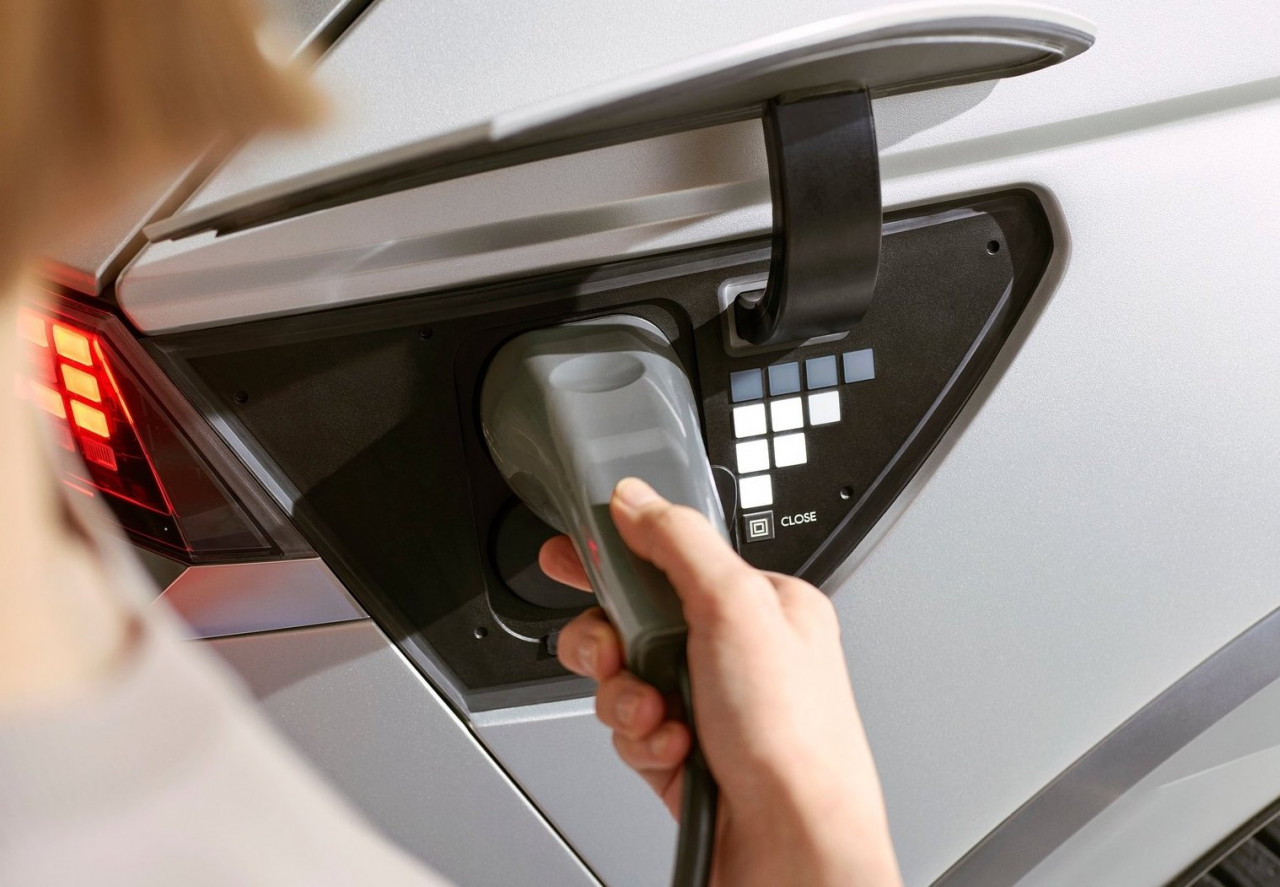
With a 350-kW charger, the IONIQ 5 can charge from 10% to 80% in just 18 minutes. IONIQ 5 users only need to charge the vehicle for five minutes to get 100 km of range, according to WLTP.
IONIQ 5 also provides an innovative V2L function, which allows customers to freely use or charge any electric devices, such as electric bicycles, scooters or camping equipment, serving as a charger on wheels.
The V2L function can supply up to 3.6 kW of power. The V2L port is located under the second-row seats, and it can be activated when a vehicle is on. Another V2L port is located at the charging port on the vehicle exterior.
Using a converter, customers can charge high-power electric equipment. The outside port provides power even when the vehicle is turned off.
IONIQ 5 Safety
Highway Driving Assist 2 (HDA 2) is included, which makes highway driving more convenient. Using a front view camera, radar sensors and navigation data, HDA 2 works to control the vehicle speed and following distance, while keeping the vehicle centred in its lane. It can also assist the driver when changing a lane.
Forward Collision-Avoidance Assist (FCA) can detect a vehicle, pedestrian or cyclist and can help avoid a collision with any one of them. It includes Junction Turning, Junction Crossing and/or Lane-Changing Oncoming.
FCA with Junction Turning activates the brakes if it detects oncoming traffic when the driver is turning left at an intersection. FCA with Junction Crossing senses vehicles approaching from the side when the driver is going straight through an intersection. FCA with Lane-Change Oncoming makes switching lanes safer.
If FCA senses an approaching car that has crossed the centre line when the driver is changing lines, it automatically assists with avoidance steering, if there is no danger of secondary accidents. If a potential secondary accident is detected, FCA will only produce a warning.
Other semi-autonomous driving features include Intelligent Speed Limit Assist (ISLA), which adjusts vehicle speed to match the speed limit, and High Beam Assist (HBA), which automatically turns high beams on and off to avoid blinding oncoming drivers.
IONIQ 5 has several driver attention-related functions to ensure safety at all times by detecting if the driver is drowsy or distracted. Driver Attention Warning (DAW) displays the driver's attention level and provides a warning when signs of driver inattentiveness are detected.
DAW sounds a warning if the vehicle remains stopped for a long period of time (such as at a traffic signal) and the driver doesn't react quickly enough when the vehicle ahead starts moving.
Several functions work in tandem to help avoid collisions in a variety of driving situations.
Blind-Spot Collision-Avoidance Assist (BCA) helps avoid collisions at the rear side of the vehicle by using radar to detect other vehicles and applies differential braking, when necessary. BCA is particularly useful in situations such as changing lanes or exiting from parallel parking.
Another function, Blind-Spot View Monitor (BVM), uses a camera to show the driver views to the left and the right of the vehicle on the cluster screen if the driver indicates to change lanes.
IONIQ 5 Delivery
By now you are probably ready to book this new Hyundai. Well, the IONIQ 5 will debut in Europe fairly soon and Southeast Asia will be getting delivery from the all new Hyundai production facility in Singapore.
Malaysian customers will have to wait until the end 2022 to get this electric car as initial deliveries will go first to waiting Singaporeans. – The Vibes, February 24, 2021
This article is powered by www.dsf.my. For more automotive updates, follow DSF.my on Facebook and Instagram