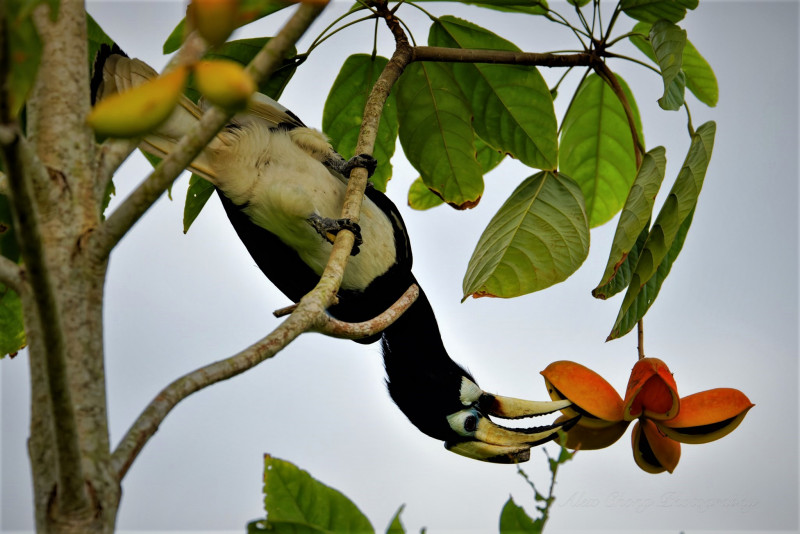

KUCHING – An Oriental Pied Hornbill, a protected species according to the Sarawak Forestry Corporation (SFC) died after it was mauled by stray dogs preying in the Piasau Nature Reserve in Miri.
The incident happened on March 1, but the Malaysian Nature Society (MNS) Miri branch chairman Musa Musbah only revealed the death of the bird in a Facebook post on March 11.
In his post Musah said: “With regrets MNS was informed by the SFC of the death of a Piasau Nature Reserve’s female hornbill who’s identification is still being investigated but is likely to be Alice."
Musa said the dead bird was the other half of a pair that had found a resting hole at the lower end of a tree with buttress roots in the park. “The nesting ground of the pair was at ground level. While she was in the hole a pack of stray dogs that were roaming freely at the park had grabbed the bird from its nesting hole.”
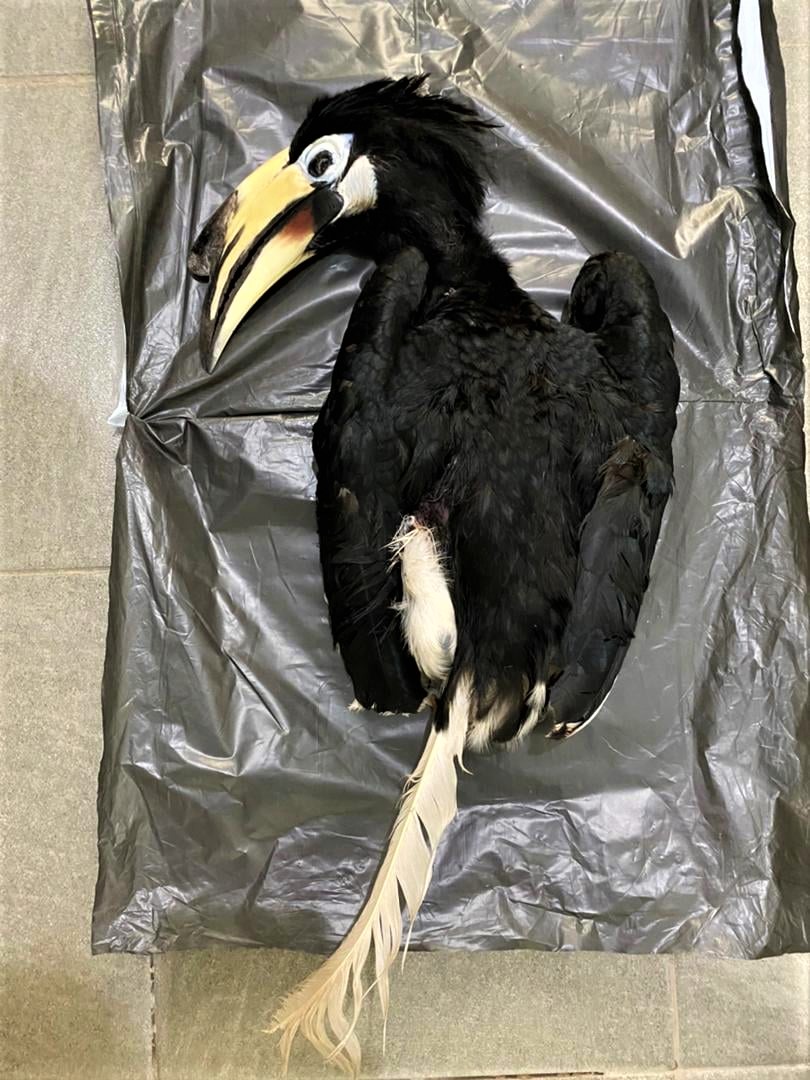
According to the post, the bird was hurt badly. It was left struggling for her life when a SFC staff stationed to look after the nest went over to chase the dogs and discovered that she was left without almost all her tail.
“She was quickly sent to the vet but died later. It is sad that the issue of dogs at the park was addressed before but local animal lovers protested the removal of the stray canines and also cats from the Piasau Nature Reserve,” added Musa.
Smallest of the Asian hornbills
According to Wikipedia, the Oriental Pied Hornbill (Anthracoceros albirostris) is an Indo-Malayan species and is a large canopy-dwelling bird. Two other common names for this species are Sunda pied hornbill (convexus) and the Malaysian Pied hornbill.
Their distribution spans across northern India and Nepal, east to southern China, Burma, south to Thailand, Indochina, the Malay Peninsula, Sumatra, Borneo, Java and Bali. They make their nests on broadleaved evergreen forests, mixed deciduous forests, island forests, secondary growth, sometimes coastal scrub, plantations and gardens.
The Oriental Pied Hornbill is said to be the smallest of the Asian hornbill species and the most adaptable to landscape modification. They are known to to have a unique form of nesting behaviour. The female uses mud or her own droppings to seal herself inside a tree cavity, leaving only a narrow slit through which the male feeds both her and the chicks until the time comes for the chicks to leave the nest.
This species also has been traditionally been captured for the local pet trade. Deforestation in the region and overall human pressure on the environment pose real threats to the local survival of the species.
Predator dog menace in nature parks
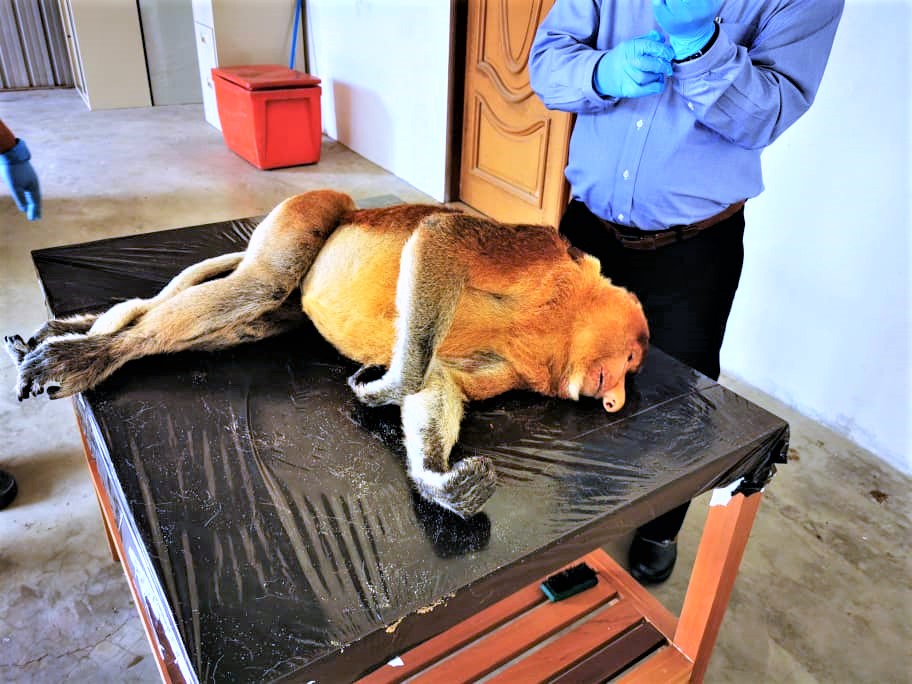
On January 26, a male Proboscis Monkey (Nasalis larvatus) died due to severe injuries caused by dog bites, SFC reported in a Facebook posting. According to the post the incident happened at the Kem Permai’s beach nature park. The incident was reported to SFC by a concerned member of the public.
The post reported: “Upon arrival, our Swift Wildlife Action Team (SWAT) discovered multiple dog bites on the primate’s head and right shoulder, which (may have) caused its death.
“Our forensic team took back the carcass for further investigation and will be preserved for taxonomic study. The exhibit will be placed either at the Bako National Park or Matang Wildlife Centre for educational purposes.
“The state’s Controller of Wild Life, Zolkipli Mohamad Aton, who is also the SFC CEO, felt sad about the totally protected animal’s death. The numbers of Proboscis Monkeys left in the wild today are less than 1,000, and it has been dropping over the past 30 years. This might eventually lead to the extinction of the species.”
Zolkipli also said SFC will collaborate with other relevant authorities to remove the stray dogs from the beach to avoid the same incident from happening again. Members of the public who have information on incidents affecting protected wildlife are encouraged to report through SFC hotlines – Kuching (019-8859996), Sibu (019-8883561), Bintulu (019-8332737), Miri (019-8290994). – The Vibes, March 17, 2021