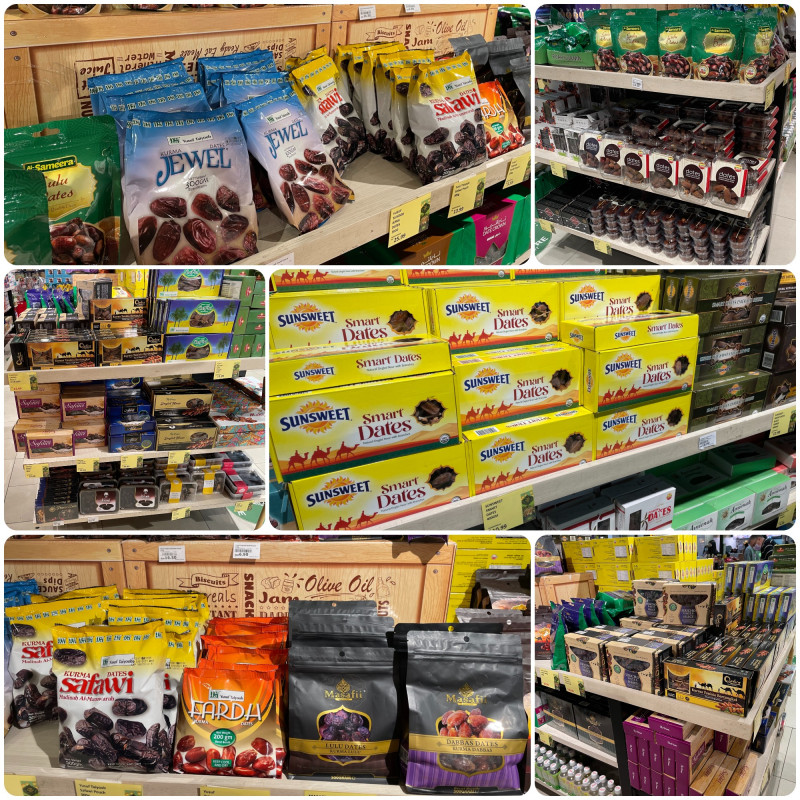

SOFT, chewy and sweet. Dates go down easy, despite their less than appetising appearance (an opinion, to be sure). Some ill-spoken children might even say they look like cockroaches.
Dates, kurma in Malay, are a fruit enjoyed by many and have been consumed for much of human history. However, when Ramadan arrives on the calendar they become all but essential.
Packed with natural sugars and other nutrients, they are often the first to be eaten once the Maghrib call-to-prayer rings through the air.
But how did this unassuming fruit attain such popularity and ubiquity, not just here in Malaysia, but around the world?
According to archaeological records, humans have been cultivating date plants and consuming the fruit for thousands of years, stretching back to the birth of civilisation. In places like Mesopotamia (modern Iraq) and the Indus Valley (Pakistan) where long-term settlements flourished, so too, did the date palm tree.
It then spread to other ancient civilisations across Asia and Africa, specifically Egypt, Arabia and India. The dates were utilised in any number of different ways, be it as a drink or as an ingredient in other foodstuffs like bread and cake.
The name “date” comes from the Greek word for finger, as the fruit's elongated shape resembles the appendage.
The date fruit’s ability to be stored for long periods of time meant it could be used as a food supply during long journeys. Especially trade routes – which cemented its importance.
Through trade ships it travelled further afield, arriving in the Americas and in Asia.
As a native of the arid climate in the deserts of North Africa and the Middle East, the date palm tree sprouted up all over the world, from the American southwest to Australia.
In keeping with their importance in the Middle East, dates played a central role in the three major religions from there. They are mentioned than 50 times in the Bible, date palm trees are repeatedly referenced in the Torah. In Islam, dates are referenced numerous times, with Prophet Muhammad said to have broken his fast with dates.
It is probably for that reason that dates are so integral to the experience of Ramadan. And their health benefits have been borne out with science. Dates are now known to contain carbohydrates, fibre, iron, potassium, phosphorus, vitamin C and magnesium – making it an ideal food to re-energise the body.
In all likelihood, dates might be the next food adopted as a vegan superfood. It has health benefits and can be prepared in all kinds of ways. Smoothies, anyone? – The Vibes, April 24, 2021