
THE name Anjalai Ponnusamy may not be prominent in local history textbooks but her freedom fighting exploits during the Japanese Occupation continues to be recognised by the Indian government and the local community.
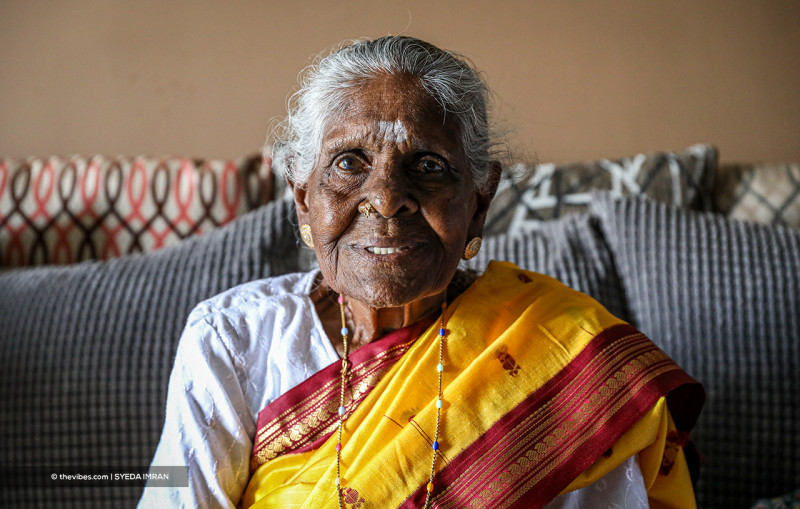
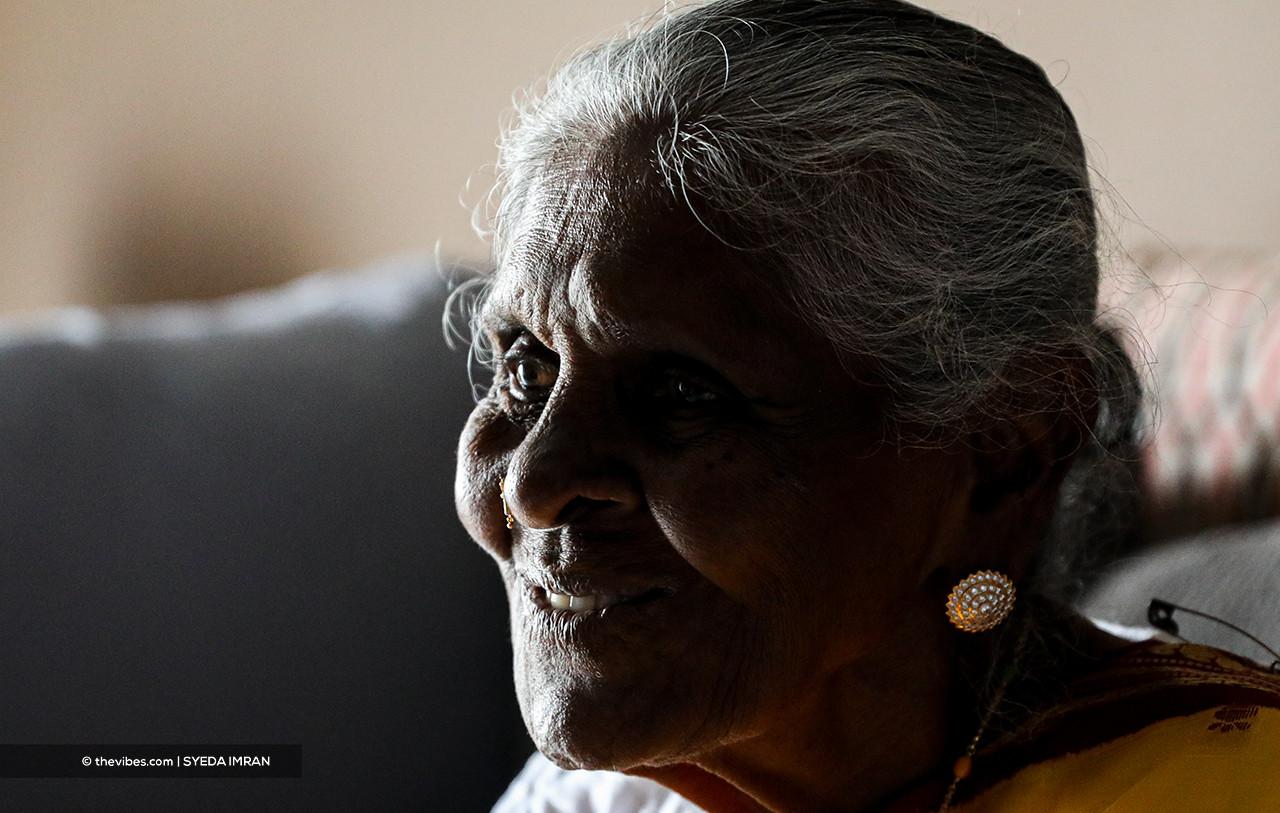
Speaking to The Vibes at her home in Sentul recently, the 101-year-old grandmother welcomed us with a beautiful smile as she draped herself in a simple yet resplendent saree, eagerly waiting to regale us of her World War 2 adventures.
While officially Anjalai was born on April 12, 1920, her daughter, Banumathy Selvadurai, said her mother was born on January 20, 1920 as the dates were mixed up due to the error-ridden birth registration process in the colonial days.
In conjunction with her birthday last month, Anjalai was honoured by the Indian High Commission during the ‘Remembering the Rani of Jhansi Regiment’ event.
The event held at the Netaji Subhash Chandra Bose Indian Cultural Centre was organised to commemorate 75 years of Indian independence.
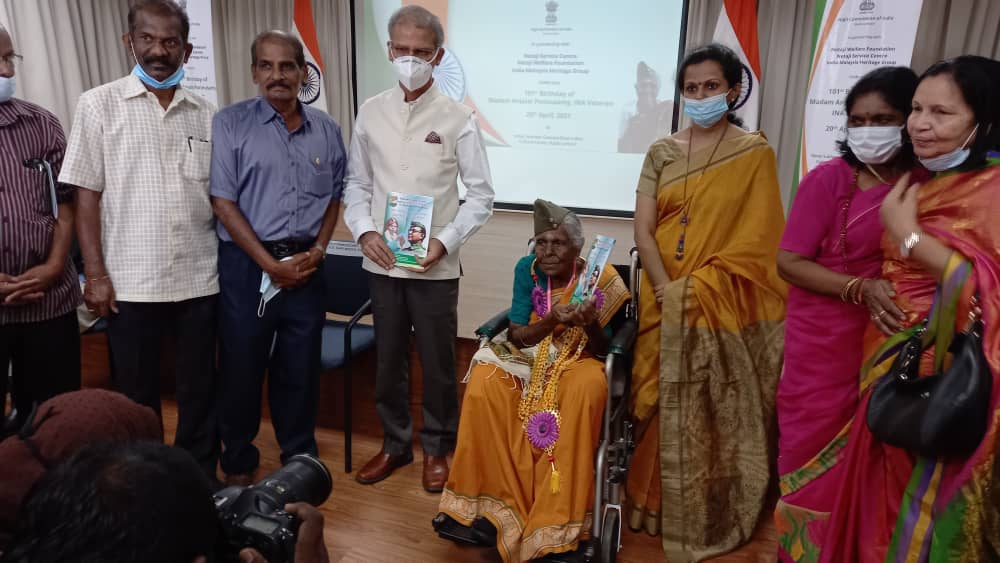
It saw Indian High Commissioner Shri Mridul Kumar present Anjalai with a silver plaque and the title ‘Veera Thaai’ (Valiant Mother) by the Netaji Service Centre.
The youngest of three siblings, Anjalai was 21-years-old when she was first drawn towards the idea of freedom fighting, after spotting several women marching in uniform in 1942, shortly after the Japanese had invaded Malaya.
"Of course, my parents did not agree that I joined them, but I was adamant and insisted on joining. No one was going to change my mind about it.
"I felt strongly that I could make a difference at the time. The British were treating the Indians badly. At that time and age, I didn't fear anything," she said cheerfully.
Having been born and bred in Sentul all her life, her father was an anti-malaria supervisor working for the local health department at the time.
Anjalai only spent a couple of years in school which was the norm and fate of the majority of Indian students during that period.
"Once I learnt that the women were from the Rani of Jhansi Regiment, I decided to join them with two of my other friends," she said.
Subhas Chandra Bose and the Indian National Army
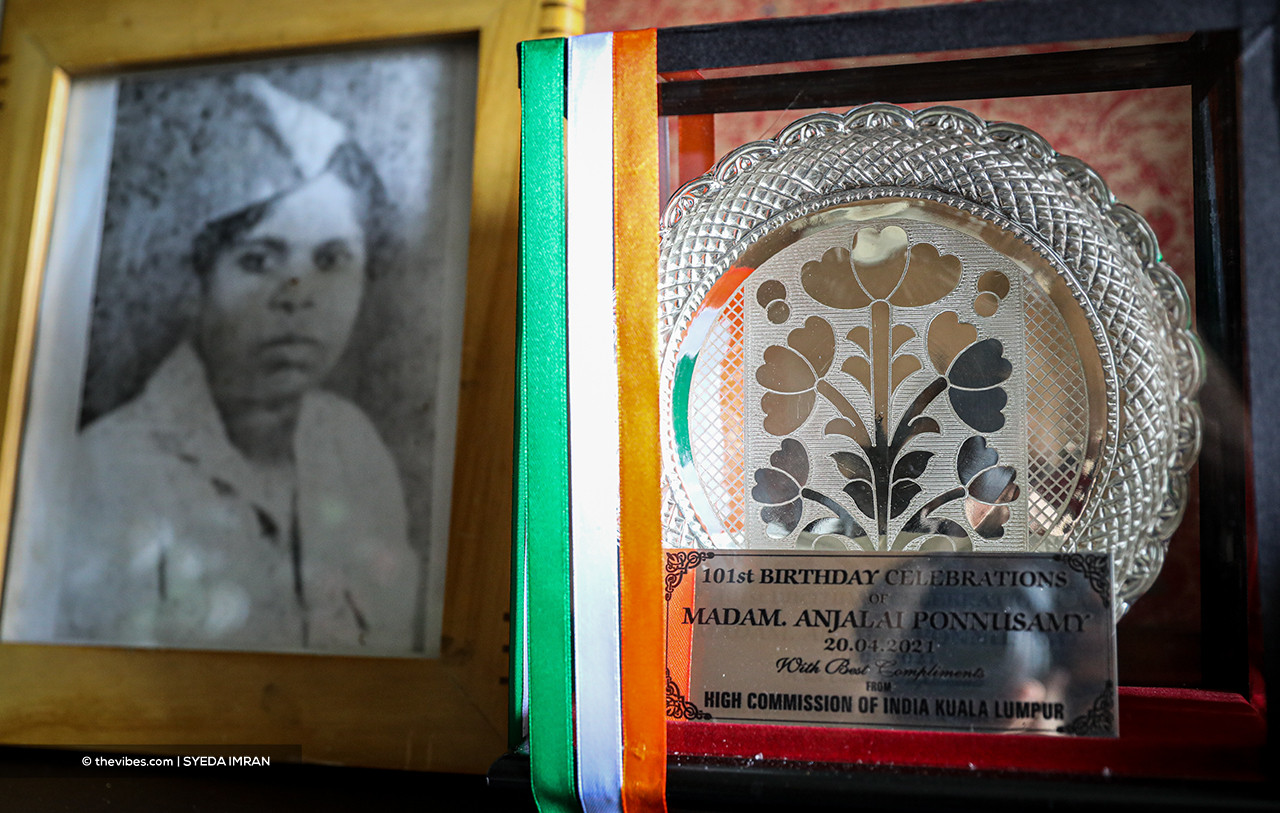
The Rani of Jhansi Regiment, or the Women’s Regiment of the Indian National Army (INA), was founded by Indian freedom fighter Subhas Chandra Bose as an all-female combat team with the aim of overthrowing British rule in India.
Unlike fellow Indian freedom fighter Mahatma Gandhi's pacifist approach for Indian independence, Bose preached for an armed struggle instead.
This led to the formation of the INA and the establishment of the Provisional Government of Free India, better known as the Azad Hind based in Singapore.
In an effort to achieve his goals, Bose aligned himself with the Axis forces, particularly Nazi Germany and the Japanese Empire, and began recruiting many Indian volunteers – including Anjalai in Malaya – in an effort to launch an attack to liberate India via Siam and Burma.
The failure of INA and Japanese forces to defeat the British-led Allied army in the subsequent Battle of Imphal and Battle of Kohima saw Bose retreating following heavy losses.
Bose, who is popularly known as Netaji, is said to have died following a plane crash in Taiwan on August 18, 1945, without being able to see through his mission for India's independence, which was accomplished in 1947.
Singapore INA camp
Following her conscription as a cadet, Anjalai vividly recalls being first sent to Japanese-occupied Singapore for basic military training.
"It was not easy but slowly and surely we adapted. Well, I am proud to say that I was able to handle various firearms such as a Tommy Gun, the Sten gun, pistols, grenades, and various rifles used during the period .
"I can't recall how many of us ladies were there but all of us looked after each other.
“From washing to cooking and cleaning the training camp and quarters.
“Most of the time we were served simple meals such as tapioca and other vegetables.
“On a rare occasion, we were able to feast on mutton.
"Once in a while, we were also allowed to travel to the beach for a stroll.
"To keep our spirits high, we often sang many songs and cheered ourselves up," she said, adding that the training camp had strict rules and a regimented schedule.
Recalling her faint memories from her time in Singapore, Anjalai said her regiment was very eager to battle, especially whenever Bose's presence at the camp was noticed.
"Netaji was such an inspiration and a father figure for us as young girls back then,” she said, referring to Bose as Netaji, an honorific term meaning ‘Respected Leader’ in Hindi, which he is commonly referred to as at present.
“There were absolutely no airs about him. Once during mealtime at the camp he was served an extra banana while everyone else was served with just one banana.
"He immediately refused it, saying if the rest are having only one then he is entitled to the same.
“Not only did he preach equality, but he also practiced it as well," she added.
Despite his allegiance to the Japanese forces, Bose, she said, was always at the regiment camp as he was aware of Japanese soldiers trying to sexually harass members of the regiment.
"We did not trust the Japanese soldiers too much as we are aware of what (atrocities) they are capable of.
“That is where Netaji stepped in and used his command to prevent untoward incidents. To him all of us in the regiment were his daughters," she added.
Burma campaign preparation
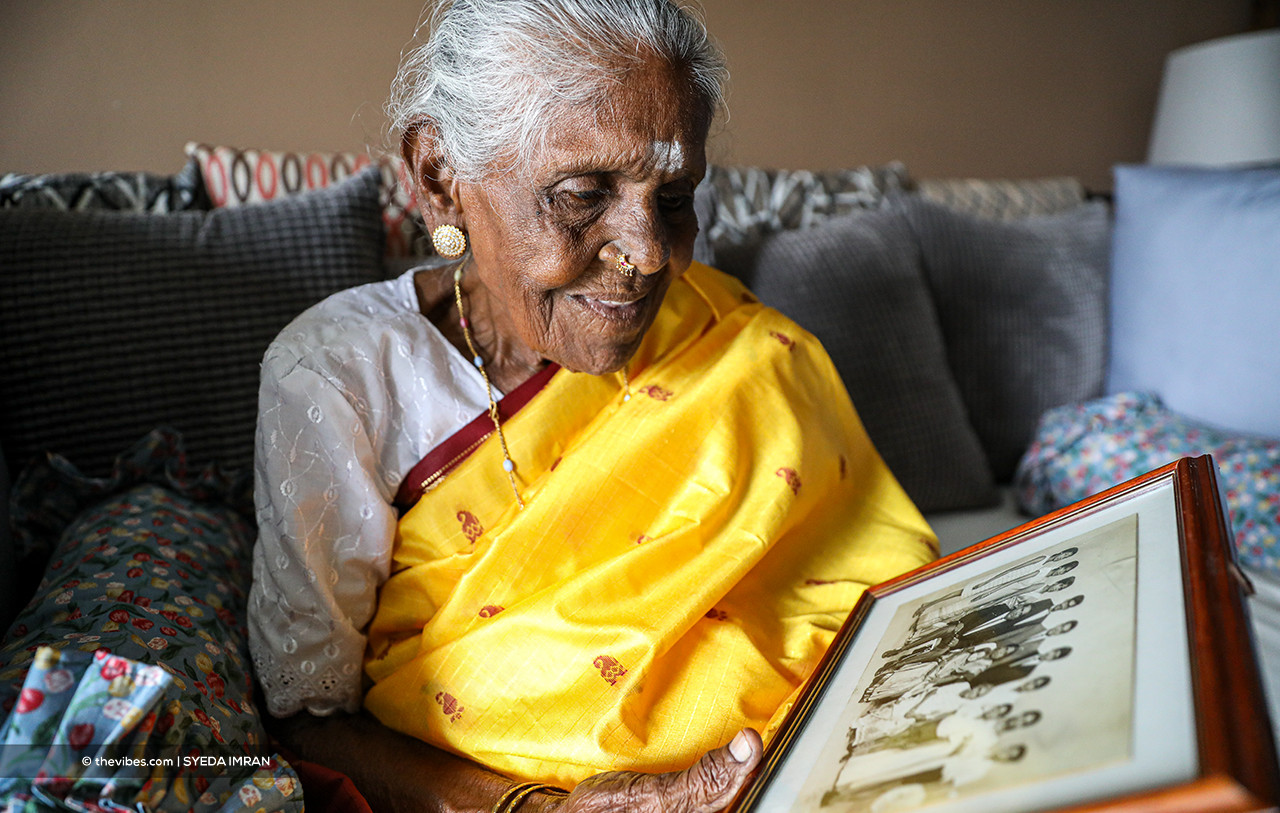
Following two years of training in Singapore, the Rani of Jhansi Regiment was keen to battle. Anjalai said that Bose, upon seeing them during a passing out parade with their rifles, decided to deploy them to Burma for further training, prior to launching an assault on the Indian border with the Japanese forces.
"I can't recall exactly where in Burma we were based.
“But that's where I picked up conversational Hindi which we spoke throughout the camp.
“We often had to conduct battle drills and sharpen our skills.
“Our food was rationed. Still, we couldn't wait to get into battle," she said.
The Japanese commanders in Burma, Anjalai recalled, often doubted the female regiment's capabilities in real battle and questioned Bose on his decision to recruit women fighters.
"The Japanese asked him, ‘Since you brought these women here. What exactly can they do?’
"In response Bose simply said: 'Just ask them what they can do. They will speak for themselves’,” she said, recalling all the details with a smile.
A challenge, she said, was issued by the Japanese commander to the regiment, requiring them to test their mettle against several Japanese soldiers.
"We were asked to charge and ambush the enemy from a long distance across a hilly track without being detected. In full uniform and heavy military gear, all of us traversed through muddy tracks and managed to surprise the Japanese soldiers," she said, adding that the Japanese commander was impressed with the efficiency of her regiment.
Following their triumph, Anjalai said the regiment was rewarded with mutton, milk and yogurt as part of their rations, which was distributed equally among each member of the regiment.
The battle that never happened, the tragic return trip
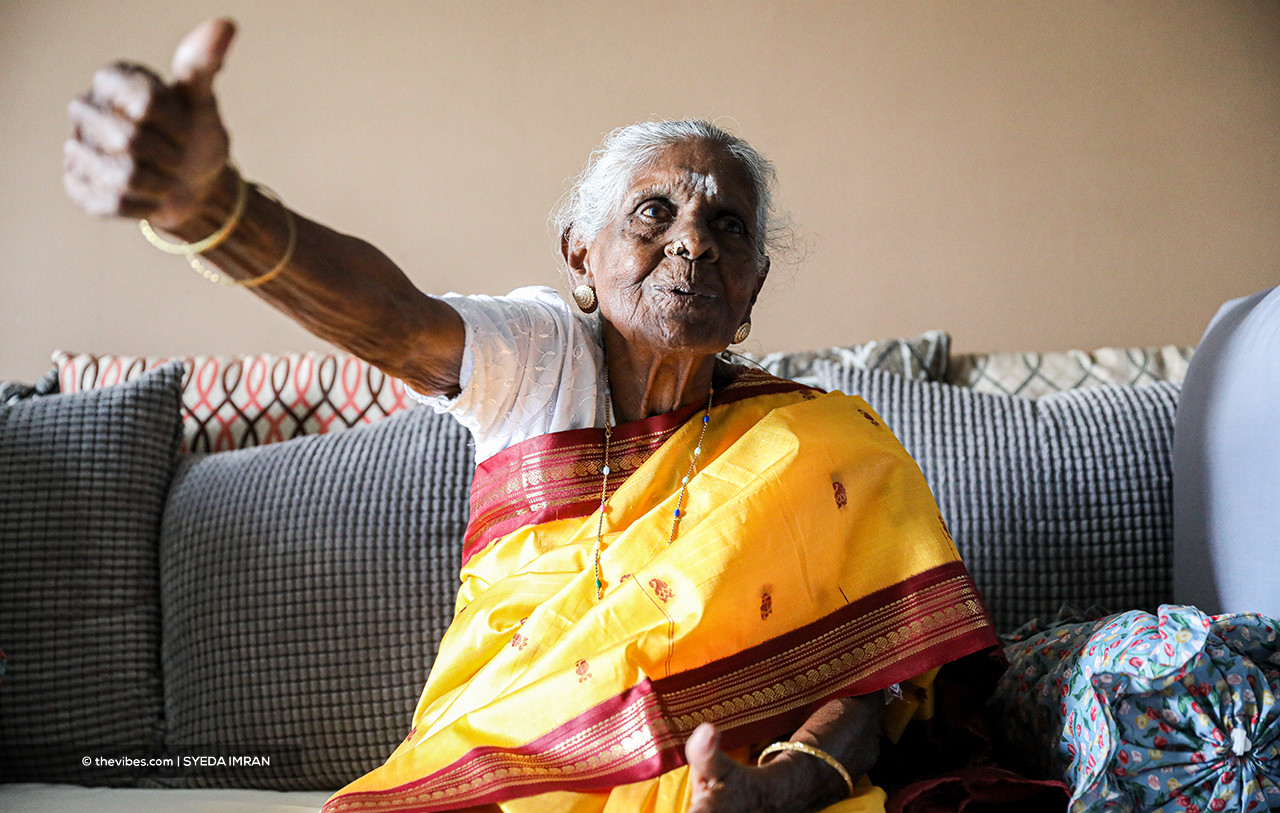
Despite being ready for battle against the British-led Allied forces, the Rani of Jhansi Regiment unfortunately never saw active combat following the INA and the Japanese Forces’ disastrous campaign to capture Imphal and Kohima in India.
"Netaji ordered us to retreat, and we reluctantly did.
“We took the train along our way back and we walked when possible.
“We swam across rivers when necessary," she said.
Two of her comrades, Anjalai recalled, named Stella and Josephine, tragically died after they were shot dead by British-backed Burmese guerrillas when they were in the train.
"It was shocking for all of us. Firstly, Stella had stepped on the train coach to go looking for her adopted child that had wandered out of the train.
“She suffered a gunshot to her chest and shoulder.
"We quickly recovered her and placed her in a hut to try and get the medics to tend to her wounds.
“Realising that remaining in the train was dangerous as it was under bombardment, we were ordered to recover our weapons and belongings and disembark from the train.
"As we were removing our stuff, we noticed that Josephine was sleeping with her head against the train window with her braided hair hanging down.
“But she was already dead because she was shot in the head," she said.
Anjalai, who described Josephine as a beautiful woman and a mother of two, said the latter had to be buried immediately.
"We managed to find a saree to drape on her remains.
“We dug a reasonable hole in the ground and did the honours.
“Soon enough, Stella also perished from her wounds.
“We did the same thing. I wish I could recall the location, but I can't," she added.
While Anjalai and her remaining comrades returned home safely, the eventual Japanese defeat saw the INA and the Rani of Jhansi Regiment disbanded.
Life afterwards
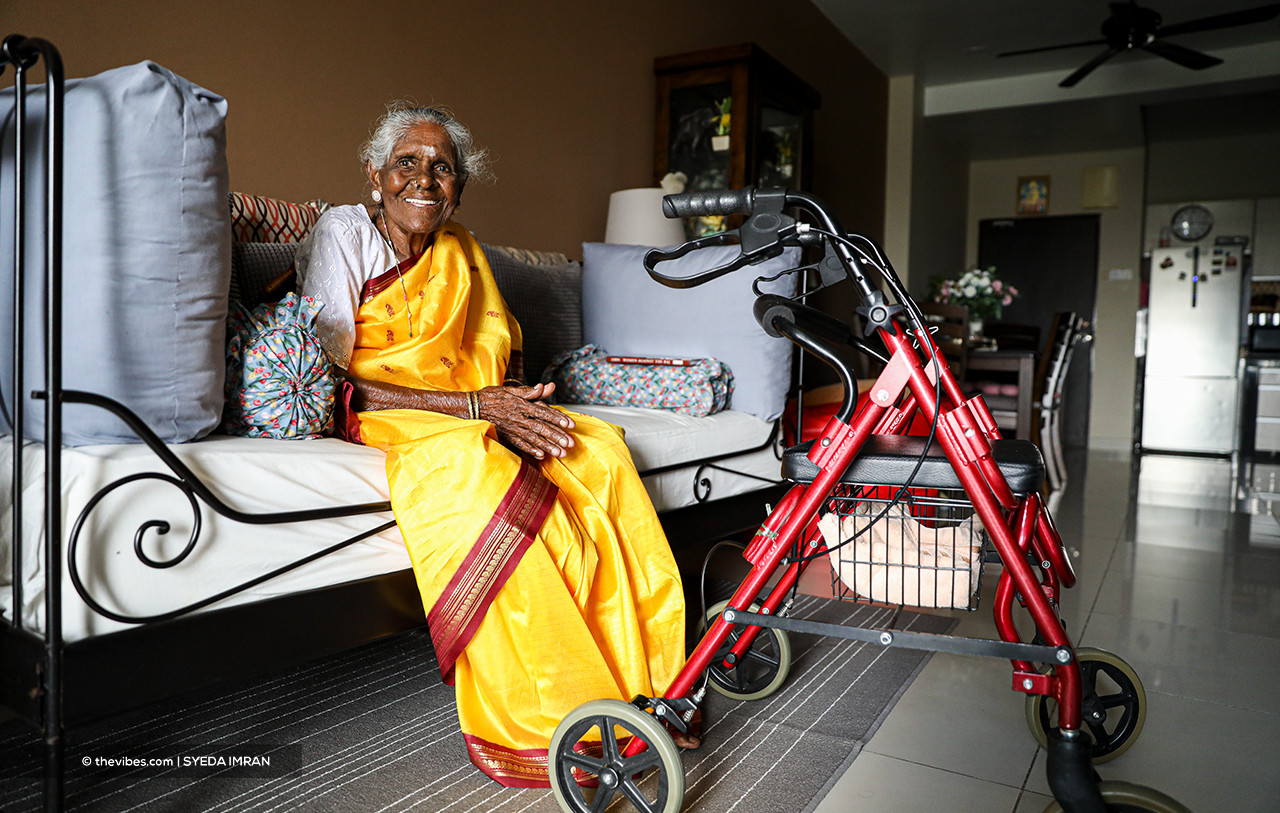
In fear of British repercussions that never came, Anjalai returned the weapons and disposed of her military suit, but saved her uniform cap which she proudly wears and poses with.
"Netaji's death shocked us. It was difficult to accept. (We thought) It wasn't true but as time passed, we learnt to accept it," she said.
Following the end of World War 2, Anjalai then married her husband, an operator of the Straits Times' printing press, raised four children and continues to live her twilight years with her daughter in a simple apartment unit in Sentul.
Enjoying her Indian serial drama shows daily, Anjalai remains alert and healthy despite relying on a walker and a wheelchair to move about, following an automobile accident in the 90s.
"My mother lived until she was 105-years-old.
“I have maintained a consistent diet of fresh milk and particular vegetables, so it keeps me going," she added.
Despite fighting for India's independence as a young lass, the Malaysian centenarian's story is certainly one for the history books. – The Vibes, May 14, 2021