_(1).JPG)
WHAT do teachers do differently in urban and rural areas with their students? Indeed, there is a “common thread” of engagement and enthusiasm in the approach taken by the best of teachers.
Even if the teachers hailed from different generations, their originality and love of teaching was a common factor that differentiated them from the norm. In the process, they successfully won the hearts and minds of their students.
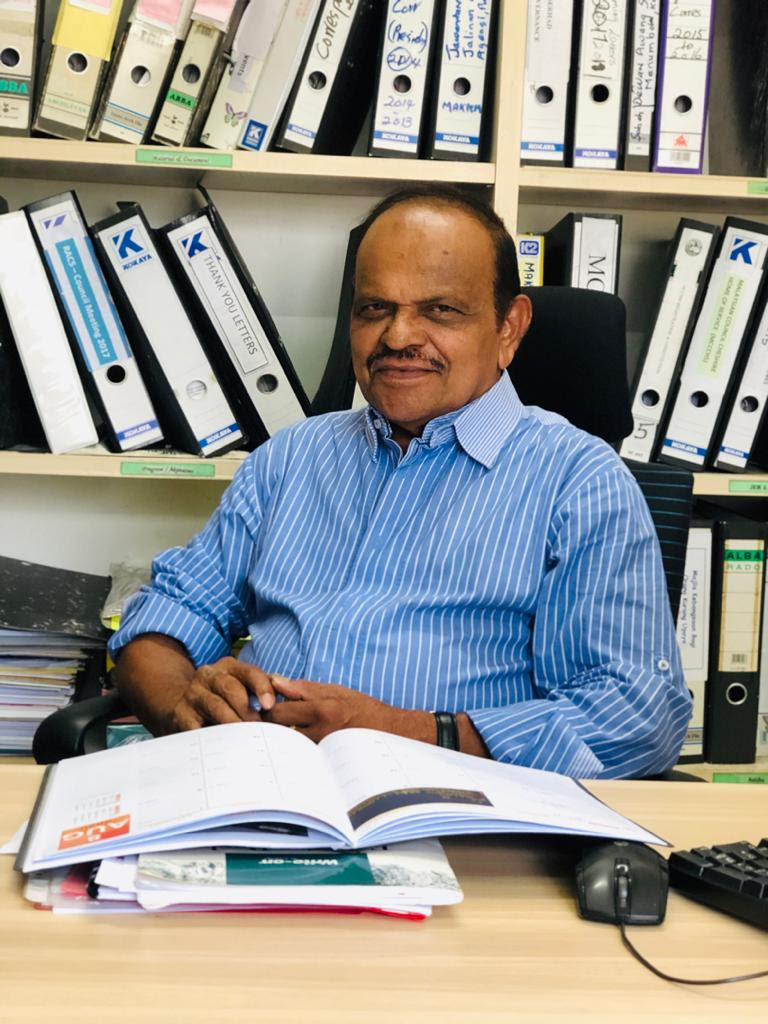
It sounds like a cliché but when Jerome Fernandez put Kelantan on the map for cricket, many were in shock. Kelantan and cricket had nothing in common, truth be told, but Fernandez, who is now a retired headmaster, did exactly that.
With 32 years of teaching experience, Fernandez was the only non-Malay headmaster in the state of Kelantan, where he served from 1968-2001.
“Not all students are academically inclined. I instructed my teachers to bring me all the students who were not doing well academically and I then introduced them to cricket. Cricket was an unheard-of sport in Kelantan in those days.
"And I actually had to make my own bat as none was sold in the sports shops in Kelantan,” said Fernandez, who lives with his son in KL.
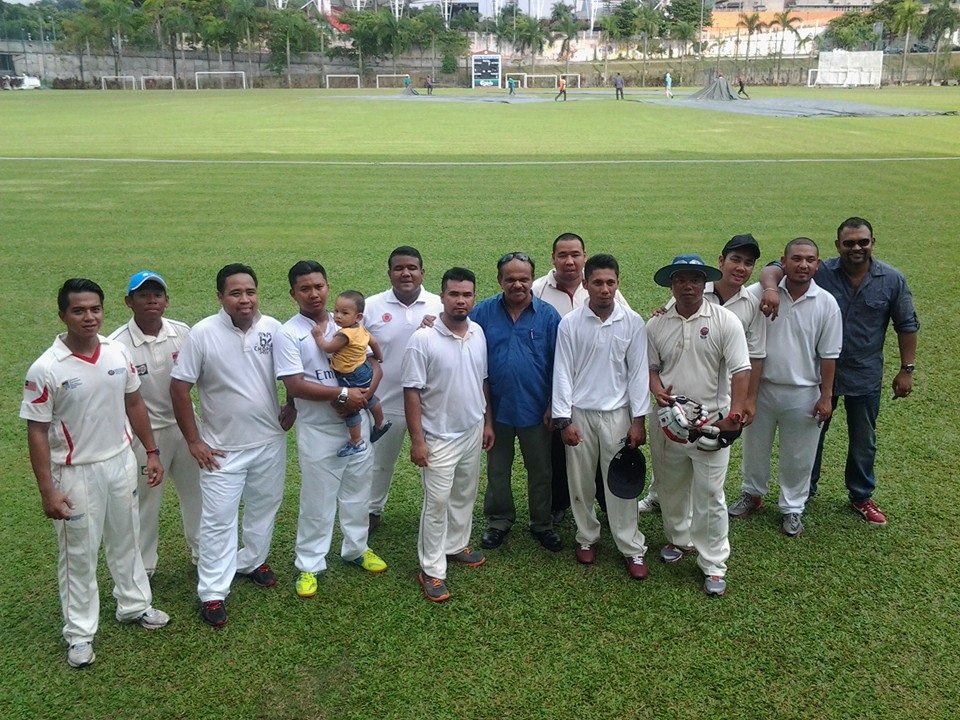
In 1997, Fernandez explained how he spent many hours coaching and teaching the boys from his school the finer points of cricket. A team was sent to take part in the Majilis Sukan Sekolah Sekolah Malaysia (MSSM) and all 11 players came from Jerome’s school in Kelantan. That success kickstarted the sport of cricket and pushed it into the limelight in the schools in Kelantan.
After many years of success at the national and state level, Fernandez is proud that his initiatives have paid off. Today, many of his former cricket ‘proteges’ hold positions in the national cricket team.
One name stands out, Mohd Shukri Abd Rahim, who trains the Malaysian National team for cricket. Another is a state coach for cricket in the state of Johor and two more made it to the Bukit Jalil Sports School.
In recognition of his contribution to cricket, Fernandez was requested to lead the Malaysian Under-17 team for cricket to Bombay in 2000. To this day he remains an iconic teacher who inspired his students to not only excel in cricket but to reach great heights of success in so doing.
From the younger generation is teacher extraordinaire Samuel Isaiah. He put Malaysia on the map when he was nominated as one of the top ten finalists for the Global Teacher Prize 2020, among 12,000 teachers worldwide. And though he did not win, what intrigued Malaysians was how Samuel gained his accolades from teaching in a rural school.
Samuel’s school, SK Runchang, Pekan was in an Orang Asli settlement and he had to travel 200km daily to and from school, located deep in the rainforest.
He is completing his master’s in education policy, online, from New York State University, on a Fulbright scholarship. One senses how he misses his life of teaching with the Orang Asli children and how he enjoyed every moment of it.
“For most of my Orang Asli students, education was not a construct they understood. It was unmeaningful and they did not believe in exams. I had to make it meaningful for them and so I fell back to project-based learning," said Samuel.
He managed to raise the rate of passing from 30% to 85% during the course of his teaching.
So how did Samuel do it?
“I made the lessons and teaching more meaningful for them. We had lessons that were conducive to learning, playing the ukulele, 'entertaining' while teaching them how to sing in English. We also write emails to pen-pals and thus communicated in English.”
What was very important to Samuel was informing their parents of what he was doing.
.jpg)
In 2016, Samuel went one step further when he decided that it was time for his students to enter the 21st century. So he raised money through crowd-funding to equip his classroom with enough tablets and smartphones. In the process, he transformed the whole teaching process.
“Education is an active collaboration between schools, parents and the community. Parents should be invited into the classroom to see what is being done. The biggest challenge today is that education is for the privileged – [they have] good internet connectivity and good computers. This finally leads to inequality and an inequity gap between rich and poor students.”
Having seen this is what inspired Samuel to take up a Masters in Education Policy and examine what is being done globally in different countries to right the inequities.
Another young teacher, Mohd Nazmi Rosli, otherwise known as 'Little Chuckee' works in the remote area of Lawas in Sarawak. In so doing he has made a name for himself, creating teaching aids from recycled materials. He is well-known on YouTube, where he has created content for teaching.
“My first posting was in 2017, at SK Long Sukang in remote Lawas, where I served from 2017 to 2020. It is located four to five hours from the nearest town – there was no Internet, no electricity and everything was a challenge. I was tasked to teach 111 students from 13 villages in and around Lawas,” said Nazmi.
“Many of my rural students had spent their whole lives in the jungle and remote areas, they had not seen banks or ATMs or even knew what a swimming pool was."
So Nazmi decided to improvise and being a fan of X-Men, he drew upon the idea of a "Danger Room”. This was where the X-Men were trained to deal with enemies without anyone being hurt. Nazmi followed it to a tee and did it by way of a hologram.
“Many of my rural students had spent their whole lives in the jungle and remote areas, they had not seen banks or ATMs or even knew what a swimming pool was. In Year 3, I had to introduce the students to the workings of a laundry and how clothes were washed in a laundry. And so I re-created, using recycled materials, a laundry for my students,” said Nazmi.
He also taught them the moral and ethical values of using a laundry room, ie, how to queue up and how to return lost clothes.
“Students from rural schools face discrimination not only because they are from rural schools but also the community. Parents feel their children will one day inherit their land and padi fields. And so there is no need to attend school. What is worst, is discrimination from the teacher, who may feel how far can a rural student go,” said Nazmi.
Nazmi’s joy is in watching his students transform by recreating scenarios of banks, swimming pools, and dentist’s rooms, using recycled materials.
What then are the lessons that one can take away from all these great teachers, who in one way or another inspired and brought out the best in their students.
Well, William Arthur Ward sums it up: “The mediocre teacher tells, the good teacher explains, the superior teacher demonstrates, the great teacher inspires.” – The Vibes, May 15, 2021