.jpg)
A DISH that originated in the 18th century, when Indian Muslims from Southern India migrated to Penang, nasi kandar has gone from street food to multi-million dollar business in Malaysia.
Getting its name from the way it was traditionally carried on the shoulders using a pole, the word ‘nasi’ translates to rice from Malay, while ‘kandha’ is the Urdu word that means shoulder.
In a 2013 survey done by Universiti Sains Malaysia to compare eating patterns among patrons in the Klang Valley and Penang, researchers gathered that “eating nasi kandar is a means of solidifying social ties”.
But, going beyond that, I have noticed that nasi kandar does not only solidify ties with loved ones but also between us and the commonly ostracised.
Throughout my time working with refugees, I have noticed that a majority would opt to buy a serving of nasi kandar for lunch.
And even now among colleagues, nasi kandar seems to be one of the go-to's for a cheap, hearty lunch.
Despite being of different nationalities, backgrounds, cultures and even legal statuses, we seem to gravitate towards a similar cuisine.

But, is nasi kandar a go-to dish by choice? Or are there other reasons?
When asked, a source, who is a refugee, shared that he chose nasi kandar because of the cost and quantity.
“I choose it because the food isn’t too costly and the quantity is a lot,” the source shared.
Another source, who has been trying to gain weight, added, “The [amount of] rice helps me get fatter.”
Although nasi kandar has taken on a different clientele today, historically, this dish was sold to cater to blue-collar workers. This indicates the dish would be rich in protein and carbohydrate.
So, at a cheap price, one can get a filling meal, but this is not the sole reason one would opt for nasi kandar for a meal.
Both sources did not fail to elaborate on the taste of the dish. It was the first thing they mentioned before talking about the effective cost.
“'Cause it’s delicious!” said one and, “The food is fresh and delicious,” said the other.
The cost-to-quantity ratio may be among one of the reasons why refugees like the two sources choose nasi kandar. But is it as such with our local Malaysians?
In the survey mentioned above, results suggested that “respondents [in both states] are not concerned about cost since fast foods and street foods at night markets are within an affordable range.”
After reaching out to a couple of colleagues and locals regarding their preference towards nasi kandar, these were their responses:
Charlotte said, “The flavour of mixed curries excites the taste buds. And a must-have; FRIED CHICKEN!”
Ramin shared: “I love when curry and nasi kandar has up to three curries all mixed.”
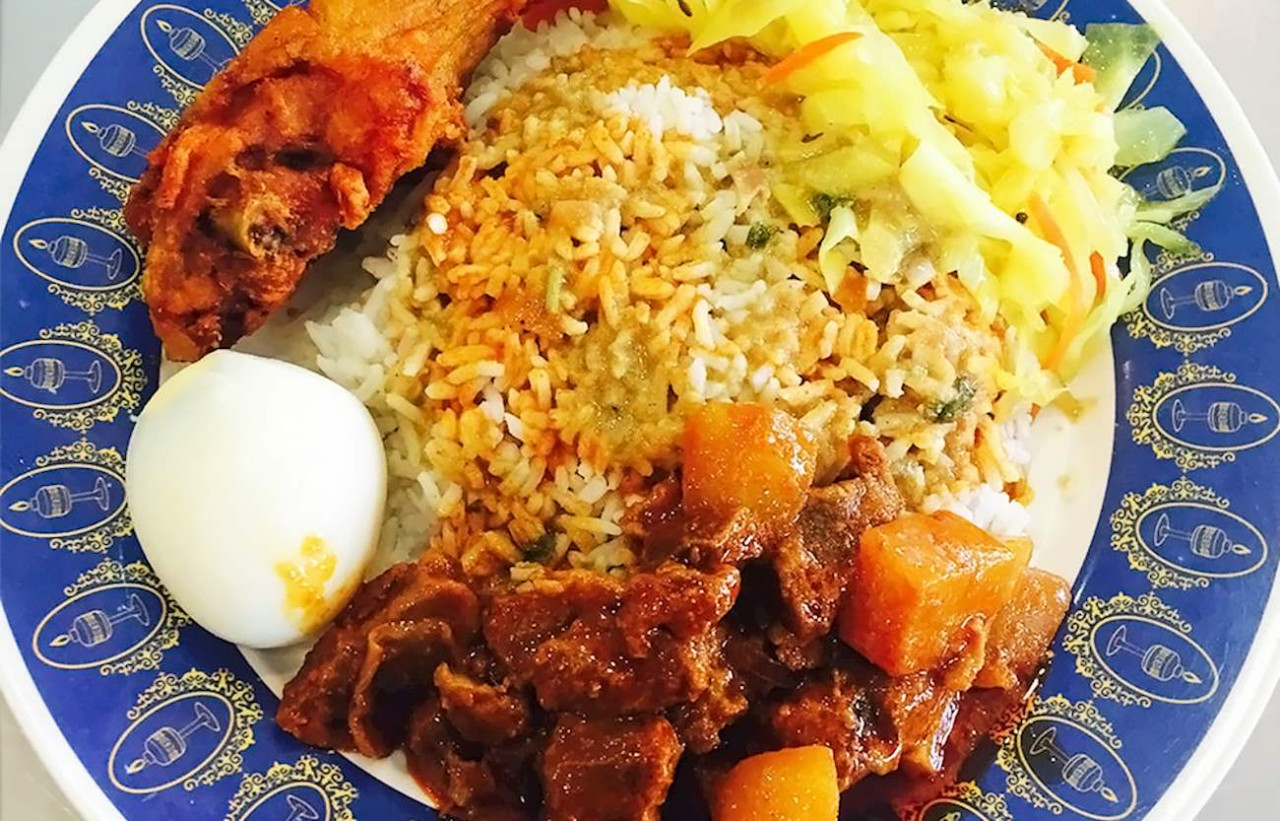
JY also shares the same sentiments when he said, “Sebab nasi sedap dengan kuah” (Because rice is delicious with gravy)
The consensus is that curry, being a universal dish, can appeal to the mass audience, elevating the dish’s flavour.
As Arjun would describe it: “A perfect plethora of flavours.”
Along that line, a migrant leader shared his observation on this topic.
“Refugees like Rohingyans, Pakistanis prefer spicy food. If the food is not spicy, they won’t typically eat it. However, they don't have many options when it comes to being in Malaysia.
“From what I have noticed, Malaysians don’t eat much spicy food and even their curry is sweet. So, if the food is more spicy, it’s more yummy for some refugees.”
With the versatility of the many mixtures of curry that nasi kandar provides, refugees have the liberty to mix and match the curries to fit their palate.
A cheap alternative to a meal may not be a reason for us locals to go for a plate of nasi kandar, but its flavour is undeniably a crowd favourite across the board.
Subtly, we share more similarities with our refugee community than we know.
Something as simple as a plate of nasi kandar transcends beyond social constructs, making us all human in want of something delectable to fill our stomachs.
Over the years, the rift between refugees and Malaysians have not shown signs of consolidating despite the many efforts by NGOs.
We may have shown compassion throughout the movement control orders, but efforts were limited and with recent news, hate speech and threats against the Rohingya community still remain unresolved.
And by understanding that we share similarities that only make us human, we look forward to a day where equality stands for all, regardless of borders. – The Vibes, May 21, 2021




.jpeg)