.jpg)

PROFESSOR Indraneil Dass, Neil for short, wears a very unique watch, one that is as extraordinary as his profession. Neil is a herpetologist – a scientist who studies amphibians and reptiles – and he is an internationally-renowned expert on all things toads and frogs, newts and salamanders as well as snakes, terrapins, tortoises and every cold-blooded tetrapod that lives on Earth.
Neil’s watch is a Casio of the Frogman series, a G-shock resistant chronograph specially designed to resist mechanical stress, shock and vibration. G-Shock is the abbreviation for Gravitational Shock and therefore his watch is appropriate for sports, military and outdoors-oriented activities such as scientific expeditions in the wilds, which Neil often engages in.
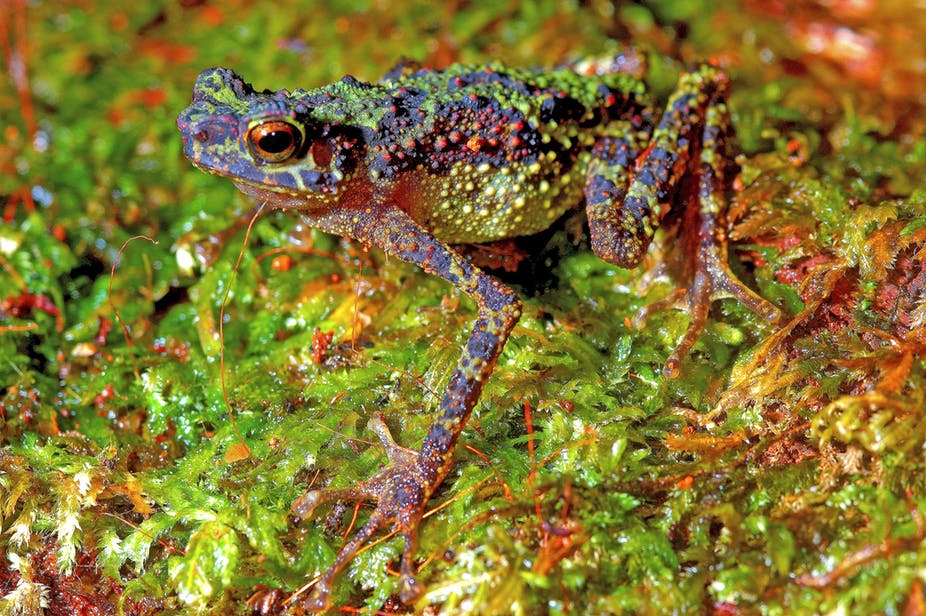
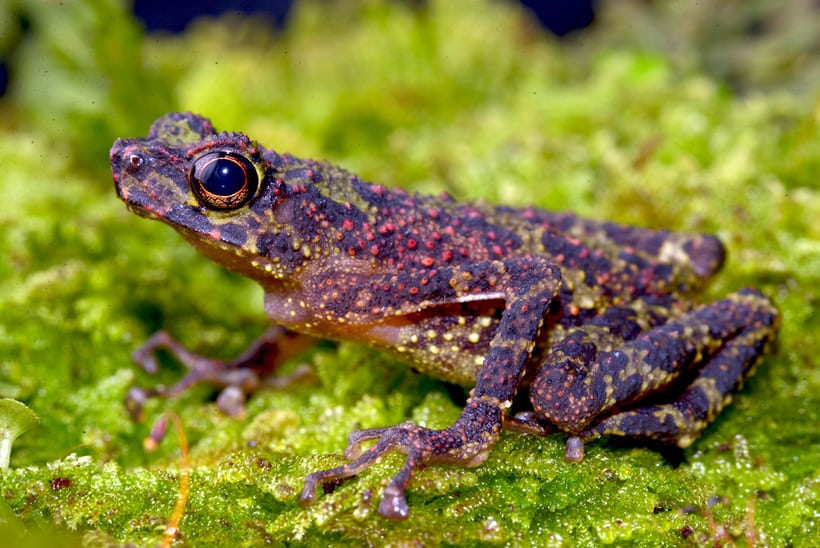
His watch indomitably carries the flamboyant colours of the lost and found East Malaysian toad called the Borneo Rainbow Toad (Ansonia latidisca), a species also known by its common name – the Sambas Stream Toad – thought to have been extinct since 1924.
It was in 1966 when an American researcher, the late Dato Robert Inger discovered two museum specimens of the Borneo Rainbow Toad, one from the 1800s and the other from 1924, collected and curated by old British researchers. Inger himself had never seen the species alive.
The search for the tropical toad was inspired by a 2010 campaign to hunt for the world’s missing amphibians by the US-based Conservation International (CI).
Subsequently, the Borneo Rainbow Toad became nominated as one of 10 species which were lost.
A scientist, a toad and a timepiece
There is an anecdotal story as to why Neil wears this rare limited edition watch featured in Hodinkee – a New York City-based watch website recognised as an influential editorial and e-commerce site for new, limited edition and vintage watches – and how he came to be the owner of it.
In 2011, Neil, a professor with the Institute of Biodiversity Conservation Department of Sarawak’s University of Malaysia, together with his grad students, set out on a scientific expedition to look for the long-lost species.
After an arduous time-consuming search, Neil’s graduate student Pui Yong Min finally discovered the Borneo Rainbow Toad in the tall trees of Gunung Penrissen in Sarawak.
Neil tells The Vibes: “We started looking for it in our scientifically strategised location away from where it was originally known to be, considering the effects of climate change and its probable migration to survive.
“It seemed that our scientific consensus on where the species could have likely migrated turned out to be a ‘perfect O’ as we found the species in an elevation 200 meters higher than the earlier recorded location for the species.”
Neil described the discovery as electrifying: “We found this unusual species in its flamboyant colours, red, green, yellow, bestowed with all the colours of the rainbow, thus its name, the Borneo Rainbow Toad.”

Says Neil: “When we later confirmed the species to be the reclusive Borneo Rainbow Toad I showed it to Robert Inger.
“I said, ‘Hey Bob, do you recognise this’ and he replied ‘No never seen it.’
“He was thrilled when I told him this was the species he had described before.”
In March this year, a writer from the Hodinkee website, writer Danny Milton, caught up with Neil to find out how he grades the special timepiece.
Nod to amphibian conservation
Neil told the interviewer that the creation of the special edition is a good nod to amphibian conservation and to the fact that cool scientific discoveries can make the general public – that is people outside science and conservation – to show interest.
“I think it is a fantastic idea to promote an endangered species in this way. I used to wear a Swiss Army watch, but now I am going to wear this. Primarily our watches need to be quiet because when you are recording frog calls, there should be no other sound as even the faint ticking of a watch would be a distraction and could be recorded.”
Neil is happy that the face of the watch looks so close to the real thing in terms of colours and if thrown on the forest floor, it could easily pass as one of the actual species.
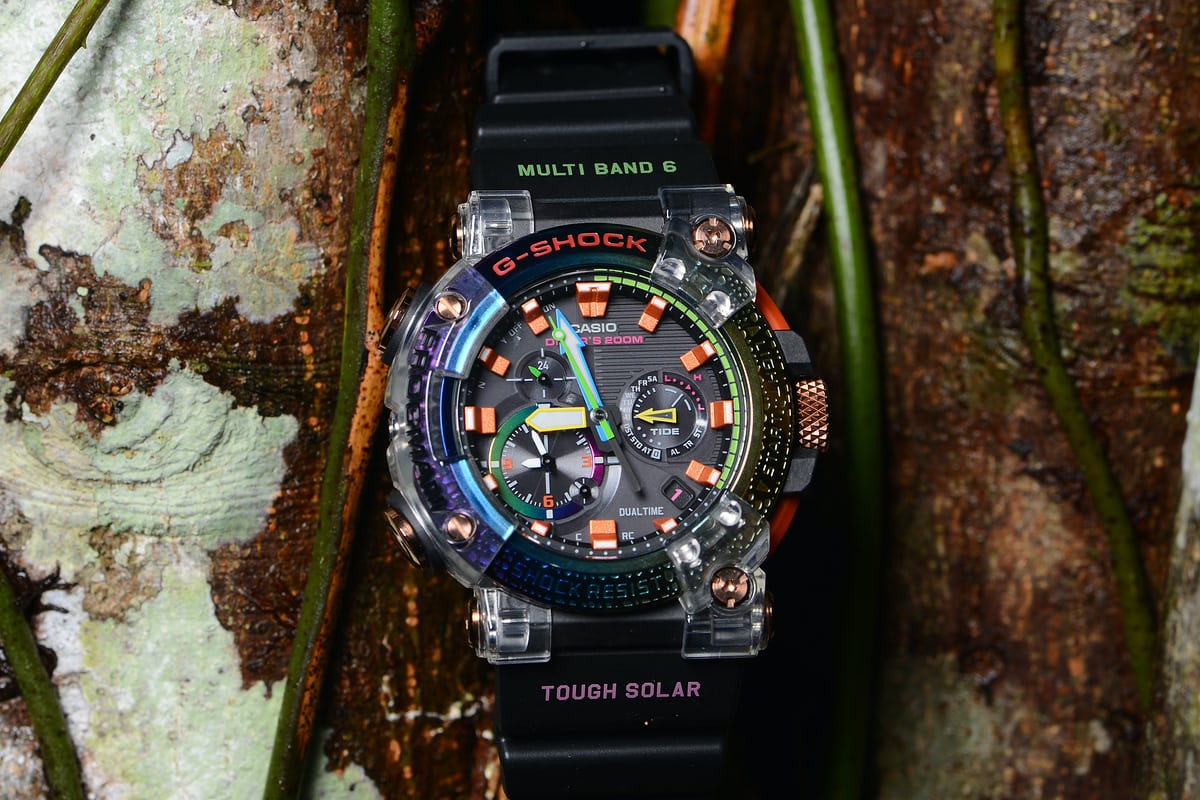
However, he said the strap of the watch could be made to look more like the toad’s skin texture. Neil also noted that the alarm could be made to sound like the call of the toad itself, which is quite melodious.
Neil also said he is getting used to the watch, adding: “We work mostly at night recording calls and exploring for frogs and other reptiles so the luminous dial is a big help to know the time at a glance, which we need to record when we encounter animals.”
Recalling the day the species was found, Neil says the discovery was made at night.
According to him, several earlier expeditions had failed. He said after securing the present habitat of the species the immediate concern is to protect the toads from poachers who may want to hunt them down to sell as exotic animals in the lucrative pet trade.
He said the current location of toads is a secret, adding there is probably a larger colony of the toads in the area and people may perceive them as a “prize catch” – especially because their flamboyant colours are attractive and they can be targeted by collectors.
However, Neil cautioned that the toads are poisonous and need careful handling.
“Discoveries like this are inspiring as it is critically important to conserve these amphibians to maintain a healthy ecosystem. It will also keep our research team motivated to continue the mission to look for lost animal species.
“Scientific expeditions are important as nature still holds precious secrets that we are still uncovering,” said Neil, emphasising that targeted protection and conservation of species is critically important.
According to Neil, amphibians are indicators of environmental health with direct implications on human health.
CI’s global search “Global Search for Lost Amphibians” covered five continents and 21 countries, where 100 amphibians that had not been seen for decades were listed in the search list.
The official search so far has only netted four of the lost hundred – a clear indication that many of the world’s amphibians are already lost and may be extinct. – The Vibes, June 9, 2021
***
In 2017 Sarawak Yang di-Pertua Negeri Tun Abang Muhammad Salahuddin Abang Barieng conferred Robert Inger (1920-2019) the honorary Panglima Setia Bintang Sarawak (PSBS), which carries the title Datuk, in recognition of his 50 years of fieldwork in Borneo, describing, cataloguing, and publishing on the taxonomy and ecology of herpetofauna in Sarawak.