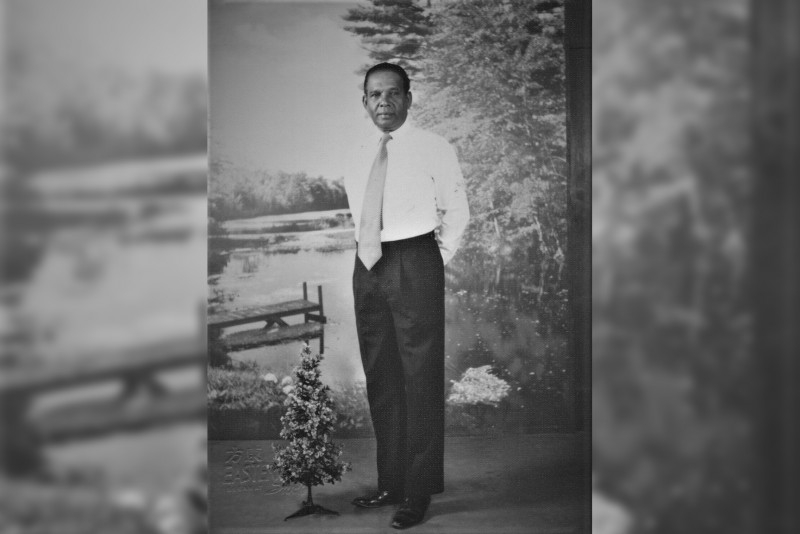
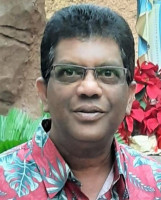
THE National Family Planning Board is not likely to reward a man like my father who had 18 children with a special accolade.
But the award given to him was not for helping to increase the population of the country.
Rather, it was for raising his children so well that not one of them was lost to the tide of social waywardness. This was especially so in the sixties when nonconformist hippie culture and drug-taking was a “happening lifestyle” among the young.
Moreover, the man pulled the load alone having lost his spouse early. This was another reason mentioned by the National Family Planning Board in its citation for giving Joe Sr the special award in 1998 before his passing on December 8, 1999.
My father was born in Kapar, Selangor in 1912 – 26 days before the Titanic sank that year. Long before anyone even thought of making a movie of the previous century’s greatest maritime disaster, the entire story of the Titanic was told to me by my storyteller father in 1963.
I sat among my siblings as a five-year-old boy excitedly listening as Joe Sr unfolded the sad story of the ship that went down in the dreadful icy waters of the Atlantic and how the ship’s band repeatedly played 'Nearer My God, Nearer To Thee' till the ship sank, bow first.
The story ended with Joe Sr humming the haunting dirge of 'Nearer My God, Nearer To Thee'. No. The story has not ended yet. Surely, there must be a moral lesson behind every story he told!
I detected a change in the tone of his voice. The storyteller father has now become an admonishing prophet.
“You see, it pays to be prepared. We can never tell when death will come. The people on the ship did not know either. Death comes like a thief in the night when you least expect it. Be prepared to meet your Creator any time of the day. Now don’t forget to say your prayers before you sleep tonight.” Story ends.
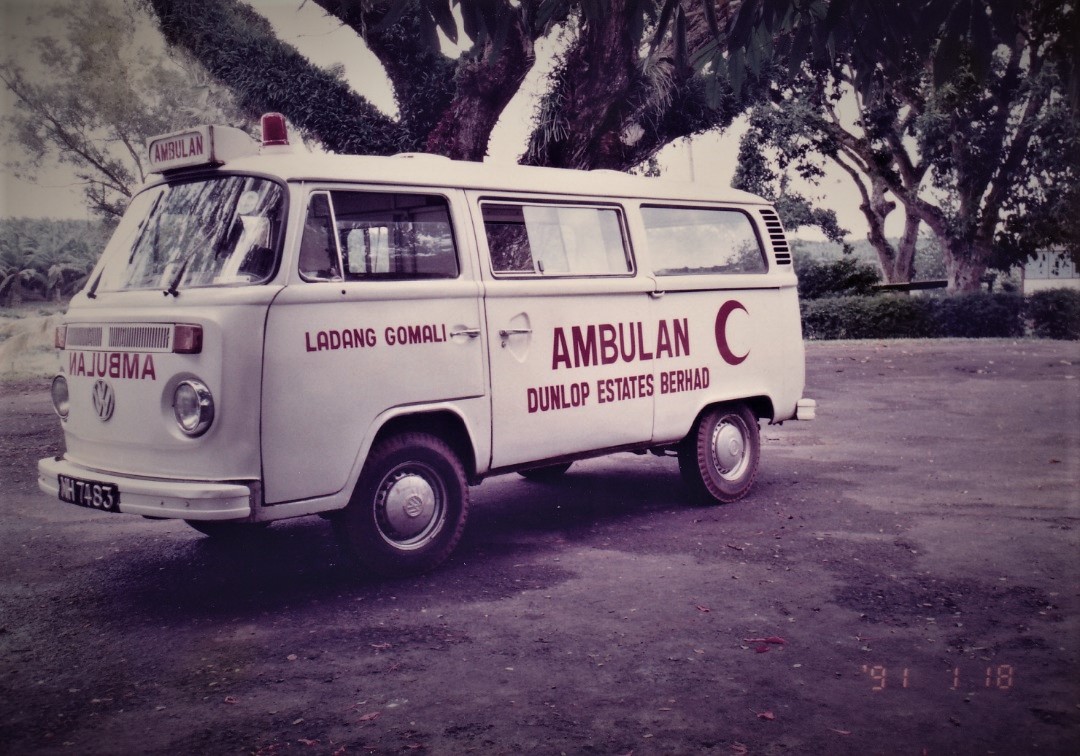
Storytelling was a typical preliminary before lights off in the Masilamany household. The family lived in a palatial bungalow in a British-owned plantation, Gomali Estate, near Segamat in Johor, where Joe Sr held court as the senior hospital assistant in the estate hospital.
There were many cosy nights and stories like this with Joe Sr an “unforgettable character” in the centre of all things. He also told us stories of his escapades in Kanchanaburi during World War II, having been a “Death Railway” survivor.
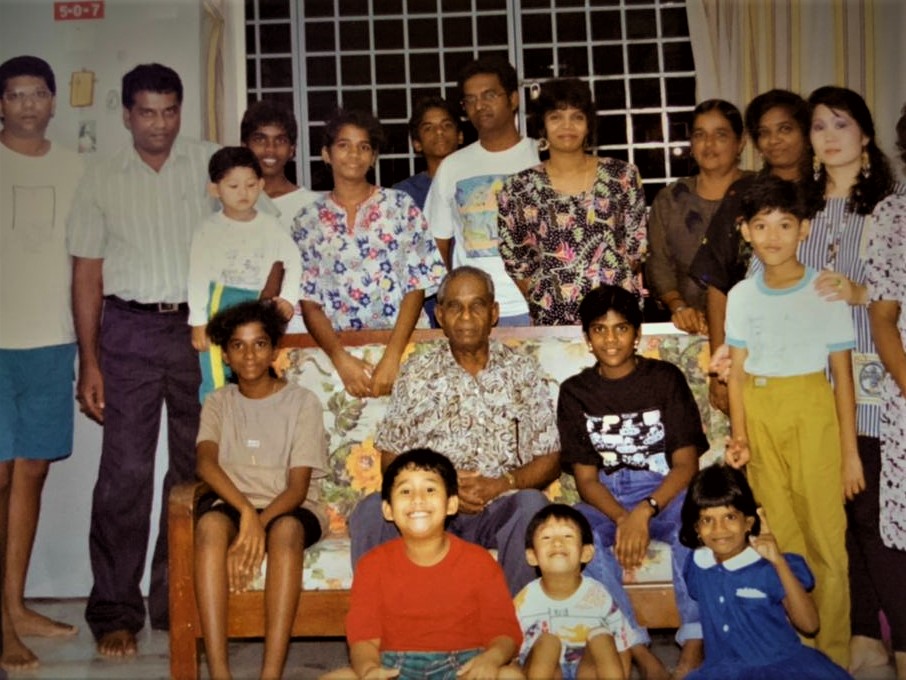
Joe Sr – the family man
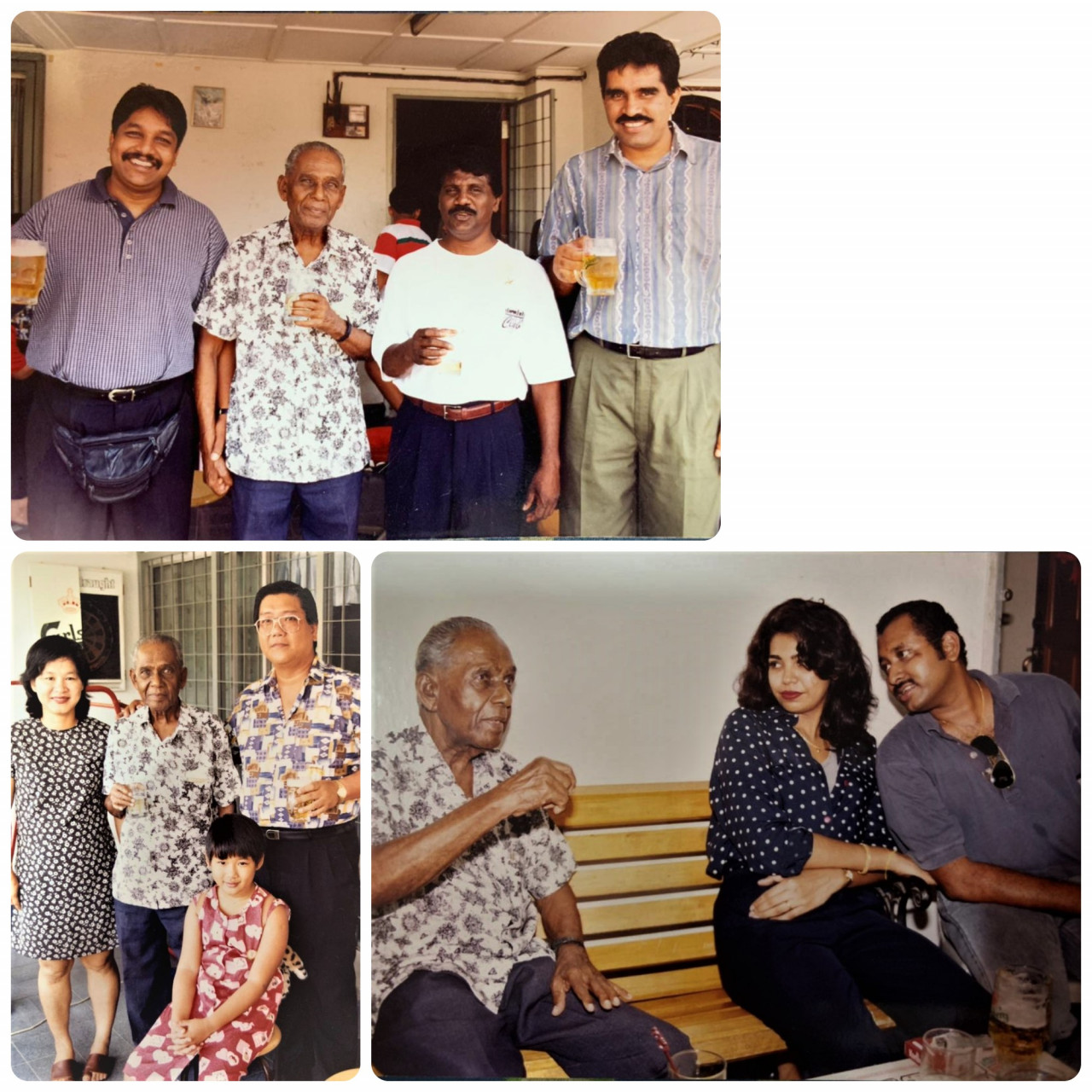
Through the years, my family witnessed Father wearing many hats. He was the warm family man, the hardworking provider and a widower at a very early stage in his life.
At the time of Mother’s passing, the Masilamany household was a kinderland of kids – ranging in age from a newborn baby to preschoolers as well as primary and secondary school children.
The last eight children differed in age by just a year each with a pair of twins thrown in for good measure.
When someone asked him why he desired to have so many children, he replied: “No two blades of grass are the same,” and went about caring for his family without batting an eyelid.
If there had been pain on account of the void caused by my mother’s passing, my father did not show it. Joe Sr was a man blessed with the grace of fortitude and courage – two qualities that he imparted to his children.
He was a good provider. I remember him, too, as a man who worked very hard and performed his work with God-fearing efficiency. Joe Sr held in high esteem the fundamental values that contributed to a “culture of life” in building the family institution.
His methods were simple. The family must sit together at meals. The family must pray together. I remember the hour-long nightly Rosary recital at home which begins at 7pm. At this time, the front door is locked – no inbound nor outbound traffic. Too bad for any visitor who arrives at this time, he or she will patiently wait outside on hearing the bead by bead Hail Marys being chanted before the family altar.
Sundays will witness the family heading for church. Together, the family kept the Sabbath day as Joe Sr had always insisted that the family that prays together stays together. He was an active member of the church and sang the Gregorian chants.
At the same time, recreation was another family affair. We played traditional Malaysian outdoor games that were popular during those days of gold and green. Nothing pleased Joe Sr more than hearing the laughter and merriment of his children as they flicked up the kanda-kaundi stick.
Noble ideals
Father always stood for the systemic functioning of persons, things and organised establishments. Hence, he inculcated certain ideals in the way he pastored his family in every aspect of living and growing. His orientation was towards the creation of a cultured nationalistic Malaysian family.
Father’s academic formation in school and his subsequent growth intellectually stemmed from the old-style colonial British education system. A well-read man, Joe Sr would be quick to wield a one-liner from poet William Wordsworth or playwright William Shakespeare.
Try telling him the knife was not sharp enough, and that is why the loaf of bread was sliced with uneven edges – Joe Sr will retort with a sharp rebuke: “It is a bad workman who blames his tool,” quoting a traditional English proverb.
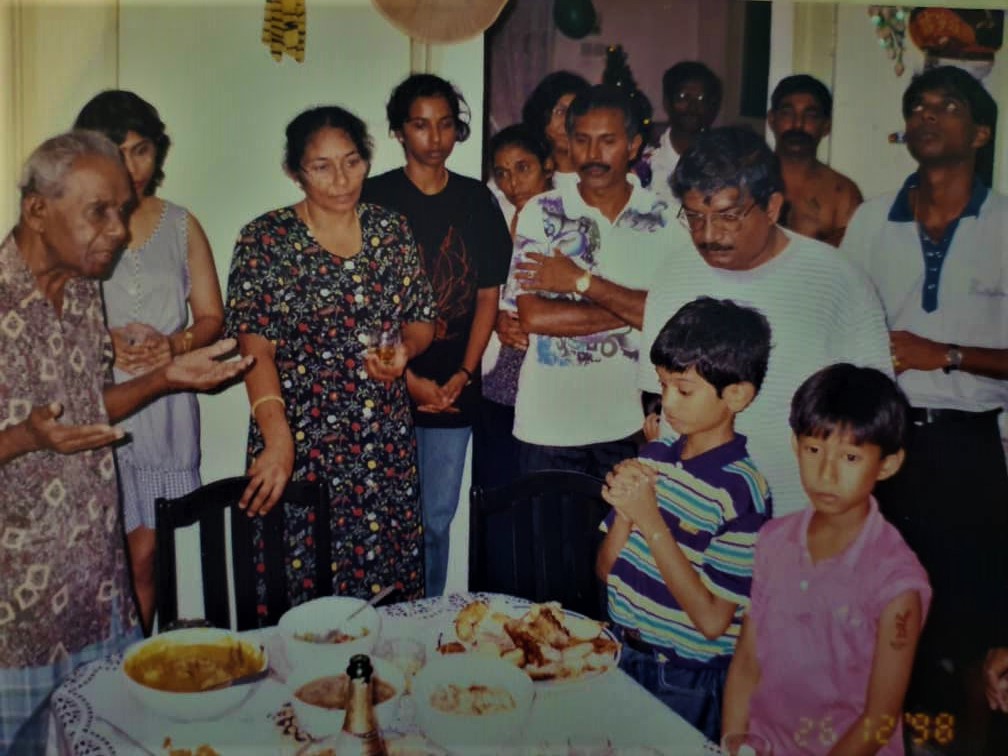
Joe Sr was also a stickler for well written and spoken English. Pronunciation and articulation with the right accent is a must; or else he will stop a conversation midway to deliver a tutorial on speech training.
Father was very much a nationalistic person and he encouraged his children to embrace this virtue. If he was alive today, he would painfully wonder why all the fuss over the introduction of khat or the Jawi script in schools.
Despite all his preoccupation with family and work, Joe Sr hired a private cikgu weekly to give him tutorials on reading and writing the Arabic-styled script.
It did not take long for Father to become an expert in reading and writing in Jawi. Soon the Jawi-scripted Utusan Melayu found its way on the family’s coffee table. Joe Sr encouraged his children to pick up the script, but I only managed “jim waw sim fa”. Father taught me this, as we share the same name – Joseph.
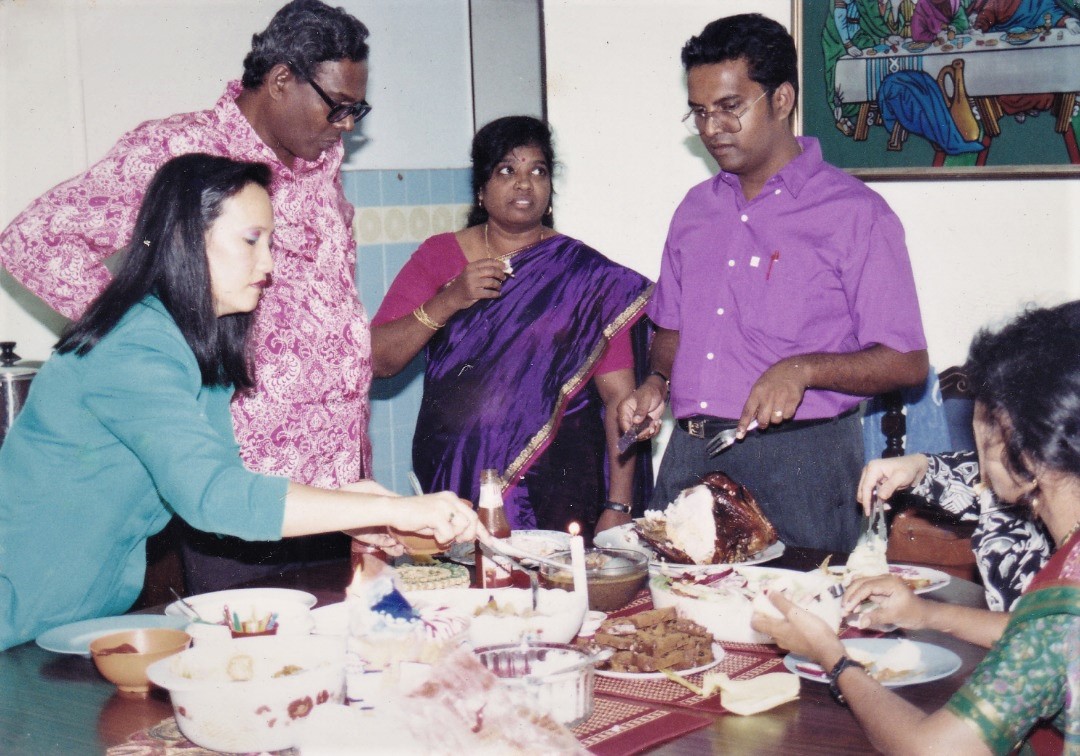
Joe Sr was also an excellent cook and ventured to teach his charges universal values on the different types of cuisines, how to prepare them, the required table setting and the do’s and don’ts while eating at the table. We always looked forward to his Christmas Eve turkey which he grilled using the pot roast style. It was his speciality.
On Fridays, the family meal would be on a banana leaf. And Joe Sr would emphasise the many “civilities and decorum” on how to consume food the traditional Indian way. It first begins with the proper way of placing the banana leaf.
“The broader part of the leaf must be on the right side,” he would insist. The vegetables must always be placed first on the leaf, only then the rice. Never serve the food if the diner is not seated at the table yet. This would mean serving food to the dead,” he taught.
In Indian custom, food is also offered to dead ancestors. Such meals served on banana leaf is called “paarthiyel” – a token celebrated on special occasions such as a memorial day to remember a deceased ancestor or a family member.
When eating, food must only be confined within the inner palm. Curry must not drip down to the wrist and elbow. Rasam must not be slurped loudly!
And most of all, there would be a very important tutorial on how to fold the leaf after the meal. One must gather all the leftover part of the meal to the centre and fold the leaf inwards, bringing the furthest end towards the chest. This is etiquette by the diner, indicating to the host, the food is delicious, thank you, and I will visit your home again.
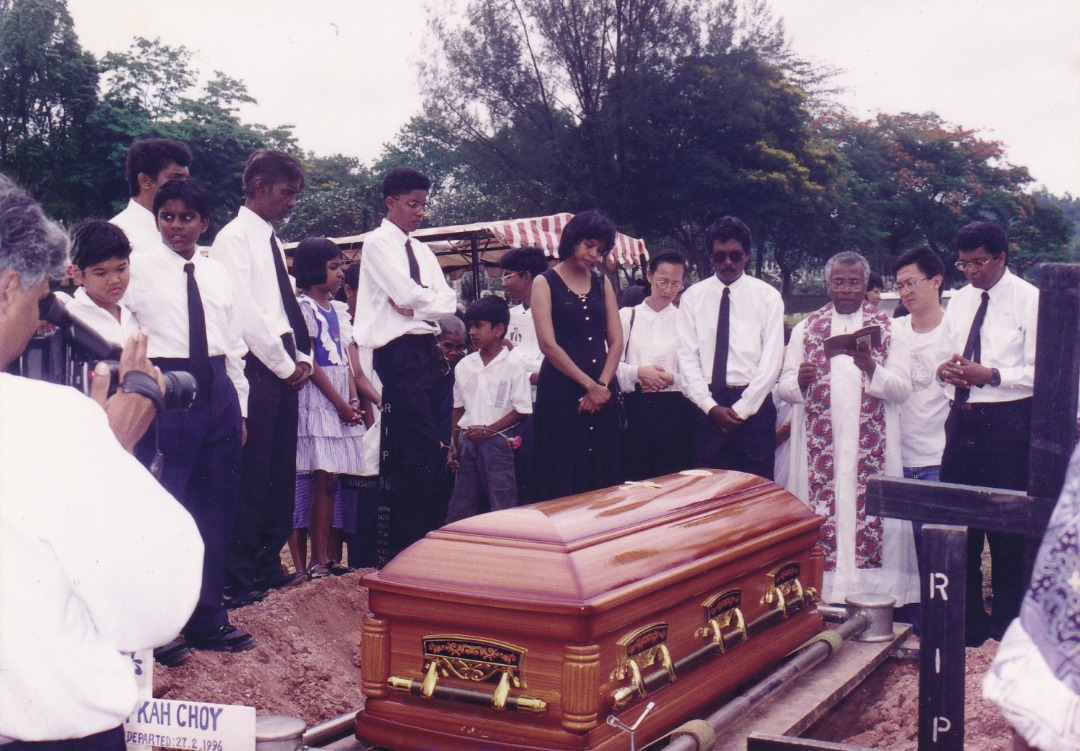
However, Joe Sr cautions, the leaf must not be folded in this way at a funeral home. “In a home that is mourning, fold the leaf away from your chest to indicate to the mourning family that when you leave the wake, you hope not to return to this home for another death and funeral anytime soon.”
On Saturdays, the family will enjoy Malaysian Chinese-styled meals. It was Joe Sr’s idea so that the family could familiarise themselves with how to eat using Chinese bowl and chopsticks when invited by Chinese friends to their homes.
And on Sundays, it would be continental breakfast after early morning church service. Butter, cheese, poached eggs, sausage, or Joe Sr’s special French omelette would be on the table together with a teapot of brewing hot coffee.
Father had a reason for offering this continental fare as well. He taught us how to use western cutlery the correct way. “For goodness sake, do not put the knife in your mouth,” he would admonish.
The family also enjoys Malay dishes prepared and served by a part-time Malay maid – who got us all accustomed to the “masak lemak” specialities and cincalok.
Steely discipline
Thi-ru-da-they (do not steal), poi-solla-they (do not tell lies) and pitchay-vangga-they (do not beg) – these were three standard codes that must be adhered to in a typical Indian family. Woe to anyone who breached this code and discipline would be severe.
In sharp contrast to today’s type of parenting where children could negotiate, protest and even coolly rebel against certain values, this was unheard of in the Masilamany household. Strictly, no-dissenting voices, no “Bersih-like” protests or Reformasi-styled slogan chanting.
Keeping to decorum and the rule of law were in the family’s unwritten "constitution".
Obedience and respectful behaviour towards family elders and those in authority was Father’s persistent teaching.
Traditional values ruled supreme in every facet of family life. Joe Sr expected a younger person to stand up when someone elderly steps into the house.
He expects visitors to be greeted by the entire family and sent off the same way. He was very particular about the use of the right and left hand when receiving and giving things to someone.
According to him, it was rude to do this in Indian culture.
A rhyme to remember the Crash of 1929
When the Great Depression of 1929 happened, impacting the world economy, our country Malaya, too, was also badly affected as the price of rubber lost its sheen. There was a sombre and pensive mood in rubber plantations in old Malaya.
However, Joe Sr decided to make light of the situation and wrote a tongue-in-cheek jingle which was sung in the estate club in any way one fancied. It went like this:
"Price of rubber now high now low
As the years their fortune make
Yet we let the milky juice flow
All our trade foundations shake
Sell or smuggle rest or struggle
As the Dutch keep smiling on
We had better fell the rubber
And in lieu plant Indian corn
Hey Salah, saya orang Malaya
Di Melaka long time stop
Cari makan potong getah
Hack the tree for a jolly good crop
When my master knocks my head
I pretend I stomach ache
So he gives me stengah whisky
And also my full gaji
I have wife and many kiddies
Who want sayur, fish and rice
Forty cents a day won't buy this
I think I would surely die
But my master always sick
One smoked sheet I daily sneak
So tidak apa stengah gaji
So long Tuan loves whisky"
Joe Sr – the witty medic
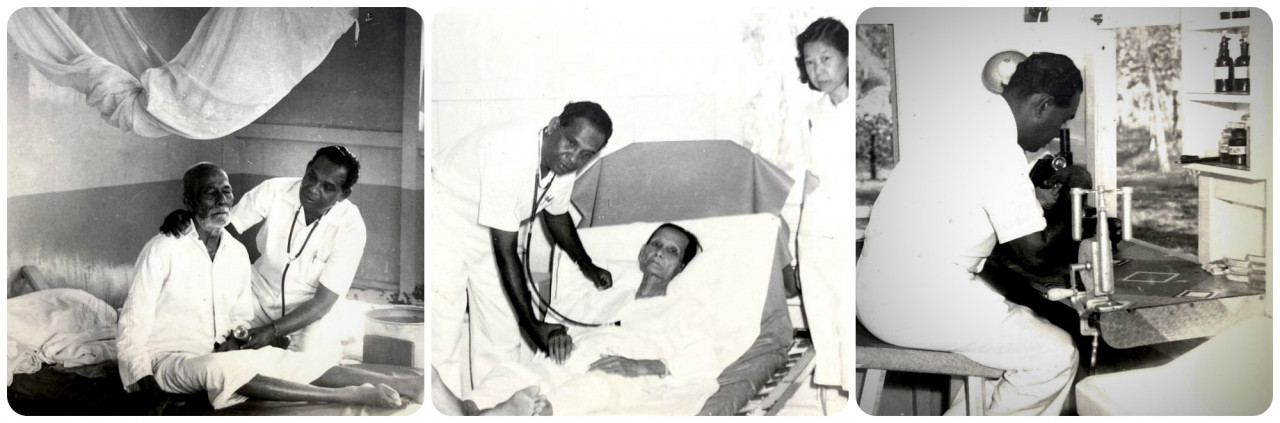
Being a medic in an estate hospital, Joe Sr shared many stories of interest.
He told us when he was being upgraded to first-grade hospital assistant, he had to undergo a written and oral examination.
The examiner was a no-nonsense British doctor full of tricky questions. Those who failed the oral test would not be allowed to sit for the written exam.
First question: “How do you diagnose stone in the bladder?”. The first candidate came out of the room with a sullen face. He had failed. And so were the second, third, and subsequent candidates.
Joe Sr was the only one who came out with a cheeky smile. He had wittily circumvented the examiner’s question with a question of his own. And that exactly was the answer the examiner expected from the candidates.
So how do you diagnose stone in the bladder? Father answered: “Which bladder are you referring to, Sir? The gall bladder or the urinary bladder?
Father got an “A” and went on to sit for the written examination earning his stripe as a first-grade hospital assistant.
Joe Sr has had his share of adrenaline-gushing escapades, too. He was once called to attend to a case of a labourer attacked by a rogue elephant.
When he got to the location with his ambulance driver, he spotted a man on the ground and the pachyderm coolly crouching beside him. As the ambulance driver was too timid to get close to the beast, so it was Joe Sr alone versus the elephant.
With only a prayer in his heart, father gingerly approached the injured man and dragged him away from the beast to safety. However, Joe Sr lost his patient who died in the ambulance due to severe injuries.
At another time, Father had to rush out of the consultancy room to the carpark of the hospital to save a man who was choking on a rambutan seed.
Pulling the man out of the car with some help, Joe Sr grabbed the man from the back in a Heimlich grab – placed both his fists between the navel and the rib cage and jerked the man off his feet. The foreign body popped out like a projectile. A life was saved.
Sometimes Father was called to attend to emergencies involving animals as well. A labourer who reared cows once approached Joe Sr for help to deal with one of his cows which was suffering from retained placenta.
Father went to the site knowing very well that he was not the American veterinarian James Herriot. He examined the animal and – noting it was in no distress and not in immediate danger of infection – told the surprised cowherd to leave the animal alone.
“Cows usually expel the foetal remains from within two to 11 days. Nothing needs to be done, as intervention can cause infection and the use of antibiotics may slow down the expulsion process.
“What is required now is to keep the barn clean and dry,” he advised the cowherd. True to what he recommended, the grateful cowherd returned a few days later to the hospital to report that the animal was doing fine.
Father did not go to veterinary school, but he read extensively on just about every subject that mattered and he had an interest in.
‘Isn’t it a bit too early for medical school?’
As much as Father was a hardliner when it comes to disciplining his children for any wrongdoing – he also tends to be understanding and reasonable at times when certain “unforgivable crimes” were committed.
I remember in 1969 when I was in primary school, Father caught me taking a peek into one of his medical textbooks.
The title of that book was 'STD in Asian Women'. I did not know what “STD” meant at that time – but I was very sure it had nothing to do with the same initials certain Catholic priests carry after their name which stood for Doctorate in Sacred Theology!
But I was neither interested in sacred theology and neither desired to be an expert in “STD” which I later discovered were the initials for "sexually transmitted diseases".
The focus of my interest was the glossy colour photos of women’s anatomy contained in the book!
As I was enjoying the forbidden peek, Joe Sr sneaked up from behind me, pinched my ear in a vice-like grip, then twisting my ear he pulled me up at the same time inquiring: “Isn’t it too early for medical school?”
I was terrified. This is it. I thought I was going to get a beating of my life but Father surprised me this time. Perhaps he decided to give allowance to juvenile psyche and curiosity and the age-old truth that “boys will be boys”.
Joe Sr proceeded to drag me by the ears to another shelf and pointed to a novel titled 'Not as a Stranger' written by Morton Thompson. It was the story of an ambitious boy who aspires to be a medical doctor.
It was a thick book and I was reluctant to read it, but when I started on it, I was unable to put it down. From here on, I became a voracious reader, exploring every other book on the shelf from Earle Stanley Gardner’s Perry Mason series to James Hadley Chase’s detective dramas, Agatha Christie’s 'The Murder at the Vicarage' to Neville Shute’s 'A Town Like Alice' and Noel Barber’s 'The War of the Running Dogs'.
So, that STD caper of 1969 turned out to be beneficial for me as I became a compulsive reader and improved my English in the process – all thanks to Joe Sr.
Stern or lenient, critical or approving, Father has by every count eased a path into the hearts of his children, deeply permeating the periods of our childhood and adulthood with his gift of enthusiasm and his priceless ability to rekindle it in others.

Sometimes, there is always this doubt in us, did we, his children live up to his ideals? The accolade that he was bestowed upon by the National Family Planning Board is testimony that the man had succeeded in his mission.
It is this, that gives us the comfort to believe that we had not let him down. And to us, as the book title suggests, he was always a friend – 'Not as a Stranger'. – The Vibes, June 20, 2021