HIGH daily death tolls and more than 5,000 new cases; insufficient ICU beds, new variants, prolonged lockdown, and fatigue among medical frontliners are posing great challenges in fighting the Covid-19 pandemic.
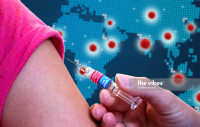
Other issues include the infodemic, fake news on social media, and pseudoscience shaping public opinion that could jeopardise measures to control the pandemic. The public is not aware that vaccine hesitancy is putting many lives at greater risks of contracting severe Covid-19.
As fighting the infodemic is a critical part of controlling the pandemic, Derita Covid-19 webinar was hosted by the YakiniVaksin campaign team to bust the myths surrounding Covid-19, the vaccines, and SOPs.
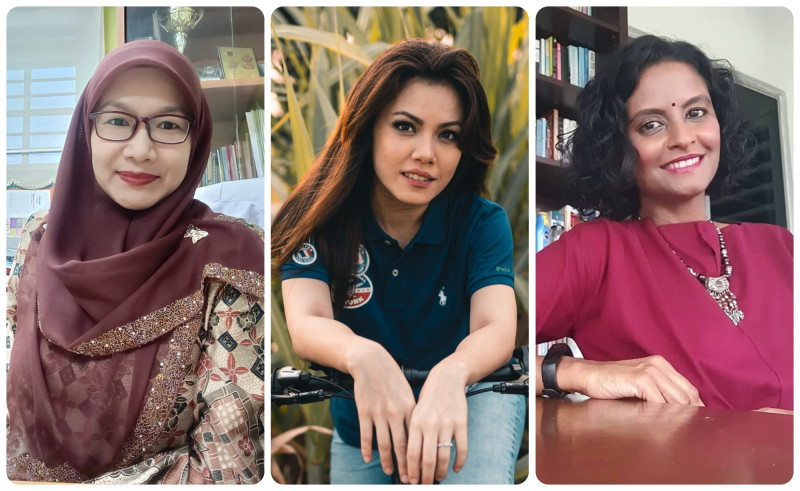
“Vaccine is not a personal choice anymore. It is our social responsibility,” explained family medicine specialist Dr Sakinah Sulong, who is from Medical MythBuster Malaysia, in a recent webinar.
This webinar, supported by Duopharma Biotech Berhad as part of their corporate social responsibility (CSR) programme to alleviate the fear among the public and address public concerns about vaccination, was also joined by Tiz Zaqyah, a well-known local artist.
“Our healthcare system has become very fragile due to insufficient ICU beds, ventilators, and fatigued medical frontliners. Doctors are pushed to make very difficult decisions on whom to give the limited medical facilities. It is a very emotional situation for us,” said Dr Sakinah.
Datin Dr Mahaletchumy Arujanan, founder of The Petri Dish and co-founder of Science Media Centre Malaysia who moderated the webinar, pointed out that many non-Covid-19 patients are deprived of healthcare facilities and the impact is not just felt by Covid-19 patients.
“Is vaccination the best solution to fight this pandemic?” asked Dr Mahaletchumy.
The expert explained that social distancing, masking, and washing hands frequently are effective in curbing Covid-19 infections. Evidence shows that proper masking can reduce the risk of transmission significantly.
“But how long can we live like this? Masking ourselves and refraining from going out, living in an isolated situation?” said Dr Sakinah.
She added that vaccines are the light at the end of the tunnel.
“I can’t wait for my vaccine. Having had a taste of Covid-19, its trauma is still haunting me,” said Tiz who had Covid-19 in May this year.
“I live with my parents and the thought of putting them at risk haunted me every day. Being asthmatic made it worse,” added Tiz who signed up her parents for vaccination and who completed their first dose.
The role of Covid-19 vaccines
Vaccines are usually meant to protect against infectious disease. However, Covid-19 is a novel disease and the level of protection given by the vaccines is still being studied.
When asked about the role of Covid-19 vaccines, Dr Sakinah said, “For now it is not about providing 100% protection. Getting vaccinated does not mean you will not be infected. We are getting new scientific information about Covid-19 daily.
"There are new variants, varying symptoms, and immunity levels among individuals. What we are certain is, the vaccines protect severe Covid-19 which require ventilation, hospitalisation and might be fatal.”
“Many countries are relaxing their lockdown when a higher rate of vaccination is reached. These countries have reported fewer Covid-19 cases, especially the severe ones. This itself will end the pandemic,” she added.
“I was lucky to have recovered from Covid-19 without the need to be in the hospital,” said Tiz sharing her experience. She also asked if she needs to be vaccinated since she has antibodies against the deadly disease.
“Vaccination is a must for everyone, regardless if you have had Covid-19 or not. The immunity level of recovered patients may only last for about three months,” explained Dr Sakinah.
She also responded to Tiz’s query on when she should get her vaccine. Sakinah advised that the Ministry of Health (MOH) has decided to vaccinate former Covid-19 patients three months after being diagnosed. She explained that this decision is made to allow others who have not been infected as Covid-19 survivors will have natural antibodies to fight the disease.
Long Covid
On another question on “long Covid”, Dr Sakinah said: “Long Covid is when the complications are experienced post-recovering. These can range from loss of smell sensory, memory, lung function and prolonged fatigue, cough, shortness of breath, anxiety and sleeping problem among others. This is where we urge the public to go for vaccination to prevent long Covid.
“Some patients become forgetful or often confused which affects their daily life. MOH has carried out a survey and found out that 20% of Stage 4 and 5 Covid- 19 survivors have long Covid symptoms,” she said.
Dr Sakinah urged Covid-19 survivors with long Covid symptoms to consult a doctor because the duration of the symptoms is still under research.
To a viewer’s question, if the virus still lives on in the patient’s body who suffer from long Covid, Dr Sakinah responded that the virus will not be present and they cannot transmit the disease to others.
Impact of new variants
Dr Sakinah cited that new variants arise when there is a high rate of infection in a population and the virus mutates to survive. The mutation causes a change of structure in their spike proteins.
However, some mutated variants will not have the ability to infect but some become deadlier. This is where the term variant of concern (VOC) emerged to classify the strains that could infect more people at a faster rate.
“We are seeing more people needing hospitalisation and medical assistance because of these new variants,” she added.
The new Alpha variant that has been identified in the UK shows 50% higher chance of transmission and the Delta variant from India shows 40% higher risk of transmission compared to the Alpha variant. The Delta variant also increases the need for hospitalisation compared to the Alpha variant.
However, vaccination is still able to control the situation. “In the UK, out of 806 patients infected by the new variant, 507 are not vaccinated and only 84 patients completed two doses of vaccinations. This shows the efficacy of vaccination,” said Dr Sakinah.
She reiterated that vaccination is a social responsibility.
Herd immunity
The webinar also heard that with Covid-19, unlike other infectious diseases, reaching herd immunity alone will not end the pandemic as new variants are emerging very quickly.
Dr Sakinah praised Khairy Jamaluddin, Minister of Science, Technology and Innovation and the Coordinating Minister for the national vaccination programme, for being on top of the latest scientific developments.
“Yes, Covid-19 is behaving differently than other infectious diseases. With the emergence of new variants, achieving herd immunity must be followed by strict SOPs. Both measures will help us to end the pandemic,” she said.
She was quick to add that “the virus will stay with us forever but if more are vaccinated we can reduce the mutation.”
A social responsibility
Agreeing with Dr Sakinah, Tiz had this to share: “I felt the immense pressure as both my elderly parents are my close contacts and there was a high chance of them being Covid positive, too. Vaccination is not only for you – if you have elderly parents and children, getting vaccinated is the best way to protect them.”
“I knew that although I was an asymptomatic patient (no symptoms), I could still transmit the infection to my close contacts. It was difficult to get mentally prepared to face Covid-19 and at the same time provide emotional support to my parents. You don’t want to be going through this. Vaccination is our social responsibility and we must fulfil this responsibility,” said Tiz.
“As a Covid-19 survivor I really cannot wait to get my vaccine because it was such a traumatic experience. And I don’t want to pose any problems to those around me,” she added.
Dr Sakinah echoed Tiz’s emotions that losing loved ones to Covid- 19 is painful. She had lost her father-in-law to Covid-19 and he passed away on the day of his vaccination appointment. Dr Sakinah also said she still has a sense of guilt and urges others to not skip vaccination appointments.
Grabbing vs choosing your vaccine?
Asked by the moderator, if she would wait till she can choose the vaccine of her choice or just grab anything that is given to her, Tiz had this to say, “for now, I will grab what comes my way. My experience with Covid was traumatising and all I want is a vaccine.”
Dr Sakinah applauded Tiz for her wise decision because vaccines are given based on the individuals’ profile given in the MySejahtera app.
“The vaccine you get is the best for you. Certain vaccines are suitable for pregnant women and older people. Each vaccine has its storage requirement and we have to keep in mind that some of the vaccines have to be transported from urban to rural areas. Just take what is offered to you,” she advised.
Dr Mahaletchumy also put a question to Tiz on how she will arrange her vaccine appointment because as an artist her working time is not fixed.
“I will still give priority to my vaccination. I will arrange my work schedule once I have received my vaccine appointment because keeping everyone safe is vital now,” said Tiz.
On a question about the ‘mix-and-match’ vaccine approach that is under study now, Dr Sakinah highlighted that this needs to be done after receiving more data because each vaccine has a different mechanism.
“However, we do not have to worry about it because MOH and National Pharmaceutical Regulatory Agency (NPRA) will decide on this after looking at all data from around the globe,” she said.
Is vaccination safe for all?
Most viewers were concerned about their medical history such as diabetes, being a cancer survivor, going through cancer treatment, high pressure and cholesterol, kidney patients, and many other ailments.
Dr Sakinah explained that there is no contraindication for most patients and other medications. She urged everyone to consult their doctors and inform them about their medical history.
“The Singapore prime minister is a cancer survivor, too, but he was vaccinated in January 2021,” added Dr Sakinah.
To questions on pregnant, nursing and women who are trying to conceive, Dr Sakinah had the same answers that the vaccines given to them will be suitable for them.
There were also questions from viewers who are allergic to certain food and medication if vaccines are safe for them.
“Before vaccination, you will be asked about your allergic reactions and how severe it is. You will be vaccinated based on your health status and you will also be monitored for 30 minutes after vaccination. Please keep in mind that allergies can be treated but treating Covid-19 is still a challenge.”
The moderator raised the issue of many who do not turn up for their appointment or skip their second dose. “Our body takes 10 to 12 days to develop antibodies after receiving the first dose and it only provides 60-80% protection. After the second dose, the level of protection increases and we do not want to stop halfway,” explained Dr Sakinah.
Takeaway messages
Asked for takeaway messages, both panellists parted with strong requests.
“Be wise, be responsible and get vaccinated”, urged Dr Sakinah.
“Do not wait, but grab your vaccine because being a Covid-19 patient is very traumatic”, said Tiz to the audience. – The Vibes, June 28, 2021
Article by Saarani Vengadesen, a project manager with the Malaysian Biotechnology Information Centre and a writer for The Petri Dish.