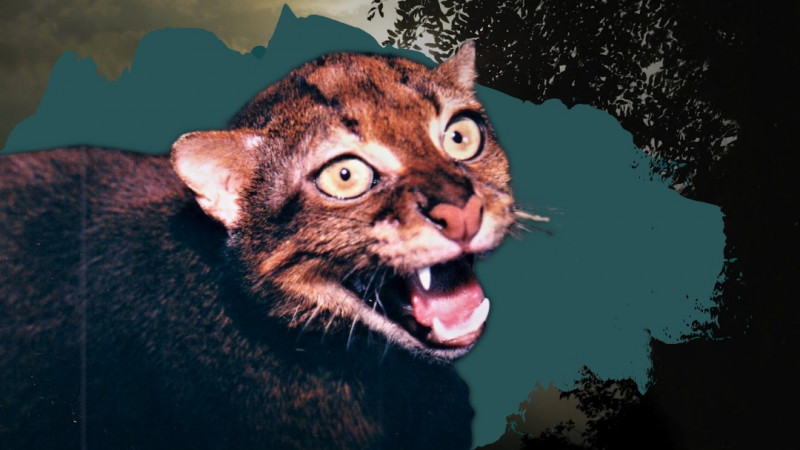

WITH just a little less than the estimated 2,500 mature breeding individuals in the wilds of Sarawak, Sabah, and Kalimantan, the Borneo bay cat (Catopuma badia), known to be the most cryptic and rarest among local wild cats (felids), may be on the cusp of extinction.
First described by British zoologist John Edward Gray in 1874, from just its skin and skull collected in Sarawak by the iconic British naturalist Alfred Russel Wallace in 1856 – the bay cat, endemic to the Borneo island has been listed as endangered by the Swiss-based International Union for the Conservation of Nature.
Speaking to The Vibes recently, Assoc Prof Mohd Azlan Jayasilan, an expert in wildlife biodiversity and conservation from the Institute of Biodiversity and Environmental Conservation, Unimas, said: “On-going studies and field surveys are necessary to monitor and record the distribution of this elusive and exclusive wild cat for posterity.”

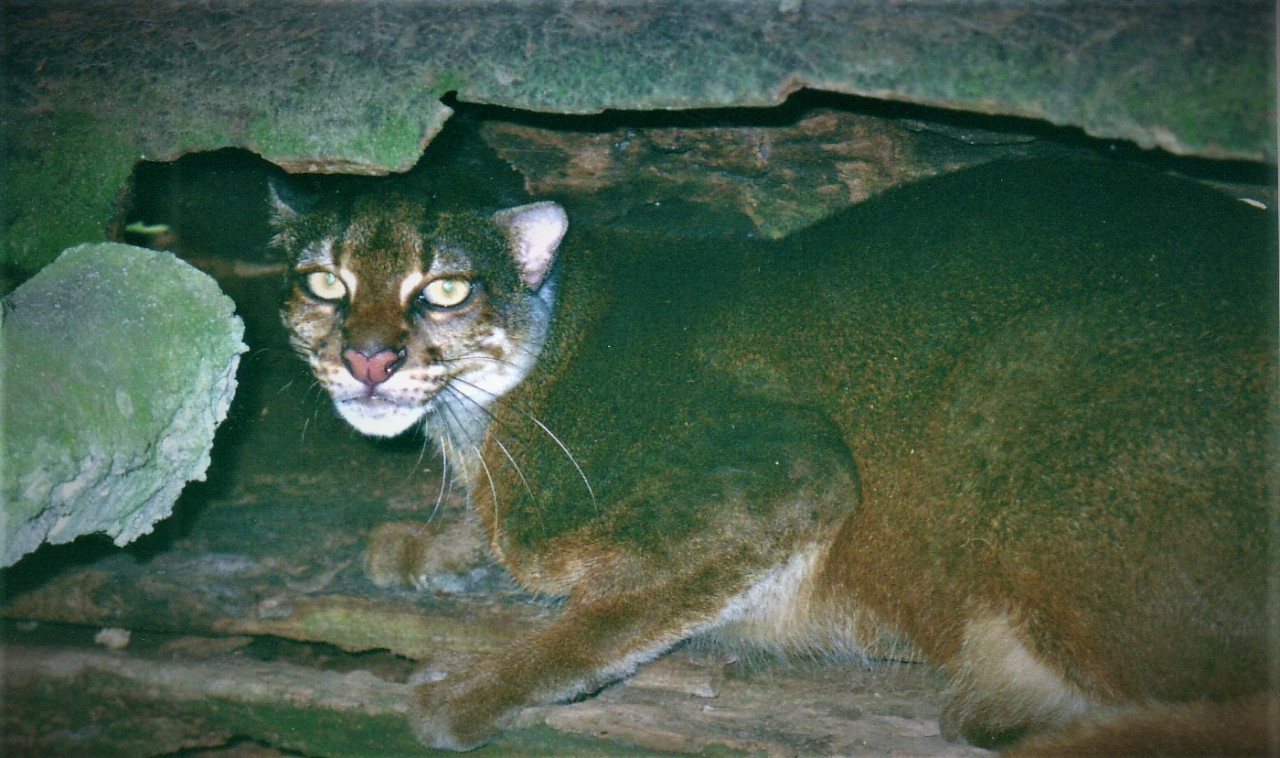
He said in the first survey of its kind conducted in 2003-2004, the study team managed to capture a bay cat, which was long thought to be extinct in the state, via field infra-red sensor camera-trapping. He said the photo-capture gives hope that the species is still around – though its population is perceived as being “few and far between” as well as to occur at relatively low density even in pristine habitats.
Mohd Azlan said the animal – dubbed Borneo’s Houdini – due to its rare sightings, was camera-trapped at the Sungai Ulu Katibas in the Lanjak Entimau Wildlife Sanctuary in a study jointly supported - by the Sarawak Forestry Corporation, the Sarawak Biodiversity Centre, the Forest Department of Sarawak, the US-based Cat Action Treasury as well as the Switzerland-based World Conservation Union Cat Specialist Group.
“The 2003–2004 survey was initiated to obtain population distributional records from infrared sensor cameras, archived literature, data from field observation, and from preserved specimens and animals captured or killed by local hunters and kept as collector’s items.
“We visited a total of five sites using camera traps while eight areas were visited to interview the local native community within Sarawak. This combination of camera traps, interviews and published information have resulted in one confirmed record of a sighting through camera-trapping with additional five sightings of bay cats by locals and researchers within the state.”
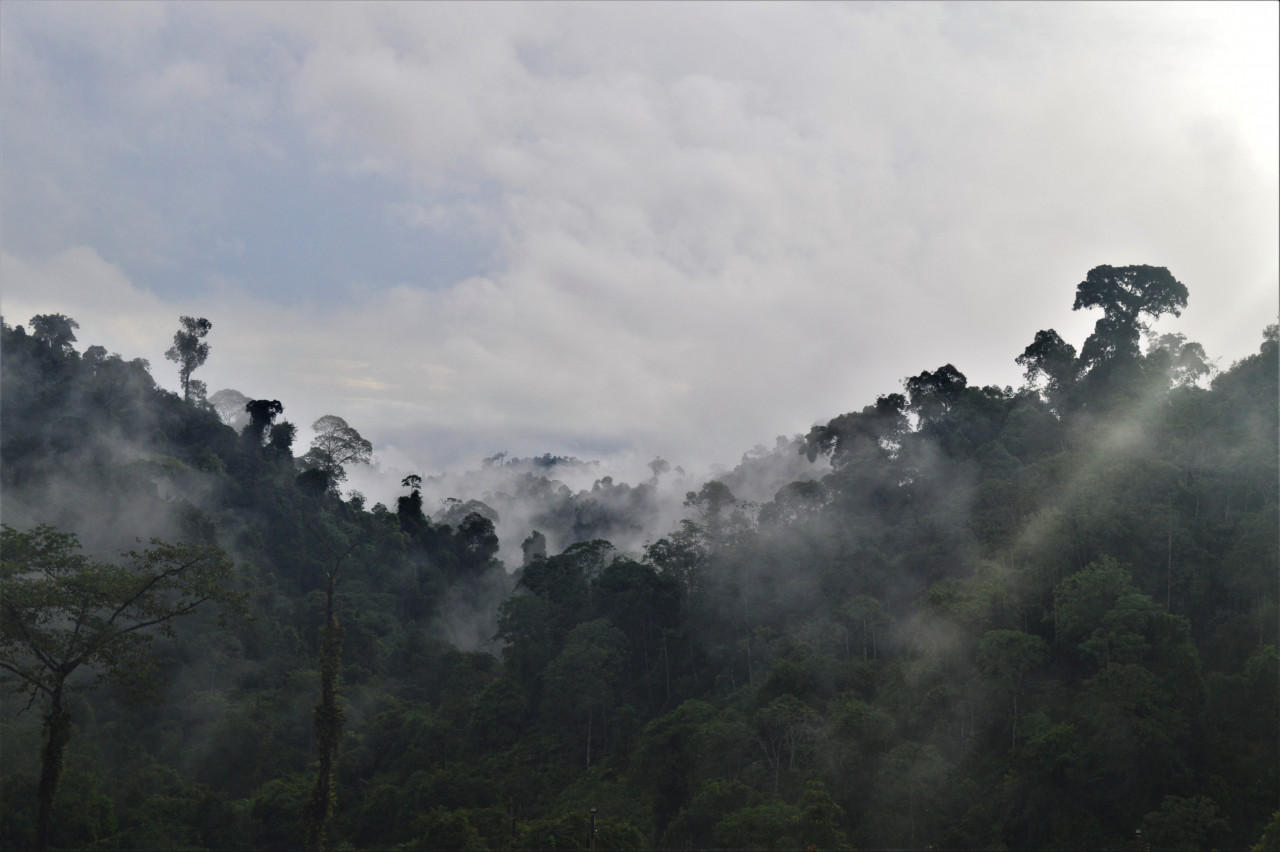
According to him, the survey also indicated that these felids can be found in a variety of habitats ranging from lowland forests, riverine areas, mangrove terrain as well as hill forests. “It is suggested that the species is widespread throughout forested areas, especially in central Borneo, which has relatively less human disturbance."
Environmental threat
The researcher also said it is quite evident that these smaller cats are facing several threats and environmental pressure in the Borneo rainforests. He said even though the bay cats are not hunted for their skin, there is evidence that some local communities consume their meat. This is according to a 2004 study carried out by Grinang and Kalu.
.jpg)
However, Mohd Azlan said in the 2003-2004 survey, interviews with some indigenous tribes such as the Iban, Bidayuh, and the Lundayeh tribe inhabiting the Sarawak-West Kalimantan border regions revealed that felids are not preferred as meat due to their very strong gamy stench.
“But if these animals are spotted in the jungle during hunting expeditions, they will be shot accidentally or opportunistically for consumption or for sport. Hunting dogs used during these hunting trips also pose a serious threat to these terrestrial felids in areas where such hunting practices are common,” he noted.
“Many of the hunters interviewed said that this cat has been much more difficult to encounter at present, compared to a decade ago,” he added.
The study noted that habitat destruction and hunting are potential threats for this species in Sarawak and that further comprehensive studies are required to understand the population dynamics of the bay cat species and conservation requirements for their well-being in order to ensure their survival in the wild.
The scientist-researcher rues that although the bay cat was described as a new species by Gray in 1874, till today, very little is known about the biology, ecology, and population of this unique Bornean wild cat, especially in Sarawak. In order to understand all these, as well as the potential threats and conservation status, detailed information on the distribution of this species is very essential now.
“Thus, the main and immediate goal is for further studies and field surveys as well as more funds to continue the earlier survey and field research on these little-known wild cats of Borneo,” added Mohd Azlan.
One of the rarest felid species
According to him, the bay cat is one of the rarest felid species in the planet. They are only endemic to Sarawak and the other Borneo states including Brunei. He also pointed out that there are only about a dozen known “museum specimens” of this species preserved in labs and scientific archives around the world.
He said ironically only two of the preserved species are found within the range countries in Sarawak, Sabah, Brunei and Kalimantan – while the rest of the museum specimens are scattered around the world, including in the Smithsonian lab of USA and in the Natural History museums of UK and Paris. In Sarawak one specimen is preserved at the City Hall Cat Museum while the other exhibit is showcased in the Sarawak Museum.
“Among the cat family carnivores in Malaysia, the tiger is the only species that has gained much attention worldwide. The little-known and elusive bay cat, being so rare has not courted so much attention or corporate appeal as much as the Malayan tiger (Panthera tigris tigris).
“Even our national football squad takes its name from the Malayan tiger, being named Harimau Malaya and a mainstream local bank has the tiger as its mascot and it is prominently etched in its corporate livery.
“Most donors are interested in the symbolism that a flagship species like the tiger can provide, such as ‘positive dividends’ in the marketing context. Thus, many attractive conservation plans are initiated and developed for specific needs of the sponsors. On the other hand, non-charismatic species like the bay cat, however rare they may be, may not be perceived as a good candidate to meet corporations’ ‘market appeal’ among multinationals and locally-based big companies,” Mohd Azlan pointed out.
He said this has resulted in more efforts being made to initiate “priority research” for the lesser known species such as the bay cat by international conservation programmes and agencies.
“This is sad, as it may jeopardise research and conservation efforts for this species. So far, information on the uncommon smaller felids in the state are scattered, usually gained from specimens found on road kills, captive individuals and the very rare chance of an animal encounter in the forest.”
Mohd Azlan said, given the fact that this species is totally protected in Sarawak under the Sarawak Wild Life Protection Ordinance 1998 and the State’s move towards sustainably managing forestry activities – there is still hope for the long term persistence of this species as they have been sighted in logged forests in Sarawak as well.
Perhaps, there is some time still to protect and preserve the bay cat whose existence hangs by a whisker. – The Vibes, October 3, 2021