
BEING newly diagnosed with breast cancer can leave a person in disbelief.
In the first few days, patients who have shared their experiences commonly feel overwhelmed or at least intensely challenged to make sense of the medical maze they find themselves in.
I have been diagnosed with breast cancer… What now?
Take an active role in your breast cancer care. Learn more about your cancer and its treatment by constantly engaging with your doctor.
Use the first few days by listing and asking key questions you would like to address before making any decision.
As Dr Patricia Alison Gomez stressed in the video interview, “Breast Cancer is not a death sentence,” and more so if the cancer is detected early.
“Tests will be done to find out the extent (stage) of the cancer, where it helps determine how serious the cancer is and how best to treat it,” noted the consultant breast surgeon.
Central importance in the treatment of breast cancer
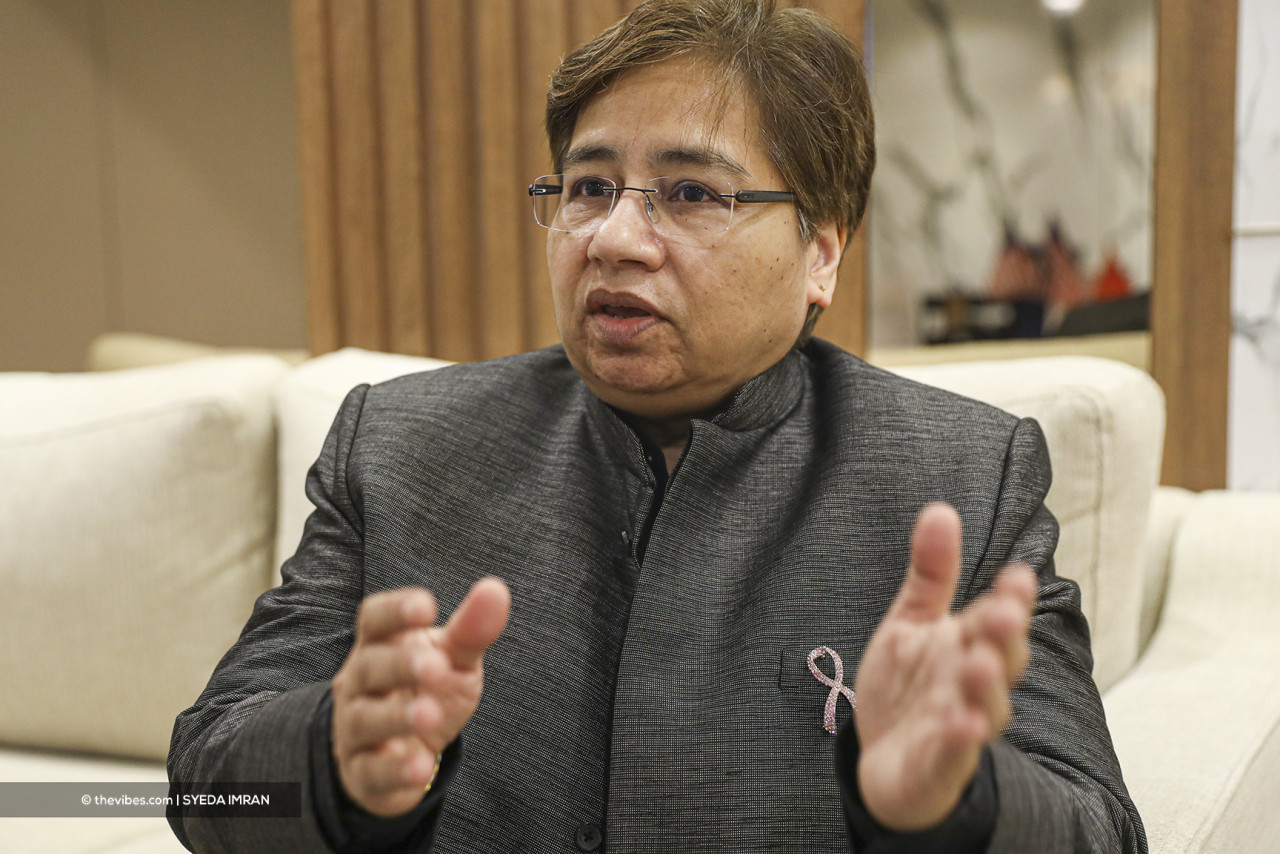
On distinct qualities patients should seek in a doctor, she shares, “you must be able to feel comfortable with your doctor.”
“Of course, your doctor must have a good rapport. Apart from it, you must be sure that the doctor is listening to your concerns because trust and communication is important.
“So, a lot of the time, the first doctor that you see is your anchor, someone who you would be coming back to as follow-up after your diagnosis,” highlighted Patricia.
“Usually he/she would be the person you go-to for questions you want answered, or new information you need clarified. Sometimes patients would even ask their doctors for social advice,” she added.
When asked if there is a best time to seek for (medical/radiation) oncology treatments, the breast cancer surgeon noted: “The primary treatment is always surgery first, but there are occasions that patients go to the oncologists first.”
“These are usually when the cancers are quite large, (usually late-stage cancers) where we try to shrink them down with chemotherapy first before we conduct surgery. This is known as neoadjuvant chemotherapy."
Patricia then shared that Malaysia does not have specialist oncologists that deal with a focused field (i.e. one cancer type) and instead deals with the whole cancer spectrum.
“So besides focusing on the surgical aspect of breast cancer treatment, breast cancer surgeons do have in-depth knowledge even on chemo/radiotherapy.”
“We are almost on an equal par (with oncologists) because we read-up and engage in discourses on anything related to breast cancer. What we don’t do is conduct or prescribe the chemo/radiotherapy treatment, in which it is where the oncologists come in.
“Here at Pantai, we have a tumor board every Friday where staff (general/breast surgeons, oncologists, orthopaedics) collectively engage in the weekly discussion on difficult cases. So the communication here is quite good where we work towards finding a certain consensus, and we don’t necessarily work in silos.
“I find such an ecosystem to be very important because at the end of the day, we want the best for our patients.” – The Vibes, October 4, 2021