
CRAWL through hundreds of Wikipedia entries and embark on Google searches with increasingly convoluted keyword combinations, and one will still be hard-pressed to find an all-encompassing definition of natural wines.
Aren’t all wines natural? Wines are just grapes left to ferment, right? Apparently, it’s not so simple.
To begin to understand natural wine, one must acknowledge that it is not a type of wine per se but is instead a philosophy in winemaking.
In conventional winemaking, as detractors often call it, the answer to unending global demand is techniques of mass production and chemical modification that are said to result in a homogeneity of the final product.
Natural winemaking, however, distances itself from the machine and the test tube, seeking to return the wine to its organic, eclectic, and natural self.
In its most basic form, natural wine is made from grape juice and nothing else.
This writer was first exposed to the philosophy, along with buzzwords such as biodynamic and ‘barnyard-y’, during a natural wine workshop organised by the Kita Food Festival 2021.
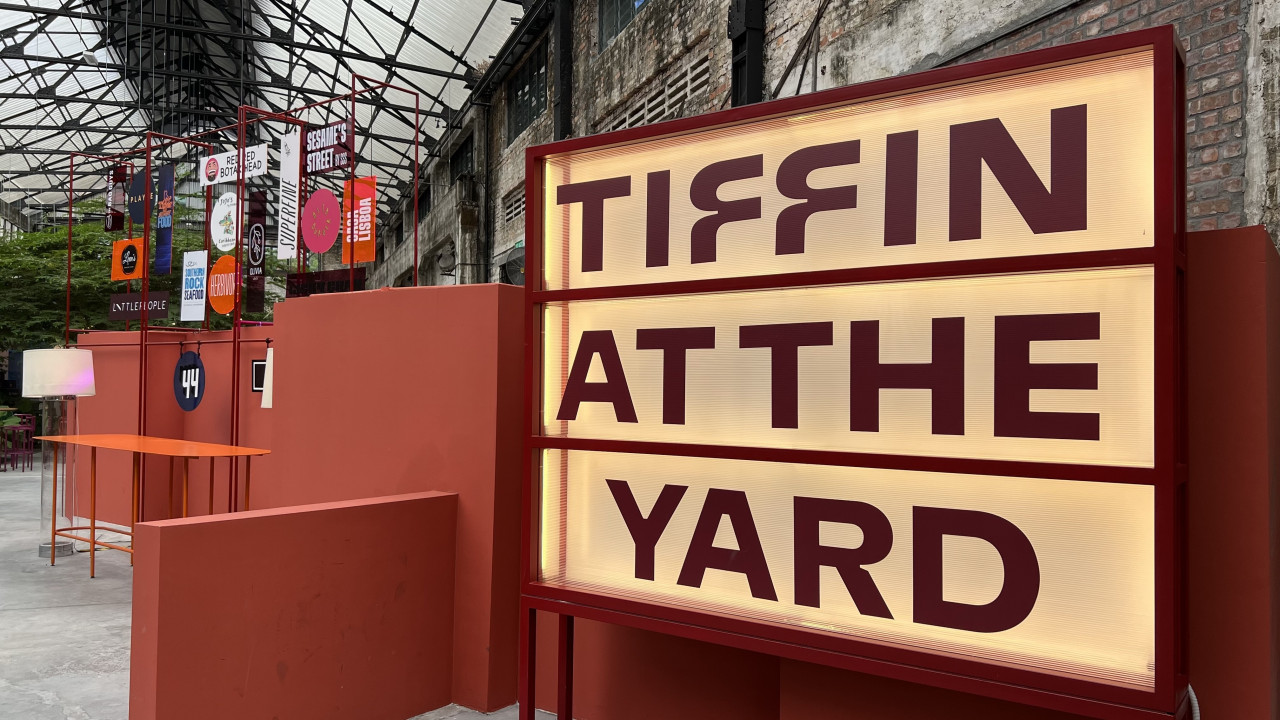
The ambiguity of natural wine was complemented by the workshop’s venue – the raw and undefined Sentul Depot – a once-bustling railway depot turned into creative space, home to KL’s latest hip and trendy premium food court, Tiffin at the Yard.
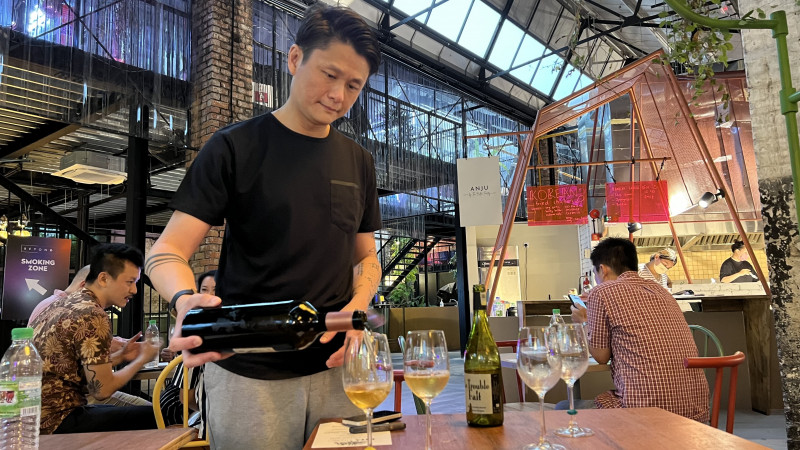
After scanning the invitations with the Fun Now app, we were introduced to Tan Meng How and Gerald Chua of Puro KL, the city’s premier natural wine bar.
The workshop began with pétillant naturel, a genre of sparkling wine that in the true spirit (pun not intended) of natural wine, does not utilise mechanical carbonation methods.
Instead, pét nat is made using the "ancestral method", where a natural byproduct of the fermentation process – carbon dioxide – is kept in the wine, resulting in its bubbly comportment.
This is in contrast to champagne where a completed still wine is bottled with yeast and sugar, which in turn triggers a second fermentation process that gives the beverage its sparkle.
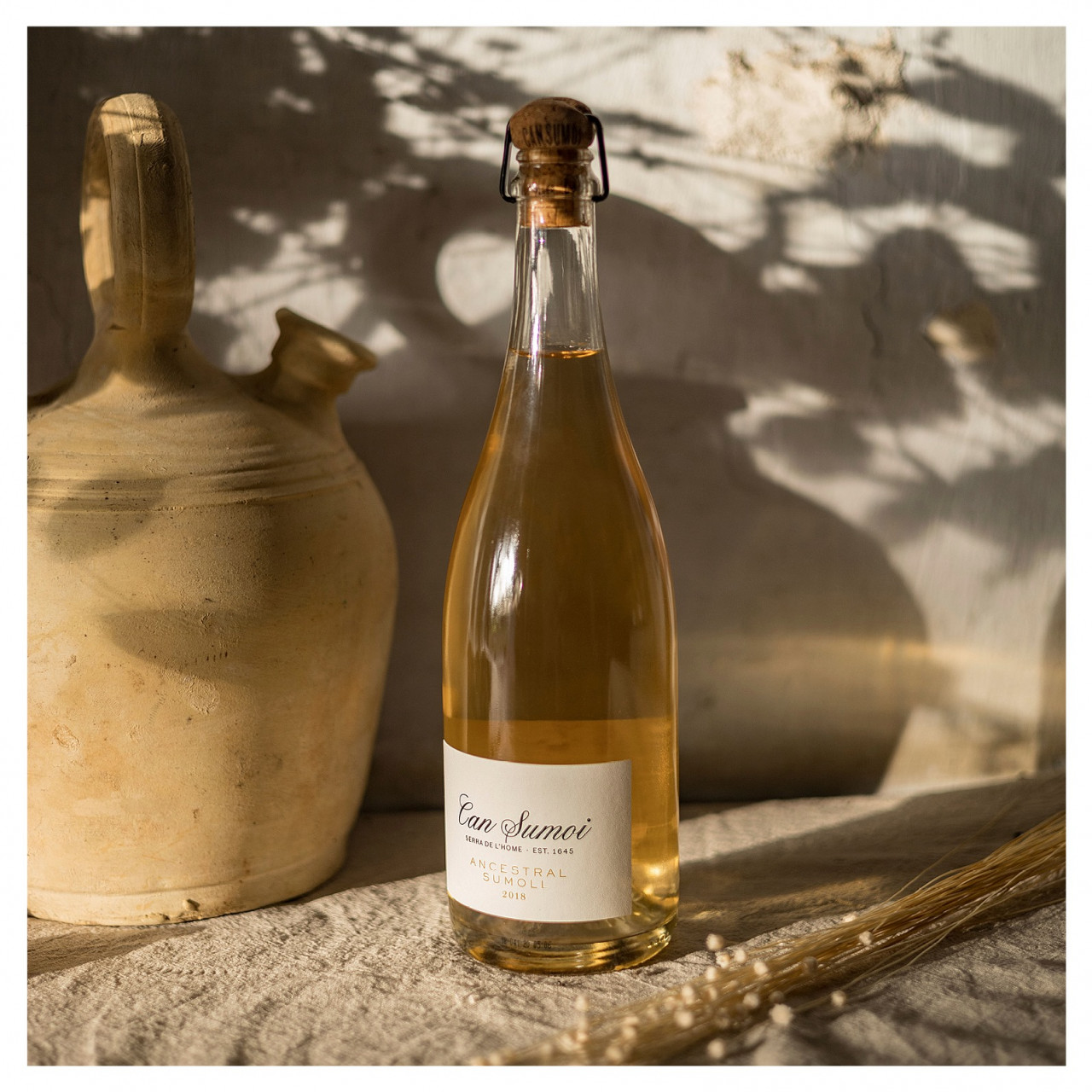
First on the list was a 2018 vintage from the Penedès region in Spain that was made from 100% Sumoll grapes. Although the Sumoll grapes are black, the pét nat it produces is clear due to the omission of the grapes’ skin in the fermentation process.
Gerald, the co-founder of Puro KL, reminds us that the colour in natural wine comes from the skin of the grapes. He cheekily adds that some conventional wines are infamous for adding artificial colouring to their brews.
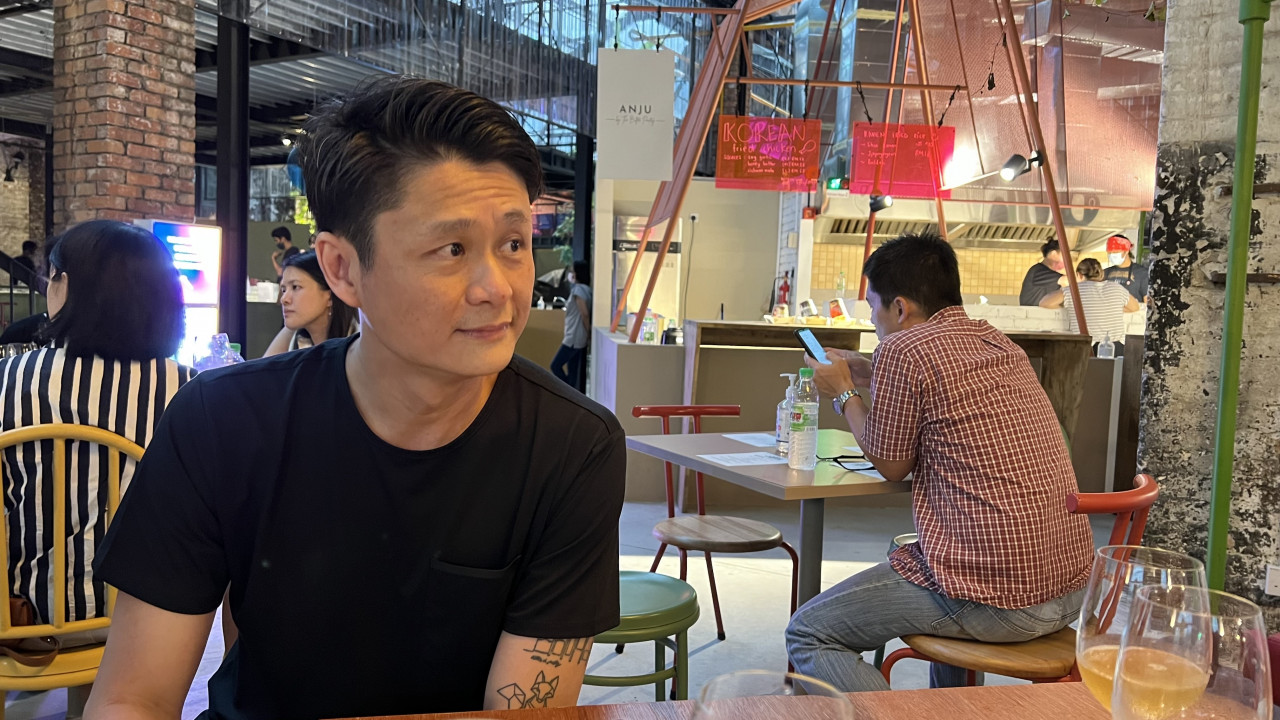
The bouquet of wild fruit preceded a slightly bitter hint of fresh herbs that enhanced the sparkle in the wine.
The second pét nat to grace our palates was the Sons of Wine ‘404 Erreur Pas Sulfite’, a 2020 vintage made in the Alsace region of France. This wine reminded us of the orange, wheaty taste of a number of IPA craft beers, something attributed to the slightly higher acid content in this wine.

Due to the grapes being harvested at an earlier stage than in conventional wines, lower levels of sugar – the trigger in the fermentation process – result in a slightly more acidic taste.
This wine is not for everyone.
Moving on from champagne’s hippie cousin, Gerald brought forth two glasses of orange wine. The first, a 2019 French vintage called ‘Le Trouble Fait’.
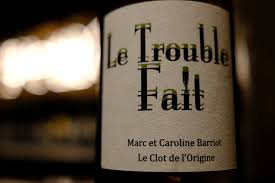
“The winemaker is a guy who allows the wine to go its own way,” are the words of Marc Barriot, the man behind the Clot De L’Origine vineyard.
In the business since 2004, Marc embodies the philosophy of natural wine in its truest sense, going so far as to plough his vineyards by horse.

Using a blend of Muscat and Merlot grapes, the orange colour of the wines is attributed to three short weeks of skin contact – that is where the skin is left on the grapes in the fermentation process.
Its colour is complemented by a bouquet of orange herb while leaving a distinct taste of grapes on one’s palate.
Another feature of natural wines, one that Marc proudly advertises on his website, is the minimal use of sulphites.
Sulphites are a natural preservative that in the case of wine, allow it to taste the same when it’s bottled as when you open it at home.
The next wine on the list was a 2017 Domaine du Pech ‘QV’ from the South West of France.
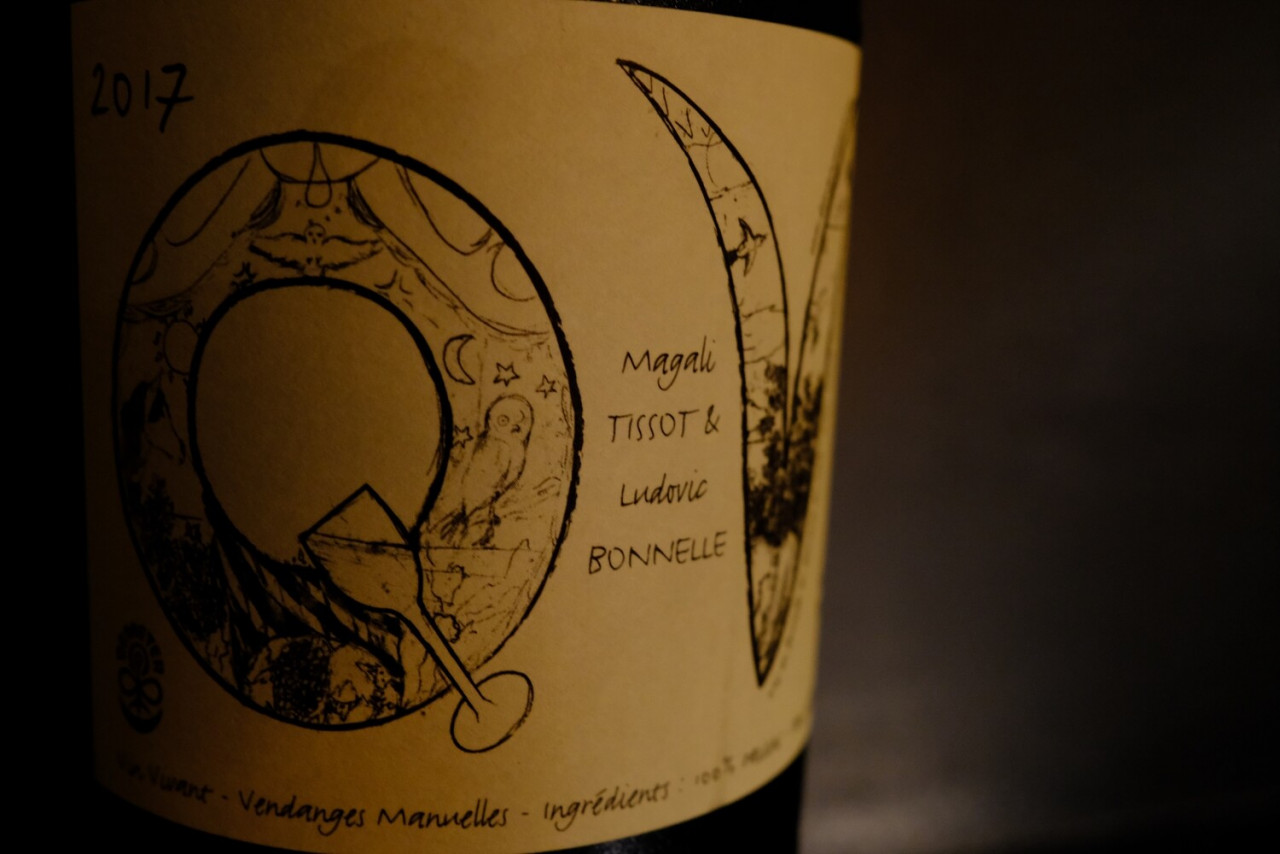
Made with 100% Sauvignon Blanc grapes, its bouquet begins with a strong waft of grapefruit followed by a bitter aftertaste of what felt like orange peel. A strong earthy flavour is attributed to the use of a clay pot in parts of the fermentation process.
While the IPA-like notes from the earlier Pas de Sulfite might leave an unpleasant taste in one’s mouth, this wine left behind a more full-bodied aftertaste that lingered at the back of one’s throat.
According to Gerald, this is often described as a barnyard taste. An homage to the organic, non-invasive philosophy behind natural wine.
As we washed away the orange wine from our glasses, Gerald poured two glasses of red wine that would be otherwise indistinguishable from conventional reds.
The first glass, ‘Tsar System’ (2019) by the Sons of Wine vineyard, carried a bouquet, not unlike conventional red wines, but upon drinking revealed a spiciness very much like pepper.
This wine is aged for almost a year in oak barrels, which make way for a full-bodied, earthy flavour.
Coming to the end of the workshop with faces redder than before, Gerald explained to 2004 Domaine du Pech ‘Totem’ from the South West of France.
The oldest vintage served to us on the day, it possessed hints similar to the previous ‘Tsar System’, though distinctly lacking the spice.
Definitely ideal for pairing with hearty steak, Gerald explains that this wine was served last to highlight the fact that, despite its lack of artificial preservatives, natural wines, too, can be kept for long periods. – The Vibes, December 13, 2021
A celebration of Malaysian food culture, the Kita Food Festival was held from December 8 to 12 at Tiffin at the Yard, Sentul Depot, KL. Consisting of a series of masterclasses exploring local culinary culture and heritage, visit www.kitafoodfestival.com for information on future events.
To explore natural wines for yourself, visit Puro KL (www.purokl.com), located in the city’s trendy arts and culture hub, Rex KL