
NATURAL disasters like forest fires, landslides, and erosions are major reasons for habitat loss in Sarawak, apart from illegal logging. Hence, the Sarawak Forestry Corporation (SFC) has embarked on a major 'rewilding project' in 12 totally protected areas (TPA).
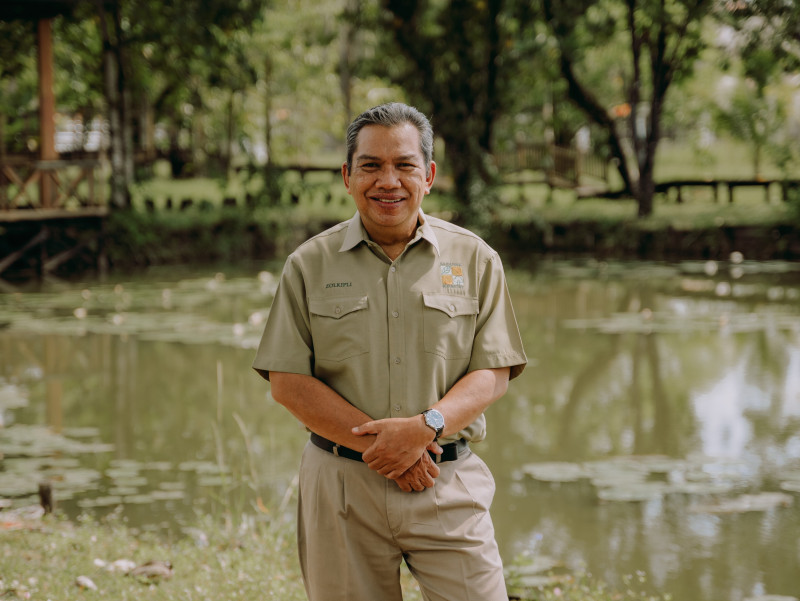
Speaking to The Vibes in conjunction with World Environment Day, which was on Sunday, SFC’s chief executive officer Zolkipli Mohamad Aton said SFC is targeting to reforest the state with 35 million trees.
Zolkipli, who is also the controller of wildlife and national parks and nature reserves, said that 12 totally protected areas (TPA) have been earmarked for the rewilding project.
“The areas that need rewilding are mangrove swamps, peat regions, and dipterocarp forests.”
Zolkipli explained that "rewilding" is a process in which selected areas are restored to their original state, by planting native trees as well as allowing for creation of wildlife corridors within the TPA.
The 'rewilding' process also enables native forest expansion outside the TPAs.
He said: “Some of the work has commenced, especially in Samunsam Wildlife Sanctuary in Lundu where 2,600 trees have been planted, whereas at the Sama Jaya Nature Reserve in Kuching another 1,000 trees have been replanted.
“In the other TPAs such as the Piasau Nature Reserve and others rewilding work has also commenced and the entire project in the state is expected to be completed by 2030.”
According to him, habitat loss leads to destruction and reduction of biodiversity which includes a wealth of different species of plants and animals in a region.
“In some areas, plants such as figs, pitcher plants, orchids, and begonias are those that are lost in habitat conversions. A closed canopy forest is a dense growth of trees in which the top branches form a ceiling or canopy, where light can hardly pass through. This shady area is a popular habitat for gibbons, bats, and birds. These plant and animal species are in danger of being lost forever due to this habitat loss which is special to them.”
Zolkipli said in order to save the forests, there is a need to increase areas under TPAs – for example, by implementing the 30/30 international benchmark of Other Effective Area-Based Conservation Measures (OECM).
He explained that OECM is a conservation designation for areas that are achieving the effective in-situ conservation of biodiversity outside of protected areas.
He also explained that OECMs encompass landscapes and seascapes where their aims are to promote equitable governance, effective management, and positive conservation outcomes.
“It also supports the recovery of threatened species,” he added.
He said SFC is constantly on its feet, as it is tasked to protect and conserve various species of wildlife and plants that are totally protected.
“This is to ensure the sustainability of our biodiversity is safeguarded for a healthier and more functional ecosystem for our current and future generations."
He pointed out that humankind has been tampering with the planet’s biodiversity and ecosystem for far too long, leading the world to face unprecedented threats that require human intervention. – The Vibes, June 9, 2022