
MALAYSIA is a major coastal country, and our agrarian economy contributes to an estimated 10% of the national GDP, as well as being a major labour force. Our environments are complex interlinked systems and drastic changes to our climate have an immediate effect on all of us.
In 2016, Malaysia was one of 195 signatories of the Paris Agreement, a legally binding framework to tackle the growing problem of climate change. This treaty was one of the keystone efforts of the United Nations Climate Change agency.
To monitor the latest developments across the world, IPCC (Intergovernmental Panel on Climate Change) reports are produced, authored by the world’s foremost scientists and experts.
In February 2022, a second working group report (WGII) was published that focused on climate impacts, adaptation, and vulnerabilities. These findings barely made headlines in local media since being published.
However, before moving further, we must understand the model climate scientists use that forms the basis of these projections. There are four potential trajectories, dubbed Representative Concentration Pathway (RCP), each assuming a different level of greenhouse gas emission in the year 2100.
RCP8.5, more popularly described as the ‘worst-case scenario’ is the most extreme end or result that makes up this model, if no mitigation efforts are taken to reduce global temperature, while RCP2.6 represents the low-end of this model, which sees future global temperature limited to 2-degree Celsius. RCP4.5 and RCP6.0 make up the medium trajectories of the model.
Under RCP 8.5 or “business as usual”, it is projected that by the end of the century, the annual rainfall will significantly decrease (approximately 30%) over Southeast Asia, and the number of consecutive dry days will significantly increase (approximately 60%) over Indonesia and Malaysia.
This could have profound consequences, as longer dry spells would result in water shortages, an already widespread problem facing Malaysians in many parts of the country. The report cites studies that suggest future increases in average temperatures could expose populations across wide areas of the tropics and subtropics to ambient temperatures for extended periods each year that are beyond the threshold for human habitability.
Increase risk of heat stress In Indonesia, Malaysia, and the Philippines would influence the migration intentions of significant numbers of people. In more urban settings, buildings would have to undergo adaptation measures and homes would see a continued need for air conditioning.
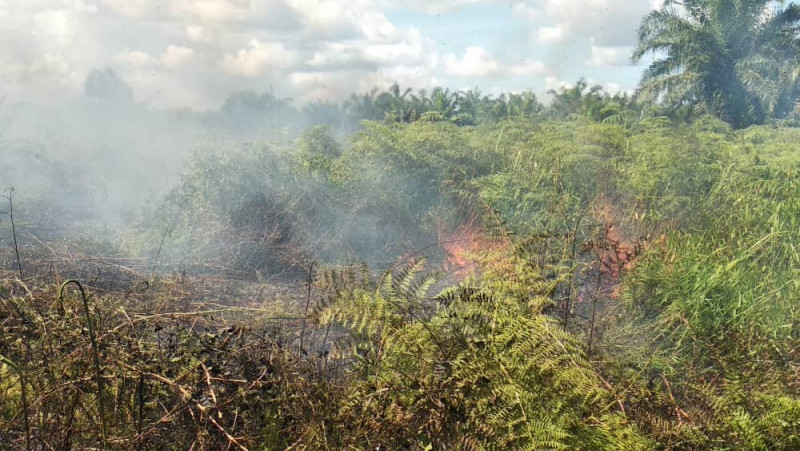
Between June to October, Malaysia experiences transboundary haze, a result of uncontrolled forest fires in Indonesia and Malaysia. Peat degradation and losses to fire result in large greenhouse gas emissions, which contribute to the haze and air pollution in this region. The neglect and constant burning of peatlands in Indonesia and Malaysia turned peat swamp forests into what used to be an important carbon sink to now a contributing source of carbon in the atmosphere.
All these contribute to air pollution-related health hazards and mortality, and hospital admissions due to exposure are expected to increase as a result. The report identifies Malaysia as a major hotspot for mangrove deforestation and shows no sign that the production and logging of mangrove swamps are expected to reduce. An important breeding ground for the orangutan, this species will remain endangered as they face continued habitat loss.
The loss of peatlands and mangrove swamps plays a domino effect, which ends up affecting local fisheries and aquaculture. Local communities that rely on these fisheries as a source of food and income would be the hardest hit as habitat loss continues to take place.
As sea level and temperature continue to rise and precipitation in the regions decreases, fisheries will be drastically impacted. Two commercial fish species would see a large decrease: the Hilsa Shad and Bombay Duck. Small-scale fishermen would be facing the brunt of these changes compared to commercial fishers.
With the impending sea level rise, salination of water is expected to occur and that would impact the availability of freshwater fish. Overall, the report cites that fisheries will continuously decrease in catch, impacting the seafood industry in Malaysia and neighboring countries.
Aroe Ajoeni, a researcher at Klima Action Malaysia, reiterates the growing calls by climate activists for the Malaysian government to immediately declare a climate emergency, so that more resources can be channeled into solving this threat.
Aroe points out that as stated in the IPCC reports, “in order for these system transitions to happen, vertical and horizontal policy linkages, active communication and cooperation between multiple stakeholders and attention to the root causes of vulnerability are essential.”
She remarks that “the outcomes of the IPCC report are crucial in shaping Malaysia’s climate policies and ambitions, for example, our NDCs”.
“However, it all goes back to localising this knowledge and recommendations since IPCC reports are very broad”. – The Vibes, June 10, 2022