DEATH lives in us.
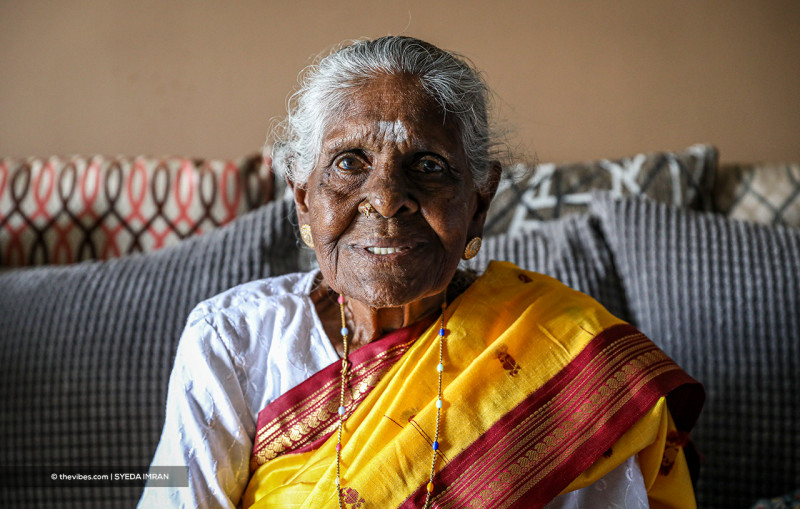
When it emerges – no matter how adequately that one thinks he has equipped himself to face the loss – it still retains the savage force to shock. Even if the deprivation concerns a person who was 102 years of age, as Aatha (grandmother, in a certain Tamil dialect) was as she lasted right up to the evening of May 31.
There is an inexplicable recurring scene that appears whenever I try to remember Aatha – Anjalai Ponnusamy as she was named by her parents – to rest. I find myself seated on the floor of her former residence at Sri Terengganu Flats, trying to make her out in a blurred celluloid scene.
She is in her customary floral blouse and sarong, rapidly reproving a person who is not in the frame and pacing herself within the meagre confines of the flat while endeavouring to complete her lunch on a stainless-steel plate. Duty calls and she disappears.
That was Aatha, in a single shot. Entirely hustle and bustle. Multitasking an expansive gamut of roles. Swiftly moving on to the next itinerary on her cramped daily schedule. In Sentul, the place of her birth and death – she was everything to anyone.
Agony Aunt. Adjudicator. Medicine woman. Master of all ceremonies from the cradle to cremation. The ultimate authority on rites and rituals. Her life had a cinematic range.
Our dead are never dead to us, until we have forgotten them. – George Elliot.
My pre-teen memories of Aatha gravitate towards one of her early abodes which was perched on stilts by the riverbank and housed a large communal brood that was a common feature of homes between the 1960s and 1980s.
The residence itself was bereft of piped-in water and electricity – which added to its spookiness and made navigation from one space to another an adventure in itself at any part of the day. But it gathered an eclectic group of uncles and aunties who lit up our lives.
I remember Uncle Mani – the last of Aatha’s departed younger sister Chinnamal’s six children, whom she raised as her own in addition to four of hers – furiously pumping the Petromax lamps without fail before dusk dawned.
There was Aunty Prema, the possessor of the most angelic smiles and the hardest worker in the closely weaved unit. She almost permanently wore a contented expression as she fulfilled every chore, from washing clothes to ironing them on a flatiron aided by hot coals to treating us to the Sentul edition of the Sunday scrub.
At the centre of all these activities was Aatha. Flitting among the shadows. Brick built. Firm of tongue and thought. She instilled divine fear in us – as well as in the uncles and aunts.
The arch matriarch did not instruct; she issued commandments. Her words, in explaining issues and offering solutions to matters at hand, were often relayed with the gentleness of a hurtling wrecking ball. One would rather be hit by it rather than attempting to evade it.
That was her style. Conservatism and strictures contoured decorum, the hierarchy within the family and the manner in which one should carry herself or himself. On reflection, most of them held the weight of Covid-era quack cures – it is in the rasam, appu – but those were rules then. We listened and obeyed until they diminished in reason and use.
Raising 10 children and holding on to two jobs on a daily basis was not for everyone but everyone is not Aatha. Aatha resolutely refused to hand over her nephews and nieces to foster care and defied detractors who sneered at her resistance. The decision – and the travails and eventual triumphs that it engendered – proved to be her most enduring legacy.
Aatha was neither my maternal nor paternal grandmother but the only grandmother that I grew up with to admire and esteem. She had habitually introduced me to another as her grandson. It follows that there are largely no references to “first or second cousins” in the family; only brothers and sisters and so forth.
Through her unselfish deeds, Aatha succeeded in fastening the family together and putting down its roots and their importance amidst headwinds that had sapped her willpower. And she did it her way.
… No matter how much time passes, no matter what takes place in the interim, there are some things we can never assign to oblivion, memories we can never rub away. They remain with us forever, like a touchstone. – Haruki Murakami
Aatha’s tough love was conveyed in acts that had to be decoded. It was more by design than anything else. Aatha, as most of us have failed to grasp even now, was a construct of her society. She belonged to an age in which hardscrabble life was the only option and a constricted world view was accepted as prevailing wisdom. Aatha’s tough love was conveyed in acts that had to be decoded.
The simple food that was cooked and served. The fingers that expertly massaged away the trouble in the tummy. The ayurvedic prescriptions that amounted to a doctor’s order. All of that will be delivered in an unrelenting manner. These are memories of a simpler epoch and people. They matter, nevertheless.
To Aatha, memories were a vital means of holding on. Recollecting them was an exercise that required high mental agility and Aatha – in spite of her prolonged years – was very much capable of retelling the stories in the exact sequence and molecular details, and accompanied by affected and appropriate body gestures.
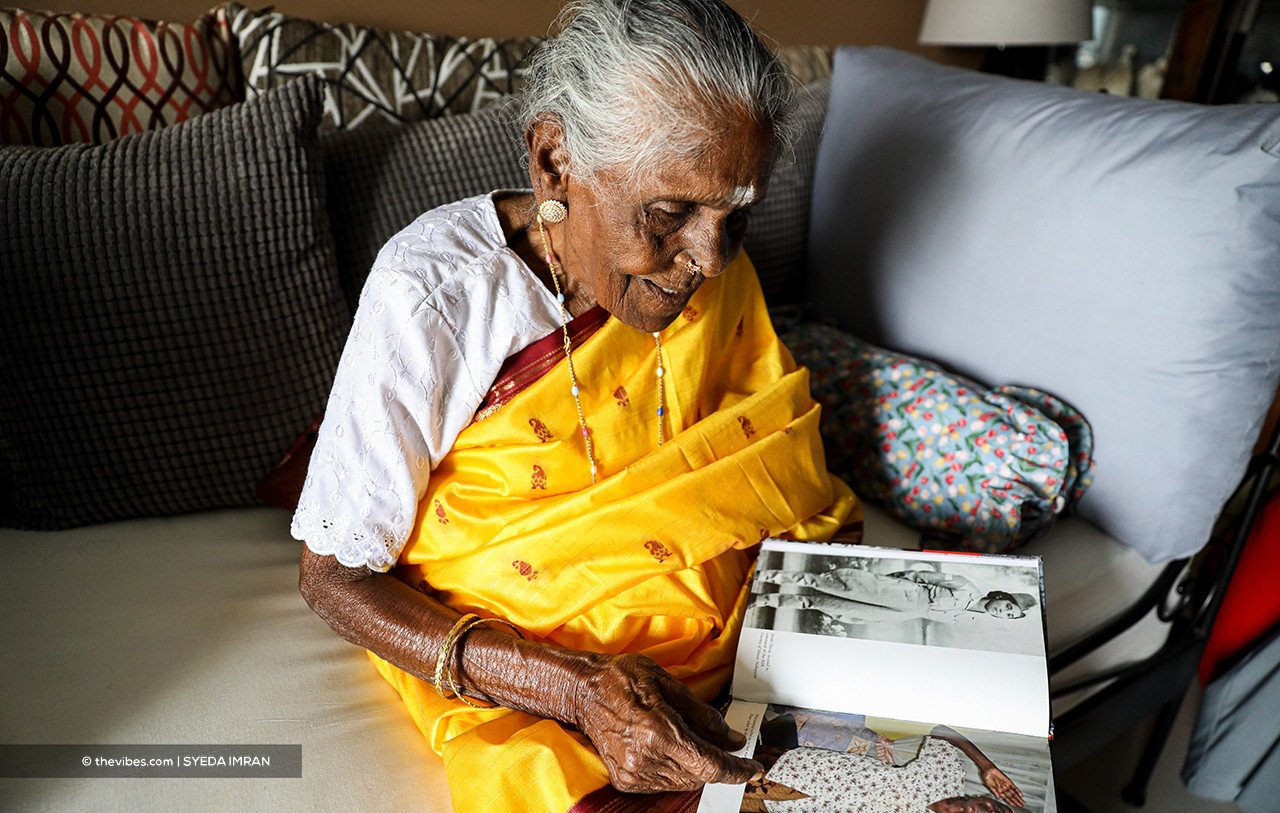
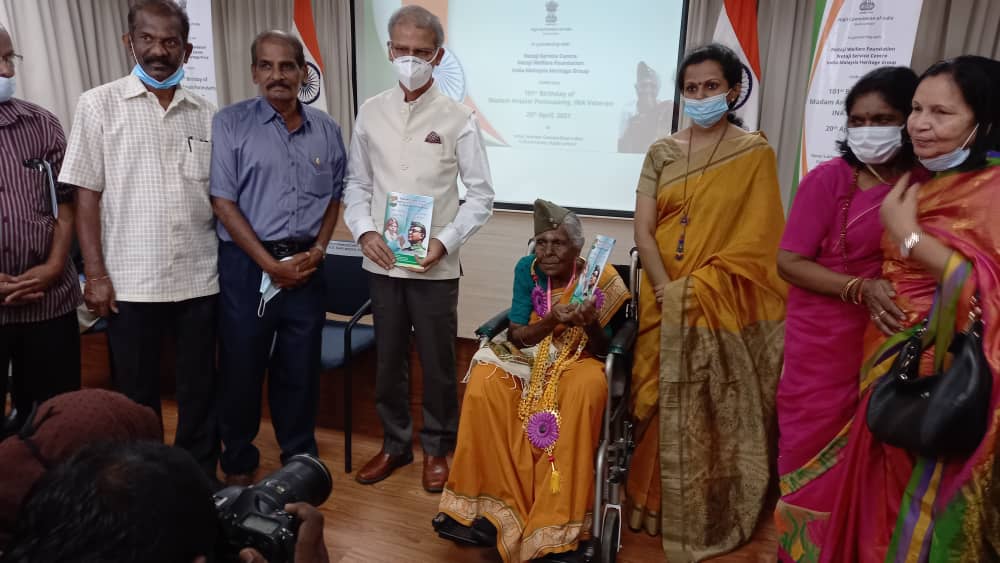
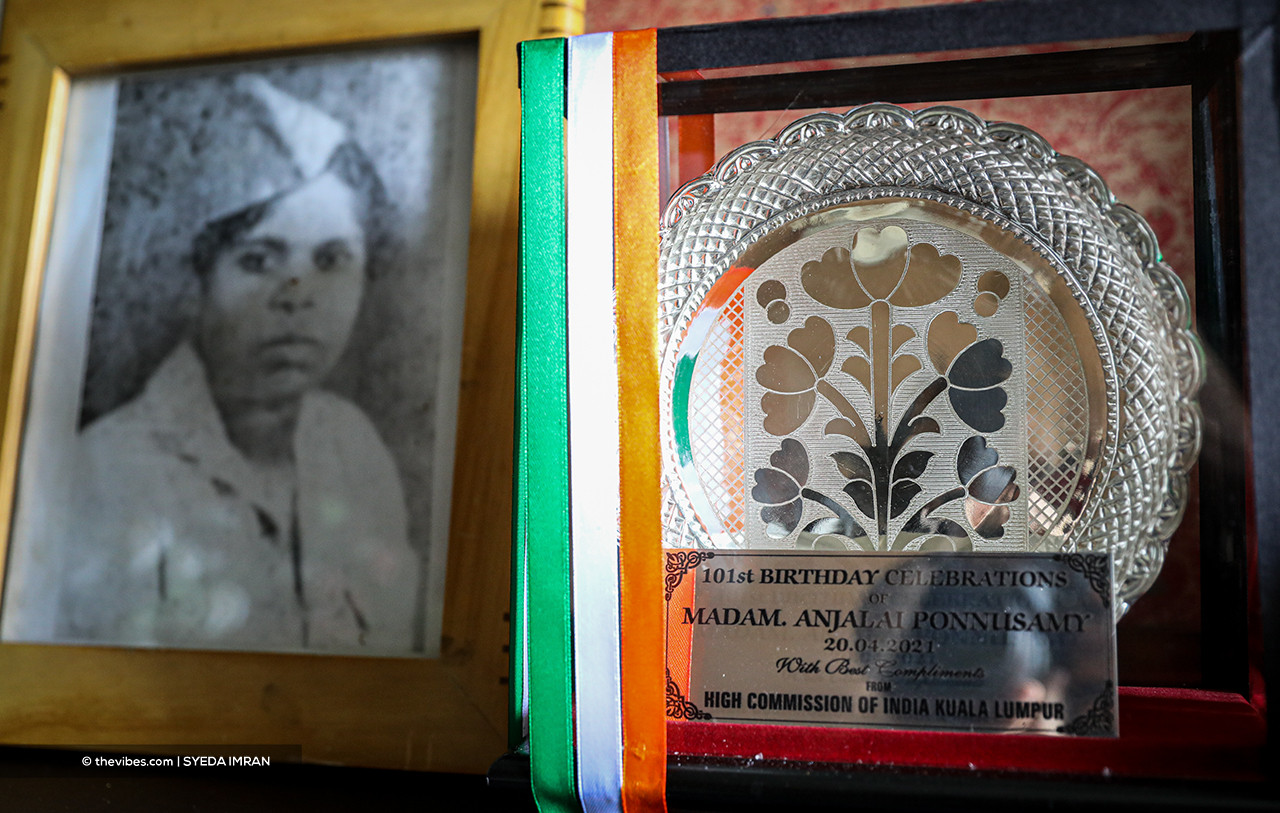
The stories of her stint in the National Indian Army (NIA) and its women’s regiment, the Rani Jhansi of India (RJI), have been spread across newspapers and multiple screens, and have been well shared in the past week on social media in India and Malaysia.
She rarely inserted them in the conversations that we have had over the years. Apart from her learning to handle a gun and the importance of maintaining discipline, there are no recollections of her army days that fossilised in my mind.
Our exchanges were mainly on the family. It was a topic that was dear to her heart. Joy streaked across her face at the mention of the characters that clasped her life. She had her favourites. Each of her peers left their indelible impressions on her as they wove into the brilliant fabric of her life.
Uncles Ramadass, Shanmugam, Kumarasamy and Empat Mata frequently helmed her stories. Aatha also reserved the utmost reverence for my maternal grandmother Sulochana while mischief always dangled in her eyes at the mention of the other grandee, the storied Silambhai.
Memories are what we make of them. They sustain one as much as they shred him to shards. Memories had that effect on Aatha: placed within her aching solitude, she lamented the diminished visits and phone calls from her loved ones and, perhaps secretly, consoled herself with the moments in their lives that she had helped craft and define.
We have only a little time to please the living but all eternity to love the dead. – Sophocles
My last leisurely chatter with Aatha was in March. I brought over lunch and – tripped over by tardiness – finally landed just past the designated hour. Aunty Banumathi, who fastidiously cared for her up to her demise, revealed that Aatha had almost yielded to the deception of another non-visit. We sat down and Aatha dryly remarked that grey hair had colonised my face.
It was a sumptuously ironic observation from one of the country’s last remaining centenarians. Aatha then launched into the stories. In private, she was a loquacious lady – and nothing quite excited her more than reeling back the persons and remembrances that tenanted her life. There were bygone tales that she had shared aeons ago and a couple of new releases.
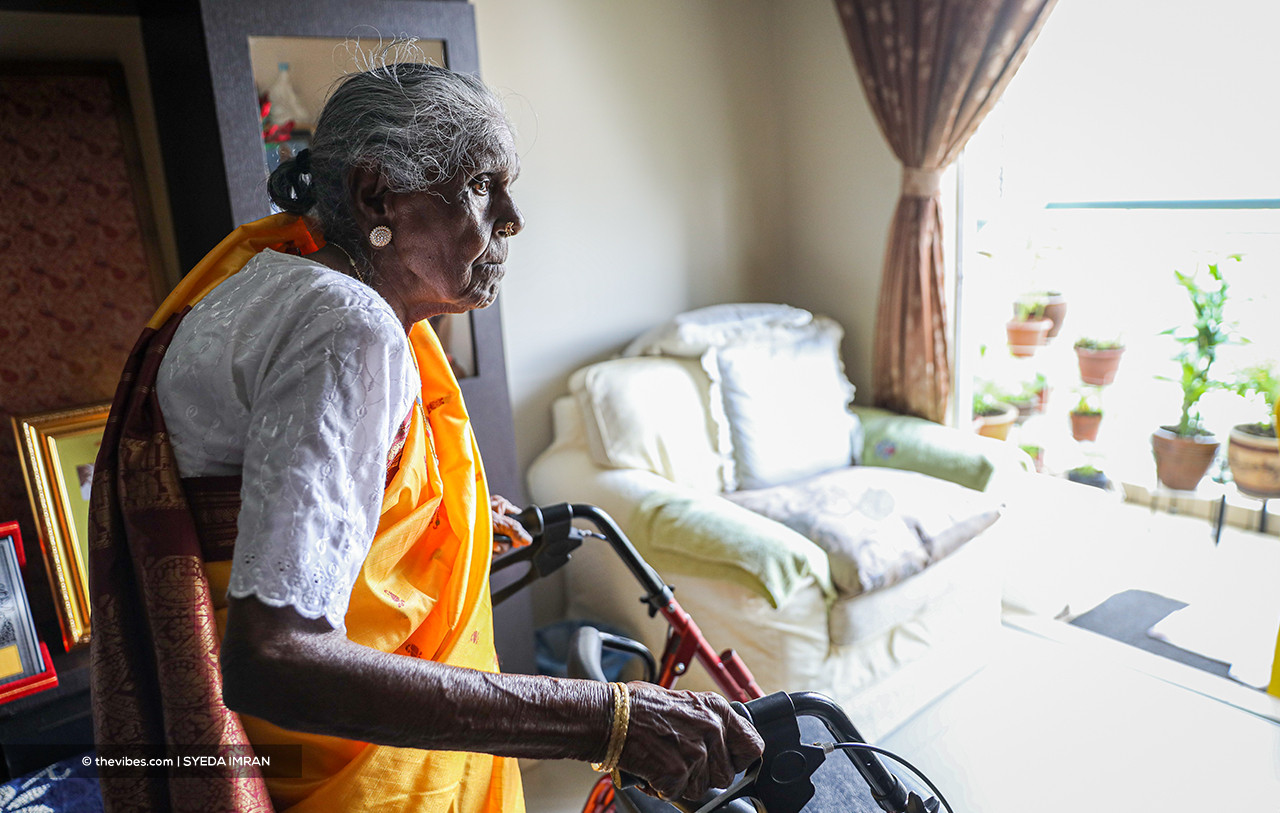
After lunch had tumbled over into teatime with mung bean soup, I bade goodbye with the promise to see her again. Aatha set out a familiar sight. She looked away and cast her sight out. I sensed that she had accepted the detachment that death has designed for the shrivelled soul, but I was comforted by the belief that she was unspooling more memories and tunnelling through her mind for episodes that linked various events that signposted her grand life.
We tend to surrender to the clamour for appropriating the deceased more than the living. Perhaps that is a manifestation of our guilt in not caring enough and not allotting the briefest of time to the departed individual. That is also human nature. The memories that seep through are all that we have in the final count. They caress down the spine, unwrap the past and nibble away to reorder the conscience.
Death lives in us. How do you remember? – The Vibes, June 30, 2022
Nantha Kumar is a former journalist
High Commissioner @BN_Reddy_8888 offered his condolences personally to the bereaved family of Madam Anjalai Ponnusamy and paid his respects to the departed soul.
— India in Malaysia (@hcikl) June 1, 2022
Madam Anjalai Ponnusamy’s life & courage will continue to inspire us for years to come. @IndianDiplomacy @MEAIndia pic.twitter.com/niTQYD6SKE
Anguished by the passing away of the distinguished INA Veteran from Malaysia Anjalai Ponnusamy Ji. We will always remember her courage and inspiring role in India’s freedom movement. Condolences to her family and friends.
— Narendra Modi (@narendramodi) June 1, 2022
Honoured to handover Hon'ble PM @narendramodi ‘s Condolence Letter on the demise on INA veteran Smt Anjalai Ponnusamy to her daughter Banumathy, in the presence of family members & reps from Netaji Welfare Foundation,Malaysia@PMOIndia@MEAIndia@IndianDiplomacy @DrSJaishankar pic.twitter.com/7xPmXFKGdV
— B N Reddy-India’s High Commissioner to Malaysia (@BN_Reddy_8888) June 12, 2022
@hcikl offers its deepest condolences on the sad demise of 102 year old INA Veteran Madam Anjalai Ponnusamy.
— India in Malaysia (@hcikl) June 1, 2022
We remain deeply indebted to Madam Anjalai for her selfless efforts in India's freedom struggle.
Our prayers for the departed soul.@MEAIndia @iccr_hq @bernamadotcom pic.twitter.com/3l6HSCUW5W




.jpg)