.jpg)

SANDAKAN – Adam, a 13-year-old stateless boy was happily drinking his Milo drink from a plastic bag that he bought for RM1, not at all bothered by the pungent smell of trash surrounding him.
He was happy that he and his father had earned over RM50 that day, which was more than their usual RM20 to RM30 daily income from sorting and selling recyclables at Sandakan’s dumpsite in Mile 8.
“Today is a good day. On good days like this, my father would give me money to spend at to buy drinks and snacks over there,” he told The Vibes, pointing to a squatter house that sells drinks outside.
It is saddening to think that a cup of Milo that might be a daily drink for normal kids is a once-in-a-while drink of celebration for kids like Adam.
Despite being of school-going-age, Adam does not go to school because he is not a Malaysian.
There are two schools set up by non-government organisations near his squatter village, but Adam said he is not keen to learn "mengaji" (reading the Al-Quran) as he would rather spend his mornings helping his father "me-yampah" (pick up recyclables at the dumpsite).
.jpg)
“At least I can help my father earn more money. That is what my father said too,” he added.
Adam’s father, Singkol, said that he has eight kids and Adam is his second child.
He said as a non-Malaysian, picking and selling recyclables from the dumpsite is his way of making sure that there will be food at the table for his family.
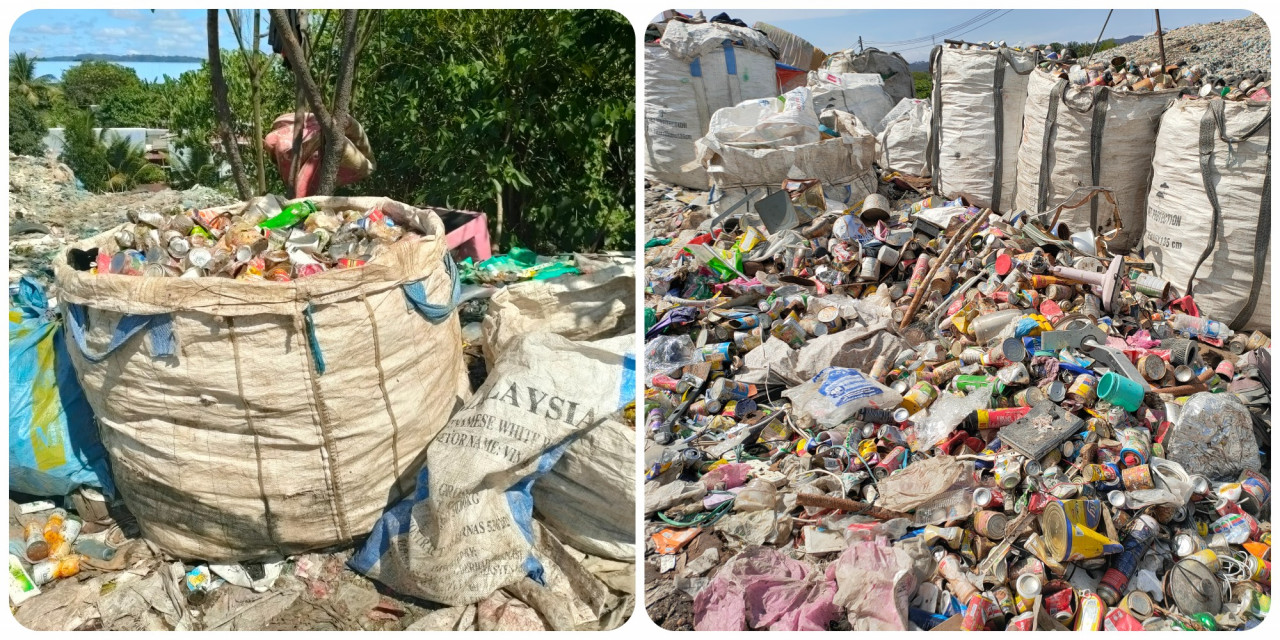
During this writer’s visit to the squatter village, it was difficult to estimate how many families live at the site, but all of them earn from picking and selling recyclables from the dumpsite.
The smell of rubbish was overwhelming, but the villagers here make their squatter homes as comfortable as possible, with most of their furniture, including mattresses, found at the dumpsite.
.jpg)
Another villager, Bong Paskuah, 52, said that he has been living at the village and picking up trash for 20 years.
He said he earns about RM30 a day, and one kilogram of aluminum cans can get him RM0.50.
“We are doing fine. Look at us, there are so many of us doing this, because it is great. RM30 may not be much, but it is definitely enough and is considered as lucrative for a migrant in Sandakan,” he said, adding that he feels lucky to be able to earn such income.
Bong said that the villagers, mostly men and kids, would go to the dumpsite and wait for the garbage trucks at around 6am, and their job will be completed before noon.
.jpg)
“There are not a lot of women because most of them would need to look after their babies,” he added.
Knowing that he was speaking to a reporter, Bong said that he hopes this writer will spread the words that he had never done anything that is against the law all his life, except for staying here illegally.
He also sensed that people, especially those who are not from Sandakan, showed that they felt sorry for him for being a “garbage collector”, but he said being one is actually the good part about his life.
.jpg)
“Picking up trash for a living is not terrible at all. It is the good part about my life because I get to earn an income with my efforts.
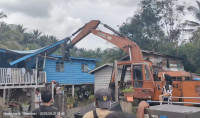
“The terrible part about our lives is living in fear; knowing that you can be separated from your kids any moment if the authority comes and take them away, sending them to a country that is foreign to us. Knowing that your house can be torn down any time the authority wants to.
“We have a hard time sleeping because of the fear, never because of the smell of rubbish,” he said. – The Vibes, July 1, 2022