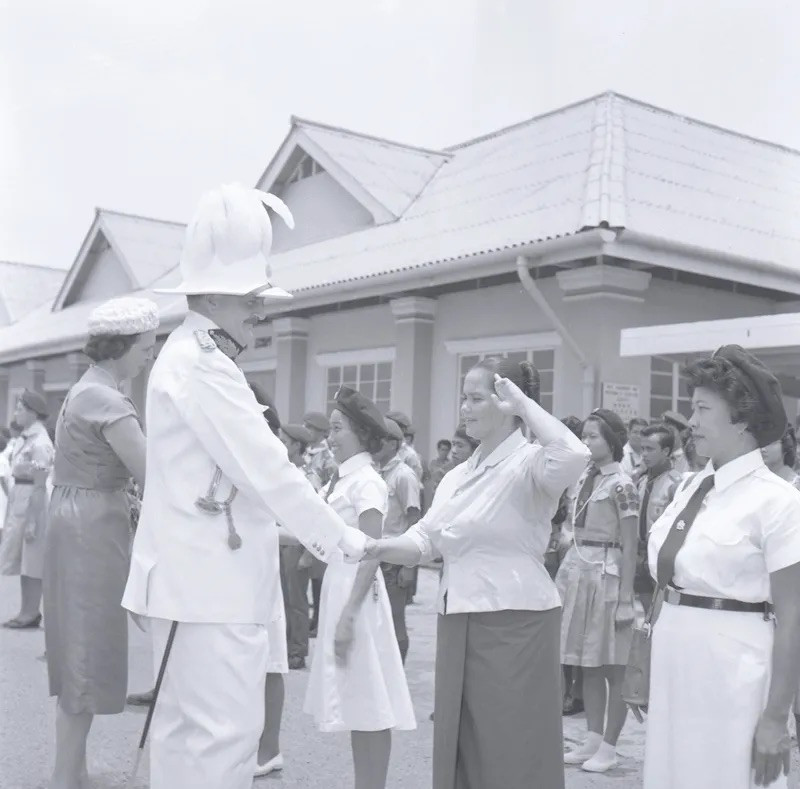

WHEN a certain Englishman left the Astana of Sarawak on July 22, 1963, boarding a white sampan to cross the Sarawak River – did this action of his spell “Independence” for the state?
Some answer with an indisputable “yes” and others like self-styled Sarawak independence fighter Voon Lee Shan say it is a moot point worthy of further inference.
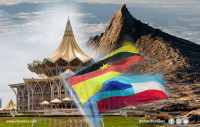
The last British colonial governor of Sarawak, Sir Alexander Waddel, took a jaunt across the river to witness the lowering of Briton’s Union Jack and the raising of the Sarawak flag – embellished by a black and red cross and a yellow crown in its centre.
By the way, does Waddel’s white “sampan cruise” across the Sarawak River signal the colour of “surrender” – as in surrendering the land from colonial polity back to native ownership? This is open to conjecture as well.
On reaching the other side of the river, in a very brief ceremony, the outgoing Waddel effectively handed over the government of Sarawak to its people.
Waddel also appointed a local, the late Tan Sri Stephen Kalong Ningkan, who was then secretary-general of the Sarawak Alliance as the first Chief Minister of Sarawak – as well as helped him to cobble a new bench of supreme council members to form the state’s first ministerial cabinet.
Every year, Sarawakians celebrate three days that embrace the essence of patriotism; Malaysia Day on September 16. It was the day when the state entered into a partnership with the Federation of Malaysia with Malaya, North Borneo (Sabah) and Singapore; Merdeka Day on August 31 when Malaya become independent in 1957 and July 22 – today – known as Sarawak Day (Hari Sarawak) or Independence Day (Hari Kemerdekaan Sarawak).
Many Sarawakians, especially the younger intelligentsia, give Merdeka Day a miss – only gleefully glad that it is a public holiday and another day for leisure.
This new generation of Sarawakians are still prickled from the unfulfilled promises of the Malaysia Agreement (MA63) and therefore choose to distance themselves from Merdeka Day celebrations – firm in their stentorian argument: “We have no sense of connection to Merdeka as it is too Malaya-centric”.
This brouhaha reflects the collective zeitgeist of Sarawak’s echo-boomers today.
Since 1963, Malaysia Day was only celebrated and first deemed a public holiday in 2010. This was when then Prime Minister Datuk Seri Najib Razak saw it fit to foster the Malaysian spirit across the South China Sea and to remind Malaysian people – including those of the Borneo states of the struggles of their forefathers in achieving the independence they enjoy today.
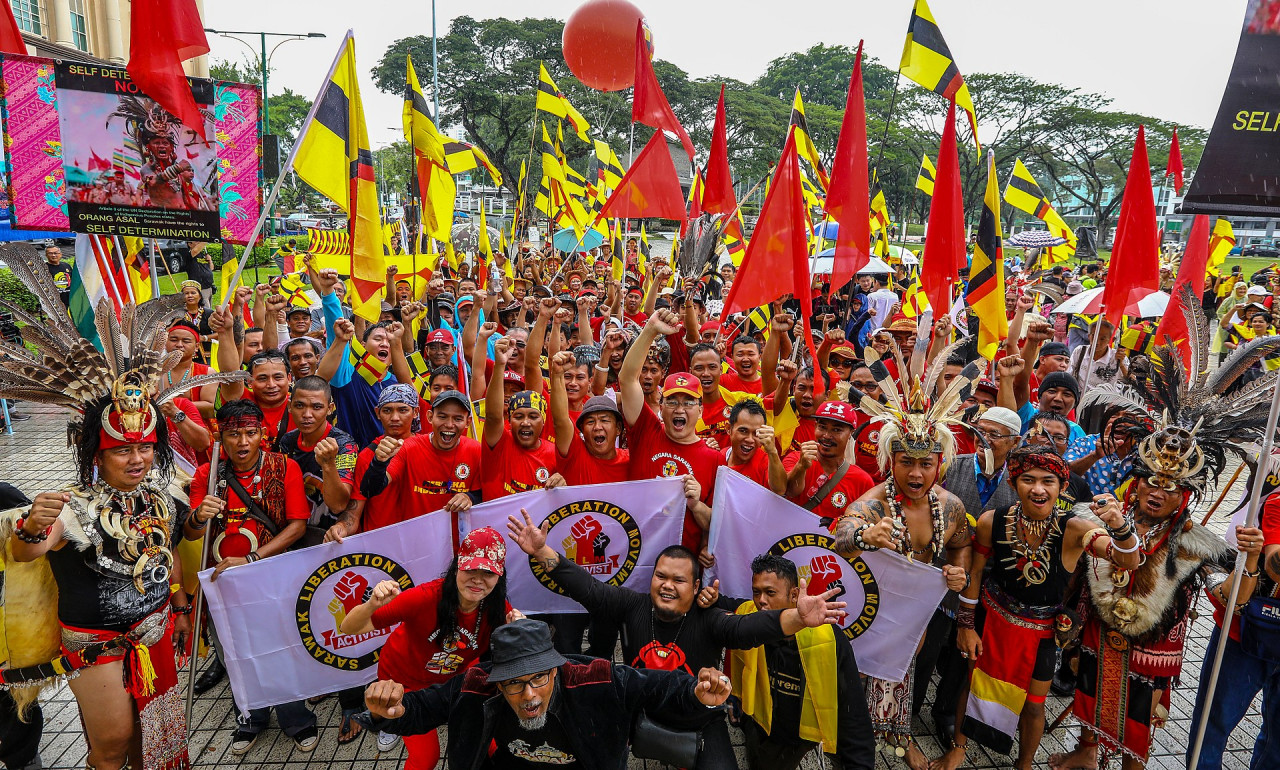
In 2016, the Sarawak Government under the late Pehin Tan Sri Datuk Patinggi Adenan Satem officially gazetted July 22 as a Sarawak public holiday – and that it, henceforth be known as "Sarawak Independence Day” – much to the consternation and surprise of several Sarawakian groups.
Misleading factual errors
A year before Adenan officially gazetted a public holiday for Sarawak on July 22, the Sarawak Malay Graduates Association president Datuk Dr Sanib Said told local media: “There have been factual errors and misleading assumptions concerning this date, particularly in newspapers and social media by some quarters.”
Sanib, who is also a historian, said: “July 22 was just the beginning of the process towards independence. “We actually achieved independence from the British for just a few hours only on September 15, 1963, when Waddel left for England that day. The next day, we became part of the Federation of Malaysia.”
The historian also said even after the appointment of Ningkan, Sarawak was not “independent” yet because some powers were still with the colonial governor and the Queen in London.
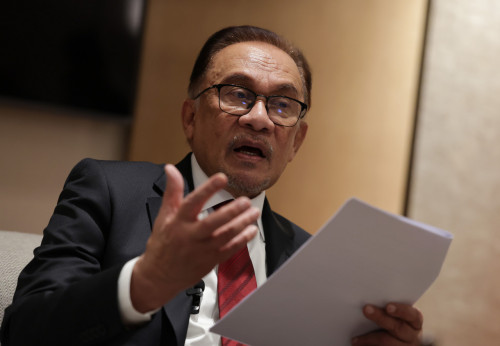
Meanwhile, lawyer-politician Voon Lee Shan told The Vibes, that politicians and academicians had misled everyone into thinking that Sarawak was granted independence on July 22, 1963, with the appointment of Ningkan as the first Sarawak chief minister.
He said Ningkan had a high stake in why Malaysia must be formed. “If this geopolitical engineering was successful, Ningkan could be the first chief minister of the state.”
He said: “Ningkan was, however, unaware of moves by certain quarters including Kuala Lumpur, that he was not favoured for the post.
Voon also disclosed that ironically, it was Ningkan’s good friend, Tun Jugah Barieng who helped to file a petition to the first Sarawak Governor Tun Abang Openg to dismiss Ningkan from his post as chief minister.
“Thus, Ningkan’s tenure as chief minister was short-lived. Leaders in Kuala Lumpur deeply distrusted Ningkan and thought that he was an unsuitable choice for the chief minister’s post.
“They felt that they had the right to nominate members of the state government as they were taking over Sarawak,” Voon said, quoting excerpts from the book authored by Professor Michael Leigh titled 'Deals, Datus and Dayaks'.
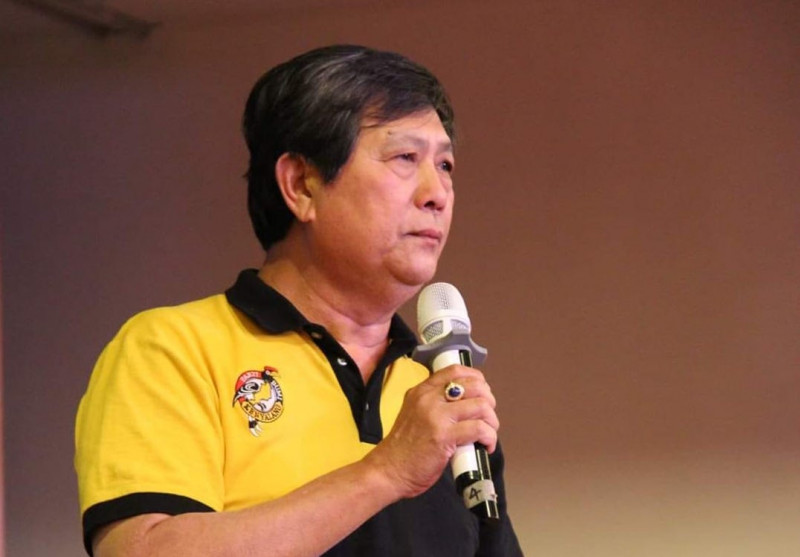
Voon, who is also Parti Bumi Kenyalang president, is vehement that Sarawak never was granted independence by the United Kingdom, not even for a minute.
He said there was no legal document or instrument of independence handed by the United Kingdom nor by the British Colonial Governor to say that Sarawak was granted independence or self-government by the British, emphasising: “Where is the legal instrument for self-government that was supposed to be granted to Sabah and Sarawak?
“Since 2016, July 22 had been celebrated as Sarawak Day. Certain activists have claimed July 22, 1963, as the date of Sarawak's independence. That claim requires careful examination, as the British governor remained in absolute control through August 31, 1963.
“The British governor continued to prudently exercise authority on what had been agreed by the Intergovernmental Committee (IGC) to be federal matters, until Malaysia came into being on September 16, 1963. It was on that date that the Union Jack no longer flew over the Astana,” he claimed.
He said Britain could only grant independence to her colonies by an Act of Parliament, called the Independence Act. He further said: "The British Malaysia Act (which came into force on September 16, 1963) provides for the transfer of British sovereignty over Singapore, Sabah and Sarawak to the new Federation of Malaysia, but does not provide for the separate independence of these territories.
Therefore, Adenan's gazette was nothing more than a shrewd political move meant to win elections and to stay in power. The truth is that ‘July 22’ was never the day Sarawak was granted independence and neither was it a day when Sarawak was granted self-rule or self-government.”
Sarawak, which some legends attest got its name from the Malay term “Serah Kepada Awak” meaning “surrender unto you”, is in transition from what it was, to what it is and what it will become in the near future – just as any other state or region.
In a way, Voon's effort to have the state "surrendered" to the people of Sarawak from the tight grip of the federation is heroic and valiant.
But for now, the seas are not readily parting for him. Voon is up to his waist in the legal-constitutional quagmire of geopolitics, where his dream of a new coronation for Sarawak also known as Cevera is hard to come by – or might never come. – The Vibes, July 22, 2022