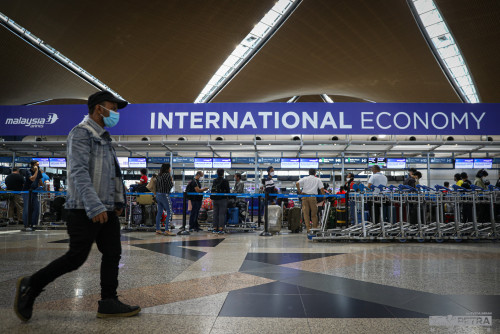

THE English economist, John Maynard Keynes, predicted in 1930 that by the end of the century, human beings would unlock such massive technological feats that the need for labour would dramatically reduce and most societies would reach a fifteen-hour work week. The first half of his prediction came true – we have achieved spaceflight, instantaneous communication, automation, and artificial intelligence in almost every sector of our industries. The second half, not so much.
In fact, a recent study by Kisi, an American security solutions company, highlighted a startling fact, but surprising no one: that Kuala Lumpur is the third most overworked city in the world, after Cape Town and Dubai.
The long-terms effects of this can be devastating as Calvin Cheng, a senior analyst for ISIS Malaysia comments, “evidence suggests that excessively high working hours carries both economic and public health consequences. Long working hours and overtime tends to reduce productivity – at the individual worker level, at the company level, and at the aggregate macroeconomic level. Public health consequences can be large too, via both higher incidence of occupational hazards as well as long-term effects on worker health.”
Data from the World Economic Forum showed that the annual working hours in Malaysia has not significantly reduced since the 1970s. Consider the following testimonials collected during the course of producing this article:
“My work is all-consuming. I start my day as early as 7am and end at 10pm. I rarely get weekends off. As a fresh graduate, I am constantly told that I need to put in my time and go through the gauntlet,” said Hemesh, an engineer for a start-up company

“I try not to bring home any work, but the news does not stop at 6pm on any given day, and as I have no deputy, it does fall on me to make sure the latest stories get picked up. Everything can be a work-related event, even on weekends. This is what working in the media is like, you are constantly switched on,” said Shareena, who works for an online news portal.
A pertinent question remains: how did we arrive in this position? Cheng explains that “one factor is weak labour rights of Malaysian workers. This has historical and political roots. We have had a long history of suppression of labour unions and the violation of labour rights, beginning from British colonial era when the British colonial government systematically weakened and stifled trade and labour unions. After independence, this suppression of worker rights and power continued under neoliberal 'pro-business' policies that aim to protect employers and companies.
"While attempts to strengthen labour laws are currently underway, decades of employer-first pro-business policies have led to both to a work culture and legislative environment that prioritises the welfare of employers over the welfare of workers. This then creates with and is magnified by 'Asian' socio-cultural perceptions of hard work that values hours worked and presenteeism over productivity.
"Indeed, while standard work week in many countries is legislated to be about 40 hours, a 48-hour workweek was considered to be standard according to Malaysian labour law – until very recent amendments a couple of weeks ago that reduced this to 45 hours.”
The rising cases of burnout, depression and anxiety among workers are forcing the hands of governments across the world to put the needs of employees ahead. More cities and townships are experimenting with a 4-day work week and introducing laws like the 'Right to Disconnect' in Canada which allows employees to switch off communications outside normal working hours.

“Research suggests that fewer mandated working hours may also have positive employment impacts through worker-hours to a larger subset of workers and through lower job destruction,” Cheng noted.
On whether Malaysia should consider similar proposals, Cheng offers a different view, commenting that “a 4-day workweek can work for many companies – and indeed to my knowledge some tech companies in Malaysia have already taken steps to implement a 4-day workweek. But that is a different question if it should be mandated nationwide by law. At this point in Malaysia’s development, it may be more productive to focus on improving the legislative environment for workers, affording more rights and bargaining power to workers, in addition to supply-side interventions to improve public health and upend socio-cultural notions of excessive work.”
David Graeber, in his infamous treatise titled 'On the Phenomenon of Bulls*** Jobs' explicated on the meaning and value of labour in the 21st century. He wrote the following, “we have become a civilisation based on work – not even 'productive work' but work as an end and meaning in itself. We have come to believe that men and women who do not work harder than they wish at jobs they do not particularly enjoy are bad people unworthy of love, care, or assistance from their communities.
"It is as if we have collectively acquiesced to our own enslavement. As a result, hatred, resentment, and suspicion have become the glue that holds society together... the moral and spiritual damage that comes from this situation is profound. It is a scar across our collective soul.”
The events over the last few years have reshaped the way Malaysians view work, opting for hybrid office-environments and greater flexibility but that has not increased time away from their occupations to pursue creative goals and desires. While we may endeavour to hope that our government and private companies have the best interest of workers in mind, it is only through collective action that reforms are made. – The Vibes, July 29, 2022