.jpg)
IN conjunction with World Humanitarian Day, a new short documentary was released that celebrates the role migrants and refugees have played in disbursing vaccines to non-citizen communities as Malaysia was facing the brunt of the Covid-19 pandemic.
Their action played a key role in speeding up Malaysia’s vaccination drive that helped the country achieve herd immunity.
The documentary was produced by Untitled Kompeni, a social filmmaking collective that creates multimedia responses to mainstream narratives when these narratives impinge on social justice, human dignity, and common sense.
Supported by the Malaysian Red Crescent Society (MRCS) and The Fourth, the documentary focuses on ten non-Malaysian citizens who played a significant role in disbursing the Covid-19 vaccine.
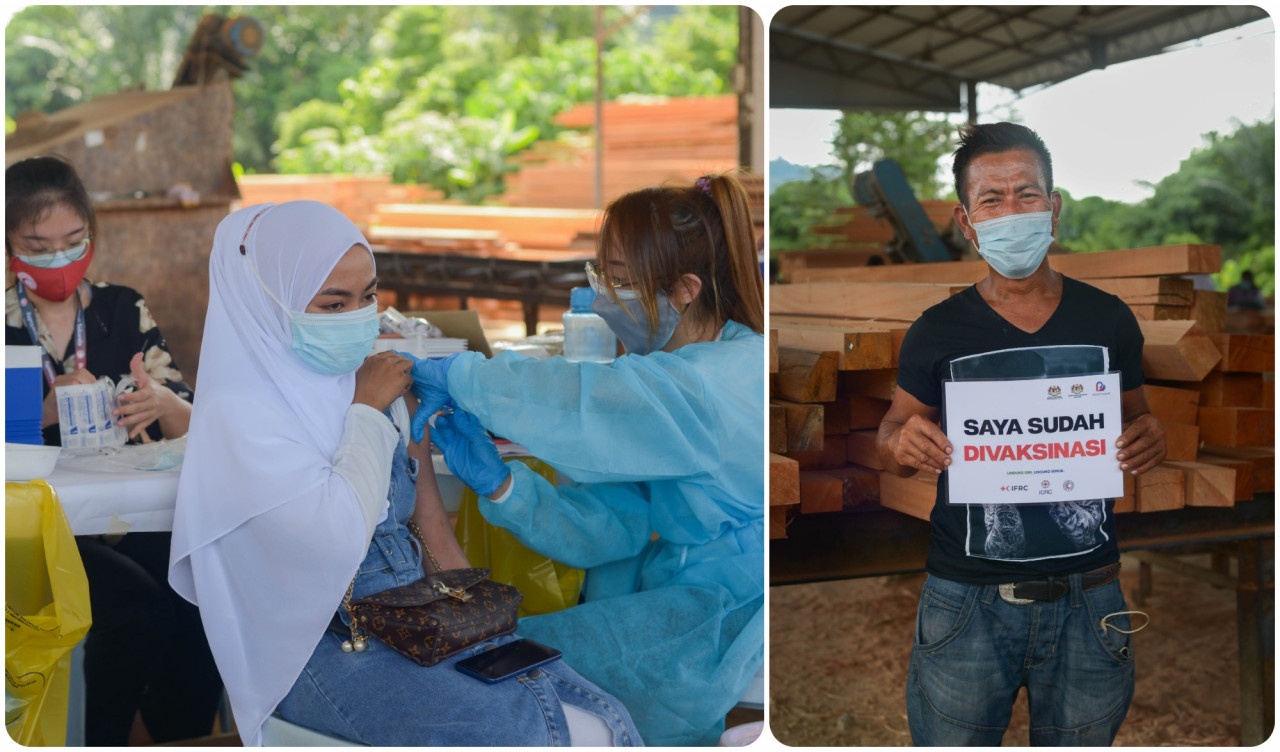
They collectively reached over 20,000 people located in KL city as well as rural areas.
Among the people interviewed in the documentary is Chang, who help vaccinated over 1,000 people. She is of Vietnamese descent and migrated to Malaysia in 1993. She has been working as a nurse at the National Heart Institute for 25 years.
Chang organised Facebook ad postings to reach out to Vietnamese immigrants and assist in their registration before compiling a list of names that are later sent to MRCS. This final name list is vital because the Ministry of Health and relevant authorities will dispense the vaccine on a need-basis.
While all this sounds relatively straightforward, the challenges the volunteers faced were immense. Beyond the misinformation campaign that was fuelling doubts about the efficacy of the vaccines, most migrant and refugee communities feared prosecution.
.jpg)
Speaking exclusively with The Vibes, Suhana Sidik, the National Board Member of MRCS attested that they “saw high vaccine hesitancy, which varied from one community to another.
"Some were rejected because they did not understand, so we worked with UNHCR and IOM (International Organisation for Migration) who helped translate the documents into multiple languages.
"When we were conducting a vaccination drive with the Orang Asli, some of them ran deep into the jungle out of fear that KKM (Ministry of Health) was implanting microchips into them.
"We worked with our partner from OA Lawan Covid and the Tok Batin (village leader) to address the various vaccine misinformation.”
Adding to this list of challenges include the language barrier and difficult transportation logistics as many do not have the means to travel into the city.
That’s where Salah comes into the picture. He migrated to Malaysia due to the ongoing Somali civil war and has lived here for the last four years. As a volunteer for MRCS, he picks everyone up first thing in the morning and drives them to their designated vaccination centre.
.jpg)
Once there, he distributes water to everyone and stamps the relevant paperwork before vaccination.
“The thing I liked most was the ‘chopping’ part. I liked it because I was given an area to be responsible for and that responsibility made me happy,” said Salah.
He has successfully reached out to a few hundred people since. The efforts of the volunteers were recognised by the Minster of Health, Khairy Jamaluddin, who thanked their tireless effort in making sure no one was left behind.
“When I was running the vaccination programme, one of the most important components was to make sure no one was left behind. We needed to get everybody regardless of where they were living, regardless of their immigration status.
"And I am so proud that Red Crescent worked together with the Ministry of Health in making sure everyone was immunised. Once again, on behalf of the Ministry of Health, thank you so much,” Khairy said in a video statement.
In a brief interview with The Vibes, the collective Untitled Kompeni described their inspiration and process for producing the documentary.
The Vibes: What prompted the making of this documentary?
Untitled Kompeni 1 (UK1): I was a full-time journalist during the pandemic. Then, there was a spike of anti-migrant sentiment. Some journalists faced intimidation from authorities for reporting on the treatment of migrants.
I produced stories that were never published. Now that I am no longer a journalist working for a media corporation, I can decide which narratives to highlight. One of the narratives I came across was the migrant vaccination drive, where migrants and refugees were working side by side with Malaysian volunteers to disburse vaccines.
.jpg)
My colleague in this project was working to coordinate these efforts, so I decided to film some interviews for documentation purposes. One thing led to another, and we now have a short documentary.
It highlights the opposite of the anti-migrant sentiment we witnessed during the early part of the pandemic. On another note, although MRCS funded the documentary, they allowed us to produce it under a Creative Commons license, so that it is owned by everyone.
Anyone can take the documentary and use it on their platforms, organise screenings, run advocacy campaigns so long as it remains non-commercial.
Untitled Kompeni 2 (UK2): I was working as a contract staff with MRCS to coordinate the migrant vaccination drive. It was a steep learning curve because it has never been done before.
Together with my colleague, Carrot Ho, we started contacting refugee and migrant NGOs and community leaders to help us reach out to members of their community who had not received their vaccination yet either because they were afraid as they were undocumented.
Or because it was too expensive to travel to vaccination centres or they had problems with their MySejahtera which they could not solve at other PPVs. We asked community leaders if they could send us volunteers as we anticipated some language barriers.
To our surprise, not only were they able to send volunteers, but they came in full force. Young and old, men and women, the community members volunteered as ushers, did the registration, translation, crowd control and even organised for meals at the vaccination outreach.
The Somali Refugee Community (SRC), not only volunteered for the vaccination drive for their community, but they continued to send volunteers whenever we needed them throughout the initial first few months to any vaccination outreach that we did.
These vaccination outreaches would not be possible without them working side by side with us, and it was something I wished everyone knew.
.jpg)
TV: What did you learn making this documentary?
UK1: It takes a village to reach herd immunity! And that village necessarily includes migrants, refugees, the poor, the rich, the educated, the illiterate… everyone. That is why we called it Gotong Royong Cucuk Vaksin.
Another nugget of wisdom I picked up was during an interview with Dr Shanti Thambiah, who said we need to focus less on our origins, and more on our destiny. We do not need to share origins to belong to each other.
We need to share a common destiny. And that is what we have with our migrant and refugee neighbours in Malaysia – a common destiny.
UK2: How important these stories from the ground are. For a moment in history, ordinary people did extraordinary things for Malaysia. A janitor, a cashier, a construction worker, a driver...
They gave their time and effort to keep us all safe, and they did it without expecting anything in return. Being able to share their story with a wider audience is a small way to thank them for all they did.
Suhana Sidik hopes the short documentary will inspire Malaysians to overcome their prejudice. “Achieving herd immunity would not be possible if we do not include everyone regardless of their nationality, documented or otherwise.
Truly, we are only safe when everyone is safe. The virus does not discriminate, and we should not as well. The power of humankind, and for me, the true reflection of our society is most evident throughout the vaccination programme.
Everyone came together regardless of gender and status, to provide vaccine to their family, neighbour, friends, and community. For the Malaysian Red Crescent, our vaccination campaign was successful as we included other NGOs and community leaders as a core component of our team, ensuring that we do not work in silos.
In total we have interacted with over 40 organisations and helped vaccinate communities from 50 different nationalities at over 400 outreach sessions,” Sidik said. – The Vibes, August 20, 2022
The documentary is available in full on YouTube: