NANOMALAYSIA Berhad and Nanopac (M) Sdn Bhd have signed a joint venture (JV) agreement to develop and commercialise a solar power panel game-changer – the Nano Light Energy Panel (NLEP).
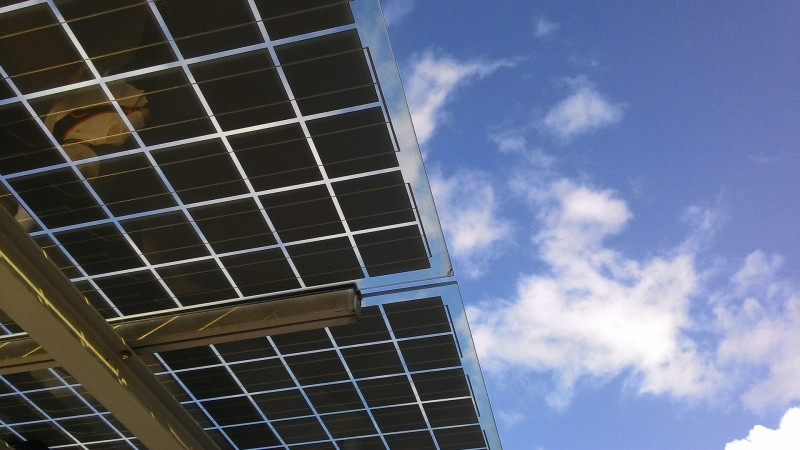
It is suitable for diffused sunlight in local climates and can be installed as windows – an advantage over standard photovoltaics (solar panels).
The glass-based panels, which utilise nanotechnology, are able to generate electricity through visible light, either via sunlight or indoor fluorescent lights, and can generate up to 100 watts of electricity an hour.
More importantly, it has a wider solar harvesting window from 8am to 6pm compared to standard photovoltaics.
Nanopac (M) Sdn Bhd will hold a 60% stake, while NanoMalaysia Berhad will take up the balance of 40% in the newly established company, Nanopac Innovation.
Nanopac (M) Sdn Bhd focuses on the research and development; manufacturing; and distribution of nanotechnology and photocatalyst technology products.
NanoMalaysia Berhad is a company limited by guarantee (CLBG) under the Ministry of Science, Technology and Innovation (Mosti) to act as a business entity entrusted with nanotechnology commercialisation and industrialisation activities.

Nanopac (M) Sdn Bhd’s CEO, Dato’ Dr Cheng Kok Leong said: “NLEP is a revolutionary and disruptive product that will not only rival fossil fuels when it comes to powering and elevating industries – it has also managed to overcome drawbacks that solar panels face.
“We received over US$400k (RM1.63 million) worth of orders from China and Thailand in the pre-commercialisation stage. Based on this demand, we project an initial sales forecast of approximately RM1.5 million over a 3-year period, beginning from 2021.
“As we have a first mover market advantage both in Malaysia and in the Asean region, we are confident that this will be well received in all of our target markets which include China, Thailand and Macau.”
He added that the raw material used in NLEP is nano-sized hybrid Titanium Dioxide (TiO2), which is a green material and has been approved by the US Food and Drug Administration (FDA) to be used in the food industry.
This is in comparison to conventional solar panels that use Cadmium Telluride (CdTe) as its raw material and has been proven to be toxic and banned in product manufacturing in many countries.

NanoMalaysia Berhad’s CEO, Dr Rezal Khairi Ahmad said: “Malaysia aims to reduce 45% of its greenhouse gases (GHG) by 2030. In addition, the current total installed photovoltaic (PV) capacity in Malaysia stands close to 882MW with plenty of upside for solar energy harvesting.
“Up to this point, all solar products used in Malaysia either originate from other countries or are simply assembled here. Hence, it is imperative for us to claim proprietary ownership of our own solar panel and establish technology sovereignty.
“It is also crucial for us to realise that we have the local talent and capacity to create disruptive game-changing technologies and build a new set of value and supply chains towards jobs and entrepreneurship opportunities.
“As the results of our pre-commercialisation phase and 3 pilot projects have shown, there is a demand for renewable energy alternatives.
“We project that the pricing points for the NLEP will be reduced to at least 60% of the standard photovoltaic at a comparable power rating at mass production.”
The NLEP can be easily deployed in a variety of settings, ranging from skyscrapers with large windows, walkways, and on tables to a mobile device such as a phone, a laptop, or an e-reader.
As these solar power windows can simply replace the traditional glass windows in offices and homes, the technology holds the potential to virtually turn every building into a solar energy producer.
Dr Rezal added: “This will also give rise to the concept of urban solar farms, which avoid using agricultural land for large-scale solar farms.
“Due to its translucence, these NLEPs are also suitable for smart farming – allowing sunlight to pass through the panels for crop growth and off-grid electrification to power up sensing and communication systems.”
According to a report released in November this year by the International Energy Agency, 90% of new electricity generation in 2020 will be renewable with the declines caused by the coronavirus pandemic in the fossil fuel sectors.
The trend puts green electricity on track to becoming the largest power source by 2025. – The Vibes, November 24, 2020