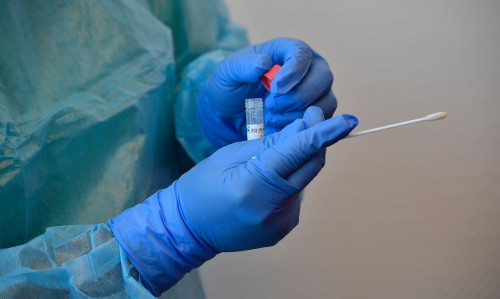
IT’S a massive and complex undertaking, and at first glance, it might seem downright eccentric. Two American researchers are working on a project aimed at creating a bionic nose. The objective is to help people suffering from anosmia regain their sense of smell.
Before the Covid-19 pandemic, the condition of anosmia, ie, the loss of sense of smell, was relatively unknown to the general public. The condition is now at the heart of extensive research programmes aimed at alleviating this handicap.
One such project being undertaken by American researchers takes a somewhat unusual approach to the matter. In an article by IEEE Spectrum, they present their work on an olfactory prosthetic capable of detecting “lost odours”.
Professor Emeritus of Physiology and Biophysics Richard Costanzo, and his colleague Daniel Coelho, Professor of Otolaryngology at Virginia Commonwealth University, have found that cochlear implants, which are used to enhance hearing, can be an inspiration for an olfactory counterpart.
For their project, the specialists aim to create an electronic nose that would be paired with a brain implant. The objective of the sensor is to be able to recognise as many smells as possible before transmitting them to the sensor located in the brain.
While the project seems promising and has many in the domain excited, the researchers still have a long road ahead of them. The human nose has 400 types of olfactory sensors and is estimated to be capable of distinguishing about a trillion odours.
The device currently developed offers sensitivity to "dozens" of odors, with several hundred envisaged for a version down the line, though not an early product. Once a smell is identified, it is still necessary to know which part of the brain to send the information to.
The path to follow is complex, and specialists are still working on solutions. A lot of work remains to be done, but the two colleagues are realistic and expect to make progress in the next few years.
Other solutions exist for people suffering from loss of smell, including a free online protocol that aims to help olfactory rehabilitation. – ETX Daily Up, October 30, 2022