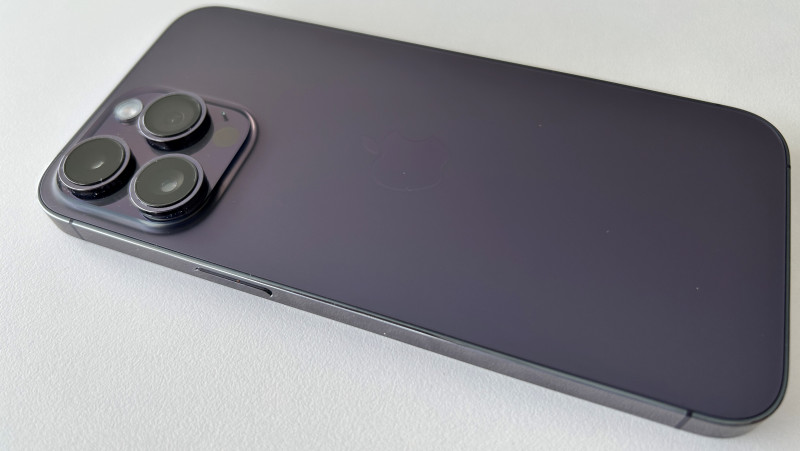

THE iPhone 14 Pro Max is a hefty device (6.7 inches across), in more ways than one, it feels substantial when in hand, especially when paired with a premium case. This is Apple’s flagship phone for the year and has all the bells and whistles that come with that distinction.
Unsurprisingly, the price is also quite substantial and this year it is even more apparent as iPhones in regions around the world (outside the US) have shot up in price. This is in addition to the price hikes for the various subscription services like Apple Music, Apple TV+, and Apple Arcade.
The Pro line of iPhones, especially as they go up in storage space – which is its own issue, the markup of RM1,000 to go from 256GB to 512GB is kind of ridiculous (that’s old news though) – are not devices for the budget conscious at the best of times.
However, with the base model iPhone 14s coming out with relatively incremental updates, those wanting to experience Apple’s first steps at offering something new will have to cough up the extra dough.
Dynamic Island – alerts with cool animations
A big emphasis in the marketing for the Apple 14 Pro lineup is the Dynamic Island that occupies the top of the screen. These iPhones are the first to get rid of the ‘notch’ that’s been around for a few generations, housing the selfie camera and the Face ID sensor.
However, instead of being hidden or behind the screen as some newer Android devices are experimenting with, it’s well, it’s an island. Aesthetically, it’s kind of a lateral move that’s only really obvious if you’re using a light-coloured wallpaper or if you’re playing a game or watching a piece of content that has an aspect ratio that takes up the entire screen.
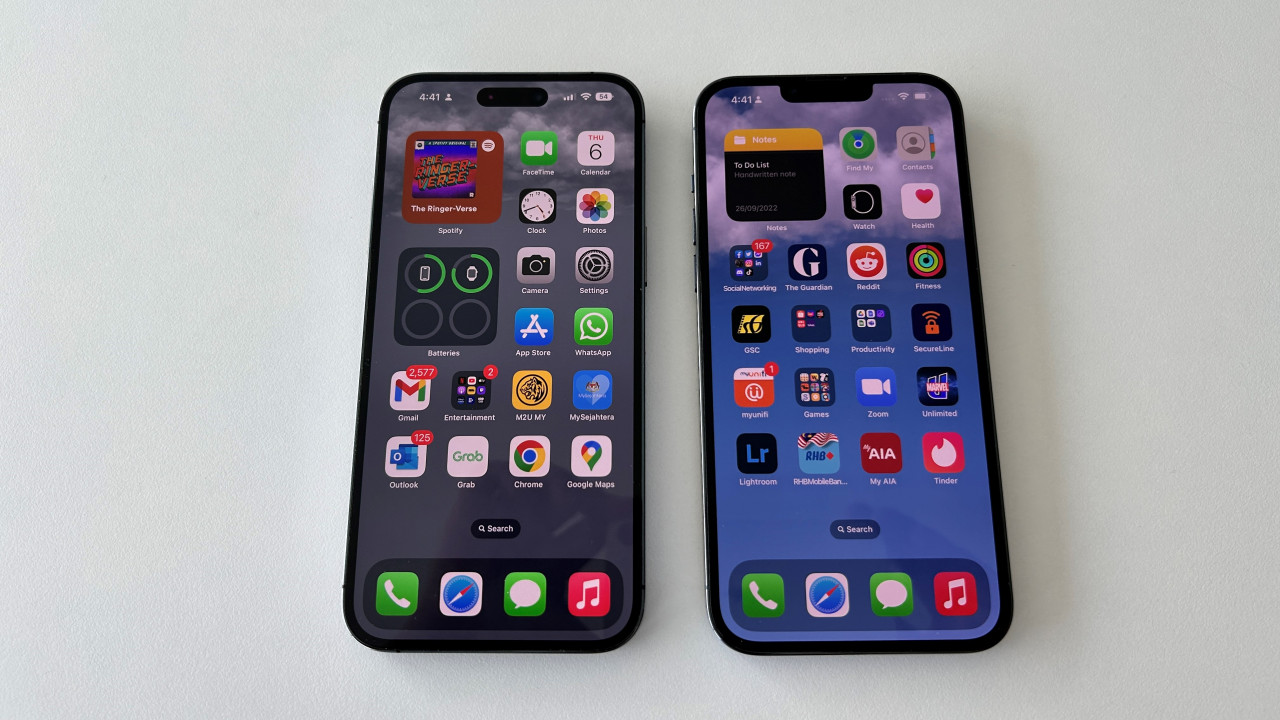
In terms of functionality, it does move all the notifications to the top of the screen, be it using Face ID or making a purchase. Tasks that are taking place in the background, such as playing music or using a timer, are highlighted on the island. If you hold on to it as music plays, a widget pops out, and if you tap on it, the app opens (seems backward).
The smoothness of the animation as it expands and contracts depending on the type of notification is eye-catching and lets the device stand out from its predecessors.
The biggest issue with the Dynamic Island is that not many apps – at least here in Malaysia – take advantage of it. Grab for example doesn’t use it. It will probably take time for more companies to adopt the feature – which is a possibility if Apple’s rivals decide to come up with something like it.
Great screen, but a bit of a power suck
Speaking of the screen, the iPhone 14 Pro line features the brightest HDR-capable OLED screen yet for an Apple phone, capable of going up to 2000 nits (which is pretty damn bright), making it even easier to see in bright sunlight. Being the second generation of iPhone with ProMotion (Apple’s term for variable refresh rate), it can drop down to a 1Hz refresh rate to be more energy efficient.
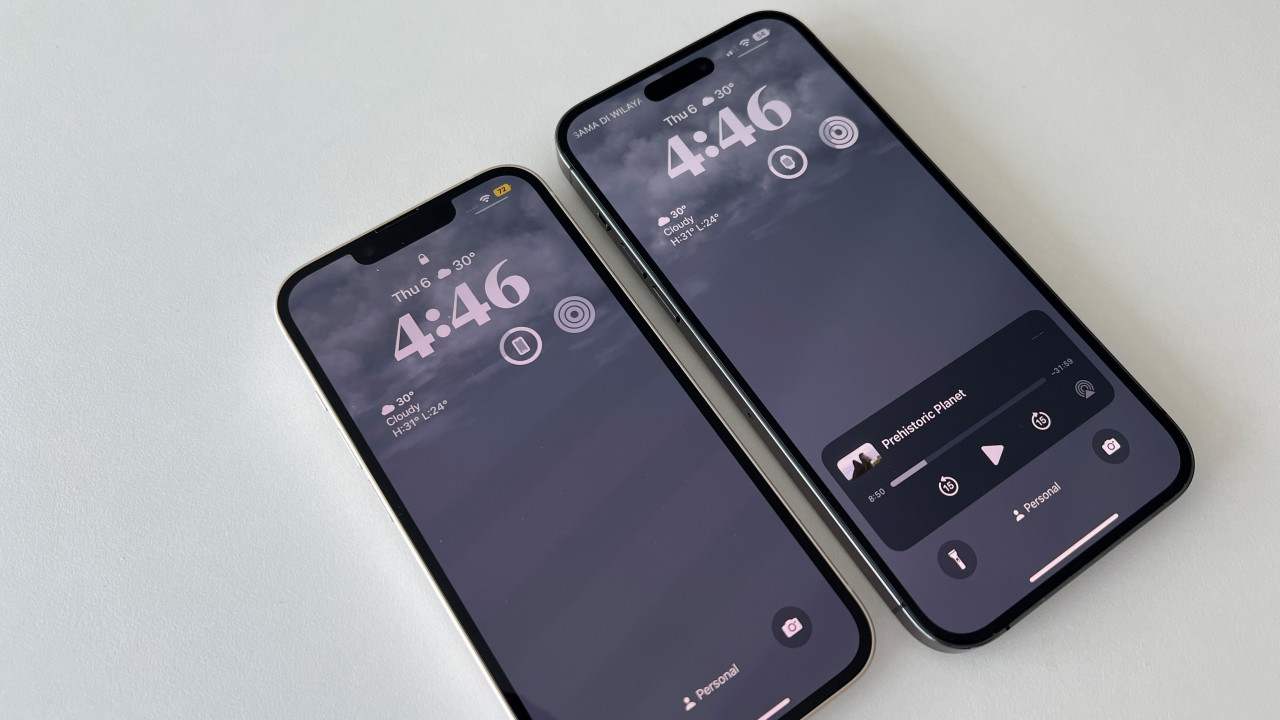
This is necessary because the Pro line features an Always-On display for the first time ever on an iPhone, something that has been around on various Android-supported phones for a few years now. Apple likes to take its time to introduce its own takes on features that have been around for years, probably because they think they can do it better.
However, always being on means the battery is being drained, no matter how dim the screen is or how inactive it is. Apple does say the phone’s battery life should be the same as the previous year’s model, but in practice, after a month of use, it does feel like it drains faster. It should still have enough for a day’s use without charging, but it does bear paying attention to.
Now users can add a bunch of widgets to the Lock Screen, such as weather, alarm clocks, the Apple Fitness app, and a few more. Like the Dynamic Island, it’s all about adding convenience – just take your phone out of your pocket, look down and you’ll have everything you need to know.
How many megapixels are too many

After hanging around at 12MP (megapixels) for the longest time, the Pro lineup comes with a new 48MP camera system – which includes a 12MP Ultra Wide camera and a telephoto camera with 3x optical zoom. Paired with the latest version of Apple’s photo processing chip (which they dub the Photonic Engine), it snaps really crispy photos.
What’s really apparent is how good the sensor is at performing in low-light situations, to the point it almost adds a look of unreality with how sharp everything is. Night mode is back, but faster than the previous iteration.
There’s also an all-new Action mode for the aspiring filmmaker. It basically auto-stabilises videos that have significant shaking, vibrating and other types of movement. It aggressively zooms in and uses a bunch of other shortcuts and tricks to do its job. It’s a fun thing to play around with but not something you’d use every day.
Bits and bobs
As a phone, the iPhone 14 Pro Max does everything well – which it should, considering how much it costs. A lot of that has to do with the new A16 Bionic chip, which Apple calls “the fastest chip ever in a smartphone.” But they say that every year, and seemingly only compete against themselves. The A15 was not exactly a slouch in terms of performance.
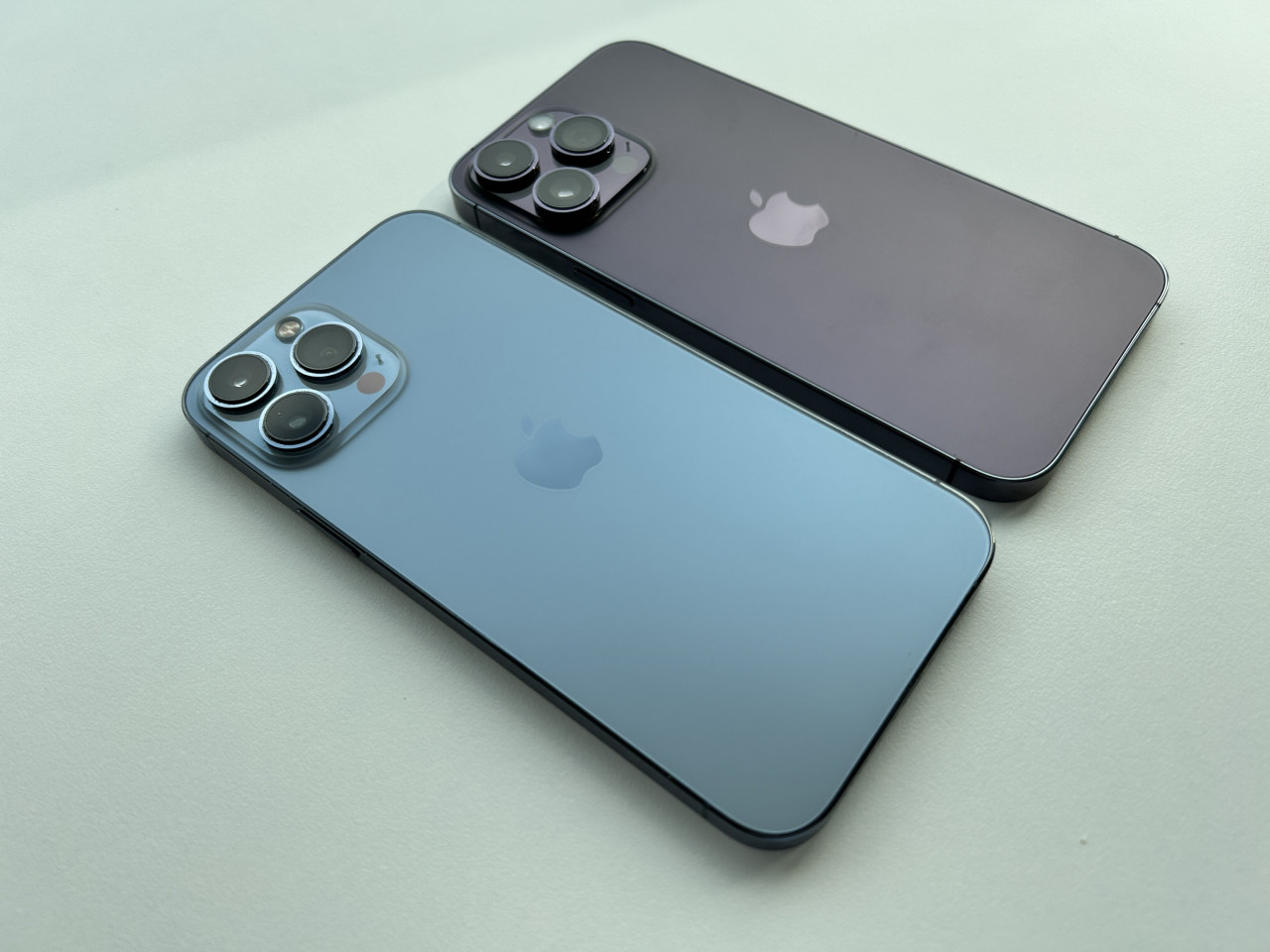
While the Dynamic Island and Always-on Display are nice improvements to Apple’s flagship phone, are they really worth the bump up in price – even from the already pricey iPhone 13 Pro Max, which started at RM5,299.
In comparison, the iPhone 14 Pro Max starts off at RM5,799. A Pro Max with 1TB hard drive is itself at RM8,299, which is a lot, even in the best of times. It’s quite the pricey stocking stuffer, especially in these tough economic times.
If you can spare no expense, then by all means the iPhone 14 Pro line should be right up your alley. For everyone else, unless you’re sitting on a near-ancient device, an upgrade isn’t quite as necessary. – The Vibes, November 3, 2022