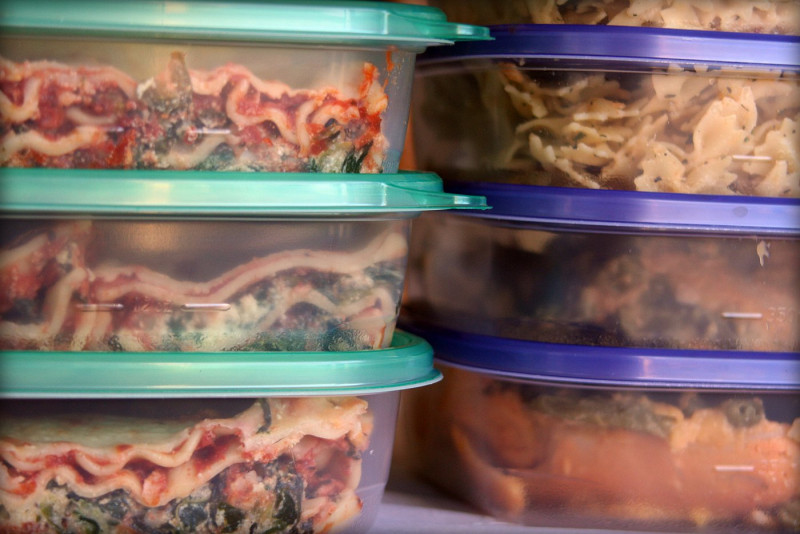
AS many of us lean back after our holiday feasts, waist-bands groaning, thoughts turn to all the leftovers.
According to the United Nations, around 17% of all food produced globally is thrown away from shops, restaurants or households. And households are responsible for the majority of this figure.
Growing food and transporting it to shops and then homes takes a huge amount of resources in the form of land, water, energy, chemicals and fuel.
Food loss or waste accounts for 8 to 10% of global greenhouse gas emissions, contributing to climate change and extreme weather.
“Reducing food loss and waste is essential in our world today, where up to 828 million people go hungry every day,” says Rosa Rolle, team leader for Food Losses and Food Waste from the Food and Agriculture Organisation.
According to Mark Boulet, a senior researcher with BehaviourWorks Australia, at Monash University, Australia, one deceptively simple idea has merit in helping households use up their leftovers.
“Simple, well-designed visual cues have been shown to be effective in encouraging sustainable behaviour,” he says.
Using marker tape for ‘eat this first’ items in the pantry or fridge reduced food waste by up to 40%.
“It acts as a visual prompt to remind householders of food that needs to be eaten before it spoils, before it passes its best-before date or before a replacement item is purchased.”
The tape was most effective in large households as a communication tool so other members knew what should be eaten or could be taken to work or school.
In Indonesia, food waste charities are filling a gap in government policy concerning food waste.
“Food waste is the largest category of waste in Indonesia,” says Vrameswari Omega Wati, a lecturer in International Relations at the Parahyangan Catholic University, Indonesia.
“But with government intervention not yet visible, social initiatives such as food banks, food sharing and utilising technology applications have sprung up to fill the gap.”
Several charity groups are using different strategies, including apps, to redistribute food to those in need, or to turn it into animal feed.
Another way to prevent food waste is plastic. Although plastic has been long regarded as an environmental evil, Helén Williams from Karlstad University in Sweden says food waste is the twin environmental evil.
“If packaging is the environmental disaster story, protection of food is the success story. When food isn’t consumed because it wasn’t properly protected, all the resources that went into growing the food are lost,” she says.
To truly understand the environmental impact of either food waste or plastic packaging, the twins need to be looked at together.
“Take beef, for example. One study showed the climate impact of beef was 780 times higher than the impact of its packaging. The same study showed the impact of a plastic water bottle was 17 times higher than the impact of the water.
"This means even elaborate beef packaging can be environmentally justified if it will reduce the waste of beef. Single-use water bottles, though, appear to be unjustifiable.”
Indeed, elaborate packaging for meat is just one of the new ideas being floated to tackle food waste. Svenja Kloß researches packaging materials at Albstadt-Sigmaringen University, Germany.
“Intelligent packaging can… provide information about the condition and freshness of the food,” she says. For example, a blue tick that fades to orange as the meat ages.
But she cautions that consumer behaviour may cause such a strategy to backfire: “Consumers may reject only slightly discoloured labels, leading to an increase in unsold food – which goes directly against the goal of reducing food waste.”
Ahmed Z. Naser at the University of Guelph, Canada, researches new kinds of plastic made from plant material.
He says, “global production of bioplastics is expected to double from around 2.4 million tonnes in 2021 to around 5.2 million tonnes in 2023.”
Plant-based plastics “have a similar molecular structure and qualities but are derived from natural resources such as plant-based starches and vegetable oils, and/or will decompose when disposed of properly,” he says. – The Vibes, December 28, 2022
Published under Creative Commons and in partnership with 360info.org