IN June every year the Dayak people in Sarawak celebrate Hari Gawai, a festival that gives thanks for a bountiful harvest.
Hari Gawai has become a larger cultural celebration of Dayak customs and traditions today. It celebrates the people's deep connection with the land.
As well as being an important celebration for the Dayak community, it also showcases Sarawak’s rich cultural heritage.
A big part of the state's culture and heritage is food. Adeline Tang, a Sarawakian who’s in the food industry, talks about her state's cuisine.
Tang is the co-founder of Freshable, a meal kit delivery service that sends meal kits of curated cuisines right to your doorstep.
Subscribers pick a dish of choice, and Freshable sends out meal kits that consist of pre-cut and measured ingredients for the recipe to you.
This month’s Sarawak menu features locally-sourced ingredients from Sarawak and adapted recipes for home cooking.
Tang is based in Klang Valley for work, like many other Sarawakians.
About Hari Gawai, she said, “Every June is filled with nostalgia and an intense homesickness. I think this might be true for many other Sarawakians who live outside the state. But of course, being Malaysian, the one thing I miss most is authentic Sarawakian food.”
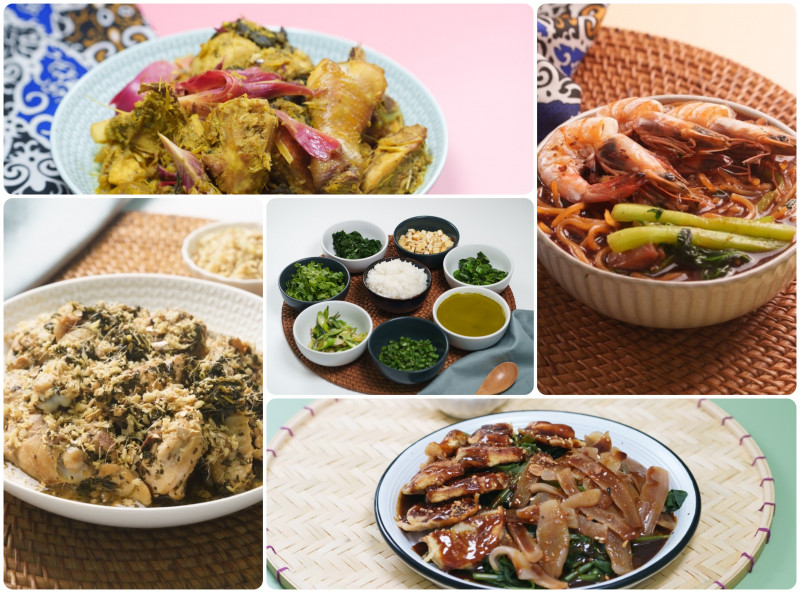
To Tang, there are four distinctive Sarawakian dishes that best represent the state. One dish that holds a special place in the Gawai festivities is Pansoh Ayam, also known as Manok Pansoh, a traditional Sarawakian delicacy cooked in bamboo.
_Large.jpeg)
The dish involves cooking chicken in a freshly cut bamboo stalk along with aromatics like onions, ginger, lemongrass, garlic, torched ginger flower, and galangal. The bamboo is roasted over an open fire, infusing the chicken with a distinctive flavour.
As the preparation of Pansoh Ayam takes a considerable amount of time, expertise, preparation, and the right space for building a fire, a proper Pansoh Ayam is difficult for most in concrete jungles like Klang Valley to achieve at home.
Another dish that’s unique to the state is the Sarawak Laksa, which has origins dating back to the 20th century.
The creation of this noodle soup remains mysterious – it is believed to be developed by Chinese immigrants in Sarawak and was popularised by the Tan family in the ’60s and ’70s with their development of the Swallow brand laksa paste.
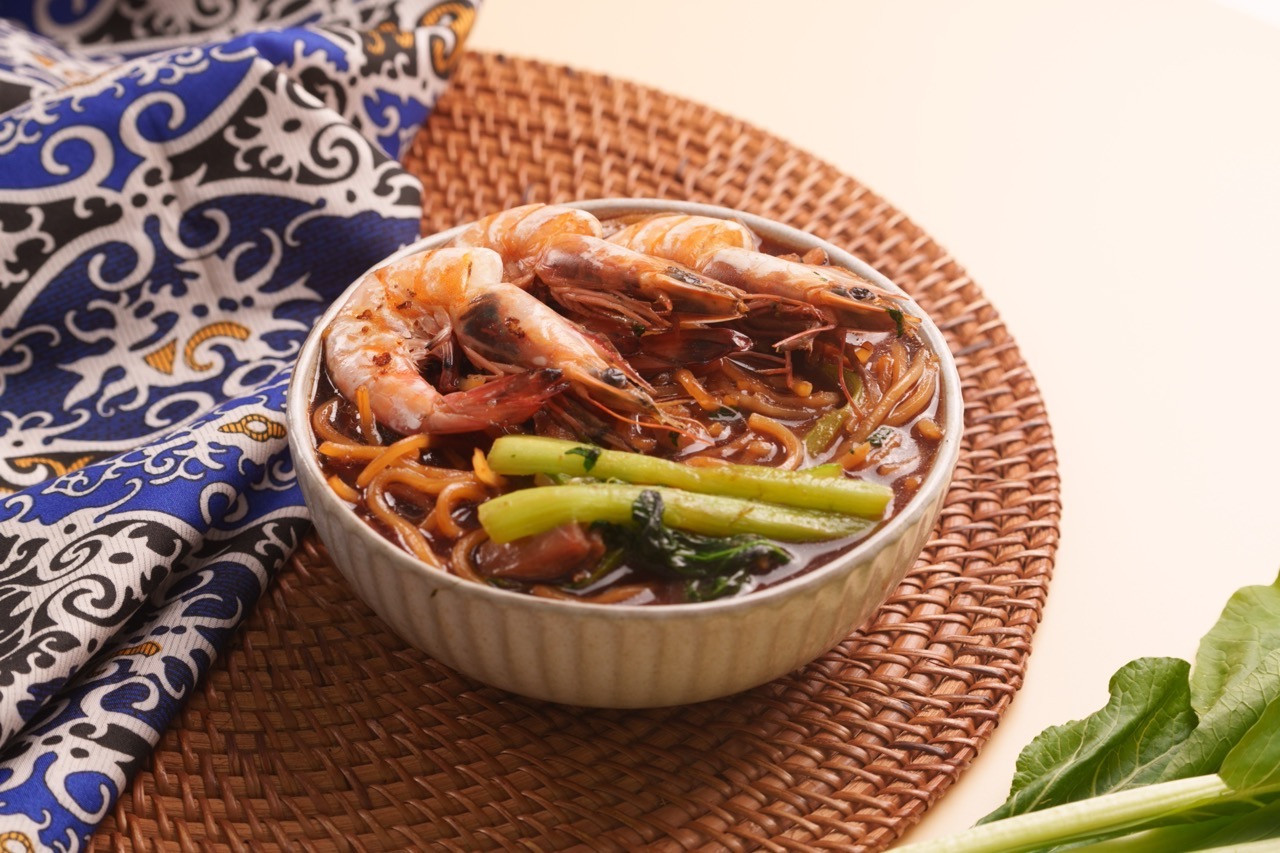
This laksa is popular for having complex flavours and stands out from similar dishes such as the curry laksa and asam laksa with its use of the sambal belacan, a pounded chilli paste made with fermented shrimp paste, which lends the dish a great depth of flavour.
Depending on who you ask, the most authentic Sarawak laksa paste has a vibrant orange hue and contains between 20-36 (or more!) ingredients including garlic, shallots, chillies, candlenut, and dried shrimp.
Topped with shredded chicken, prawns, bean sprouts, and slices of omelette, the hallmark of the Sarawak laksa is its thick and creamy soup. As with all laksas, laksa paste is the most important component to getting the taste right.
However, as Tang explained, an authentic Sarawak laksa paste can be quite rare to find.
“Sarawak laksa paste involves many ingredients, so it can be more difficult than you expect to get the taste right if you made it yourself. You could sometimes find Sarawak laksa paste here, but it doesn’t always capture the authentic taste,” she said.
_Large.jpeg)
Ka Chan Ma (Motherwort Herb Chicken Soup) is also another dish that is unique to Sarawak. The chicken soup dish features the motherwort herb, which grows indigenously in the state and has been used in various cultures for its medicinal properties.
As Tang shared, “Ka Chan Ma is an acquired taste because the motherwort can be quite bitter. But over the years, I’ve found an appreciation for the complex, bitter yet floral flavour, as well as its health benefits.”
The herb is believed to aid in mood regulation and reduce anxiety. As the dish is made with motherwort along with ginger, wine, and other spices, it is also believed to be good at relieving gas and improving blood circulation.
For these reasons, the nourishing chicken soup is often used as confinement food, but it is also popular among the masses for its unique flavour and as a highly nutritious dish with great health benefits.
Tang also looks back fondly on Ding Pian Ho (鼎边糊), another unique Sarawakian dish. This Foochow dish’s name roughly translates to “wok edge paste” which refers to the way the noodles are made.
A flour slurry is poured around the sides of a wok with soup. When the noodles are cooked, it is scraped back into the wok while some of the slurry has cooked in the soup. The result is a cross between flat rice noodles and congee.
For many Sarawakians who have grown up watching hawkers scraping woks to make a bowl of Ding Pian Ho, it might seem a mundane thing.
Tang shared that she remembers watching the hawker make these noodles with much fascination – it is certainly one of the most interesting ways of making a flat noodle.
On Hari Gawai this year, Tang commiserates with fellow Sarawakians about missing the taste of home.
Through Freshable, Tang was inspired by her roots and her longing for authentic food from Sarawak and featured her home state’s cuisine in a monthly special.
“I felt that Hari Gawai was the best occasion to put a spotlight on Sarawakian cuisine. There’s so much to be said about how unique our food is, but I would rather put a bowl of Sarawak laksa in front of someone and let them experience it themselves,” she added.
As for Sarawakians who find themselves homesick this month like Tang: “There’s so much comfort that a hot bowl of food from home brings me. I hope to share with fellow Sarawakians the taste of home while away from home.”
She added that she aims to bring Sarawak’s best dishes to doorsteps in Klang Valley.
“When I first started with my business, it was driven by my passion for food. And the Sarawakian food I grew up with and learned to love was a big part of that. As I pay homage to my roots by featuring my favourites in this month’s special, I think things have come full circle,” she said.
Get your taste of Sarawak now on Freshable’s website and follow them on social media at Instagram and Facebook. – The Vibes, June 1, 2023