FROM Greece to Hawaii and Canada, many countries and regions have been severely affected by wildfires this summer, with all the environmental and health consequences that result. In addition to effects on the respiratory and cardiovascular systems, inhalation of these fumes may also be harmful for brain health, potentially even leading to neurocognitive or mood disorders, as a new study reveals.
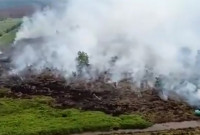
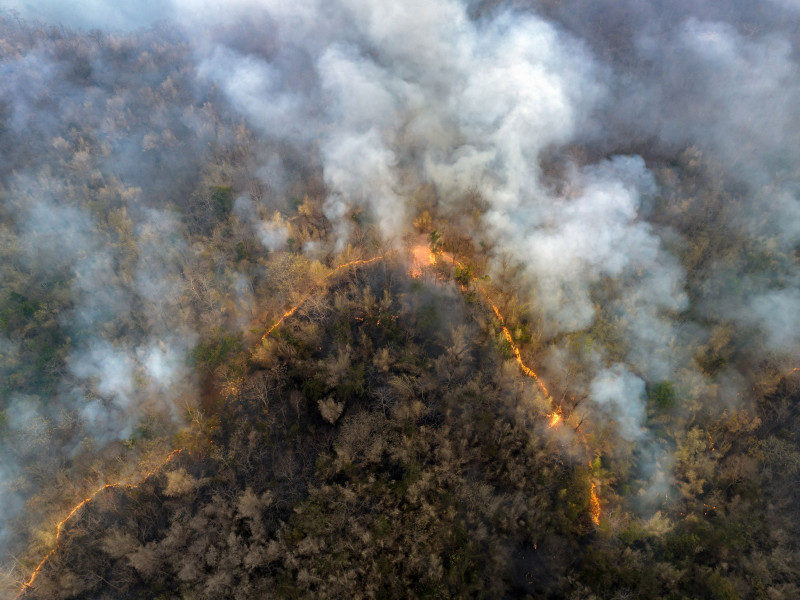
Increasingly frequent and intense droughts and heatwaves encourage the outbreak of forest fires, which can then spread rapidly due to the wind or the nature of the vegetation and soil, sometimes spiraling out of control. We saw several examples of this phenomenon this summer in Greece and other parts of Europe, North America, the Pacific and North Africa.
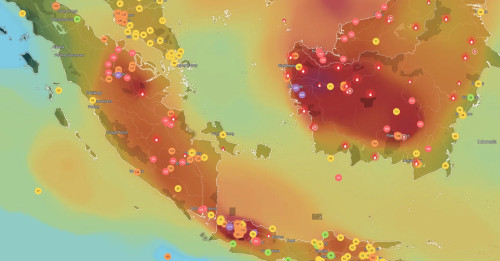
It's a phenomenon that has serious consequences on both the environment and human health, as France's Agency for Food, Environmental and Occupational Health & Safety. (Anses) outlined this summer. The French administrative body explains that inhalation of these fumes, which can generate suspended particles, carbon monoxide and other chemical substances, can cause respiratory and cardiovascular effects, and is particularly damaging to firefighters and people with chronic respiratory conditions and cardiovascular disease.
But there could be an even greater impact on health. That's according to a new study by researchers at the University of New Mexico's Health Sciences, which links wildfire smoke to brain health. Their research, published in the Journal of Neuroinflammation, reveals more specifically that inhalation of such smoke could be responsible for inflammation of the brain and that such inflammation persists for at least a month.
"The inflammatory process affects the hippocampus – the brain region associated with learning and memory – altering neurotransmitters and signalling molecules," explains Professor Matthew Campen, one of the study's authors, via a press release.
Risk of neurocognitive disorders
For their research, the scientists exposed rodents to smoke from a wood fire every other day for two weeks. At the end of the experiment, they identified pro- and anti-inflammatory responses when tiny particles of smoke managed to cross the blood-brain barrier (BBB) – whose function is to prevent, among other things, the passage of foreign substances, sometimes toxic, and other pathogenic agents, into the brain. What's more, this inflammation was not short-term, and may even be long-lasting.
"We were able to measure the inflammatory response amplitude and time frames. We expected it to be a lot shorter. Some of it progressed out to 28 days and we didn't see a complete resolution, and that was very scary to us," says David Scieszka, who led the research. This observation is all the more alarming as forest fires are multiplying at speed around the world, exposing a growing number of people to these unhealthy fumes.
According to the researcher Matthew Campen, "neuroinflammation is the seed for all kinds of bad things in the brain, including dementia, Alzheimer's disease – the buildup of the plaques – but also alterations in neurodevelopment in early life and mood disorders throughout life."
He adds: “If you’re a firefighter, or if you’re just a citizen in a community that has had some of these dramatic smoke exposures, you could be having neurocognitive or mood disorders weeks or months or weeks after the event."
In the event of a forest fire, the French government recommends staying indoors – provided your home is not in danger – and plugging air vents. It is also advisable to apply a damp cloth over mouth and nose to avoid inhaling the smoke. Some experts also recommend wearing an N95 mask, designed to filter out particles potentially harmful to health and using an air purifier, preferably fitted with a high-efficiency particulate air (HEPA) filter. – ETX Daily Up, August 30, 2023