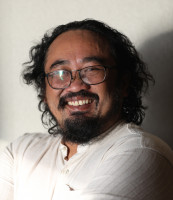
SABAH should retrieve all its historical documents, particularly the Malaysia Agreement 1963, from London to dispel further misconceptions of its historical context and sovereignty matters, said an independent Borneo history researcher.
Shari Jeffri, an associate research fellow of the Institute of Borneo Studies, said this in light of last Thursday’s appeal by Putrajaya to set aside a high court decision granting the Sabah Law Society (SLS) the right to carry out a judicial review of the state’s 40% revenue rights.
“These historical documents will continue to inspire research and scholarship in the future. They offer new avenues for exploration, interpretation, and understanding of Sabah’s history, contributing to ongoing intellectual inquiry and discovery.
“They are invaluable resources for education and research, providing evidence for historians, scholars, and educators to study and interpret Sabah’s past, and contributing to excellence and intellectual discourse,” he told The Vibes.
The last-minute entry of the Sabah government in last week’s appeal saw the lawyer representing the Sabah Attorney-General’s Office interpret the revenue rights as merely “aspirational”.
The incident triggered wide public backlash, forcing Sabah Chief Minister Datuk Seri Hajiji Noor to clarify the state’s unwavering stance on pursuing state rights. Hajiji also clarified that the 40% revenue rights are “more than just aspirational”.
Senior lawyer Datuk Roger Chin supported Shari’s call, saying that the MA63 documents are crucial for understanding the original intent and agreements behind the 40% special grant for Sabah in the Federal Constitution.
“These documents can provide context to the current differing interpretations and ensure an accurate reading of the provisions, while at the same time assisting the courts in their decision,” he said.
Chin was the Sabah Law Society President when the body decided to file a judicial review of the 40% revenue entitlement and seek a decision on the “lost years”.
The lost years refer to the period from 1974 until 2022 when no review of the state’s special grant was carried out despite it being mandatory as stipulated under Article 112D of the Federal Constitution.
Meanwhile, Shari noted that other than the Malaysia Agreement document itself, the state only has bits and pieces of crucial documents available publicly.
He said the complete documents can be retrieved at the National Archives in London, United Kingdom, where they had been available since 2012 following the declassification.
“Before 2012, Sabah barely had any materials related to the Malaysia Agreement and only had bits of information mostly on the 20-point agreement and the Intergovernmental Committee (IGC) report. We in Sabah have some documents, for example, minutes of meetings with the district office and documents from individual political parties, but not the entire details as what is being kept at the National Archives Kew London,” he said.
In 2022, a group of legal experts, researchers, and officials from the federal and Sabah governments, led by then minister in the Prime Minister’s Department (Sabah and Sarawak affairs) Datuk Seri Maximus Ongkili, went to London to search for and study these documents.
Among those in the team were Sabah Attorney-General Datuk Nor Asiah Mohd Yusof and Sabah’s envoy to the Brunei Darussalam–Indonesia–Malaysia–Philippines East Asean Growth Area, Tan Sri Pandikar Amin Mulia. Upon return, Ongkili said that he “saw and touched the documents, many of which used to be classified.”
Sabah also sent several lawmakers to do the same a couple of years later. However, it was clear no documents on Sabah had been retrieved.
In contrast, Sarawak assigned a team of experts in 2017 to study and retrieve its Malaysia Agreement-related documents.
The documents, which is termed as migrated archives, originated from Sarawak before September 16, 1963, but classified by the colonial administration as “secret” / “confidential”. – May 19, 2024




.jpeg)