THE indigenous residents of Gaya Island face a harrowing future following a plan to uproot them from their ancestral homes to make way for a tourism project.
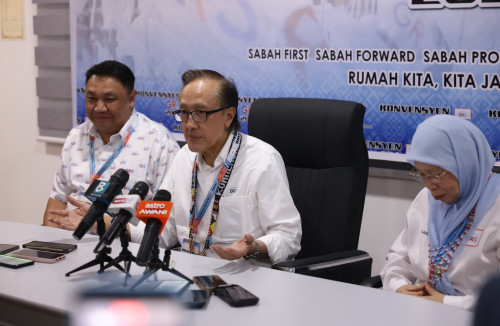
During a visit to the island on April 7, Sabah Chief Minister Datuk Seri Hajiji Noor announced that the residents would have to move to the mainland, allowing the island to be transformed into a tourist destination.
For 70-year-old Kanchi Abdullah, this news is a heartbreaking blow as his ancestors, along with 400 others, were the earliest to inhabit the island in 1750.
“The night before the chief minister’s visit, we heard rumours about the relocation. So, I wrote a letter and gave it to my wife to pass to the host, asking the government to allow us to stay.
“But the next day, the chief minister confirmed our worst fears,” Kanchi recounted in his village of Kg Gaya.
Tourism is a vital sector in Sabah and many locals work in it.
The state government has earmarked Sembulan Lama and Gaya Island for development to boost the economy and eliminate squatter areas, a move affecting over 30,000 people.
Gaya Island is historically home to the Bajau Samah and Bajau Ubian communities, with many of them having deep-rooted ties with the Bajau Samah in Sembulan Lama.
Originally, Kanchi said there were only around 400 of the original families living on the island and their presence had been recorded even before the British North Borneo Company arrived in Sabah.
Most of them were fishermen.
However, the population on the island swelled between 1972 and 1984 due to the civil unrest in the southern Philippines.
The Usno-led Sabah government had allowed Filipino refugees from Mindanao to seek refuge, and this led to an influx of migrants, which changed the island’s demographics significantly.
Kanchi remembered the waves of newcomers: war refugees, economic migrants, and eventually, illegal immigrants, whose numbers soon outstripped those of the indigenous settlers.
He noted the granting of citizenship to the migrants but stressed that this did not happen until the Usno-led state government was ousted by Berjaya in the 1970s.
He said the population of the island has now reached over 20,000 and only about 1,000 of them are from the families of the original inhabitants of the island.
A portion of the migrants later invaded Sembulan Lama during a political crisis in Sabah in the mid-1980s and early 1990s and began establishing a squatter colony on a 3.5-acre land nearby.
The land is now earmarked for the Sembulan Urban Renewal Scheme.
65-year-old Awang Butun from Kg Torong Logong voiced concern about the impact of relocation on their way of life.
“We are fishermen with little education or savings. Moving inland would destroy our livelihoods. We just want the government to let the original Gaya Island inhabitants stay. Our numbers are small compared to the migrants,” Awang pleaded.
Awang expressed disappointment that the government does not recognise them as the island’s original inhabitants, planning instead to relocate them alongside those with dubious citizenship.
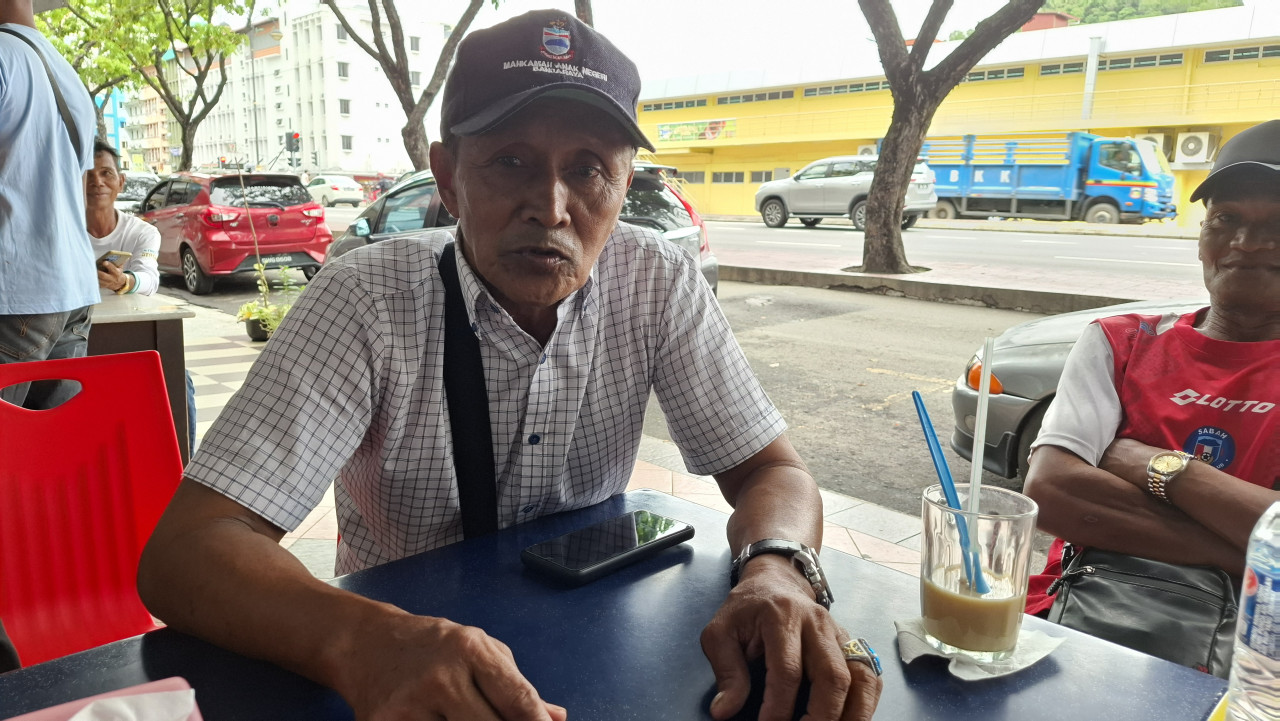
Meanwhile, Rajit Serong said that the voices of the original residents are often drowned out by the migrants who now dominate the island.
“The problem stems from divisive politics. The numerous migrants with Malaysian citizenship are crucial voters.
“Some made political branch leaders and community leaders and they wield more power than the village chiefs,” said Rajit.
He concluded that their pleas to the state government are likely to fall on deaf ears, as decisions are influenced by the political clout of the migrant population.
Meanwhile, former Putatan MP Datuk Marcus Mojigoh, who is well-versed in their origins, strongly believes they must be allowed to continue residing there.
He noted this was not the first time they have been told to relocate as they had faced similar instances during past administrations.
And each time, Mojigoh told them no.
“The state must not relocate them elsewhere. Build a new high-rise building and let them stay there. Don’t mix them with the migrants. Let them continue staying in their ancestral land.
“They are natives of Sabah. The mainland people do not know about this. Until now. They forgot there are local people there. They are not crooks,” said Mojigoh, adding that they were from the Bajau Ubian and Bajau Samah ethnic groups.
Mojigoh admits the original inhabitants had been victimised by the negative perception brought by the influx of illegal immigrants in Sabah.
“It is a known fact. Everybody knows what’s in Sembulan and Gaya Island. The social problems and what not. But why are the authorities, knowing all these, not doing anything?
“This is not a criticism. But do your work,” he said.
Mojigoh fought hard to provide the Gaya Island residents with water and electricity when he was MP between 2004 and 2018, something most of the island folk now enjoy.
“Since 1963 (when Malaysia came into being), they had been living without electricity. Their only source of water had been from a tube well,” he recalled from his time as MP.
Historical records shown to The Vibes confirmed the original inhabitants of Gaya Island and Sembulan Lama settled in the areas in 1750 and 1788, respectively. – June 9, 2024