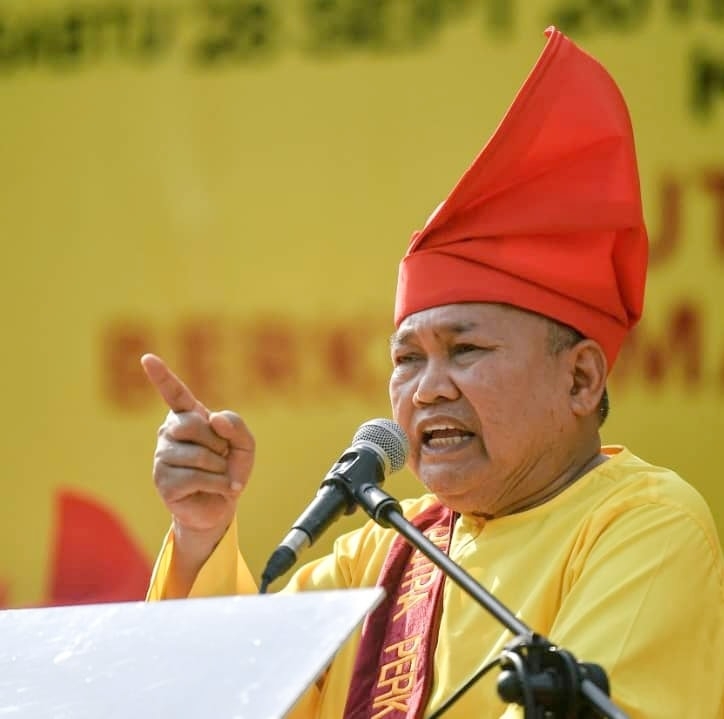

UNITY among the Malay community will remain elusive because of the country’s democratic system, a veteran Malay rights politician said.
As long as there is a system that encourages the formation of Malay-Muslim political parties, which compete for the electorate’s support, true Malay unity will remain unattainable, said Datuk Paduka Ibrahim Ali.
"The Malays will continue to fight among themselves as each party seeks to outdo the other. This is democracy in practice. We now see a proliferation of parties trying to represent the Malays and the Bumiputeras in Sabah and Sarawak. Even multiracial parties want a share," he said.
The Putra president said those pursuing Malay unity are merely daydreaming within the Malaysian context.
This marks a shift in stance from the self-proclaimed Malay rights advocate, who founded Perkasa in 2008 – a right-wing Malay rights civil society group – where one of its core missions was to advocate for Malay unity.
Perkasa served as a precursor to Putra, which has since become a political entity but suffered significant losses in the last general election, failing to win any seats and, in some cases, losing deposits.
What has changed for Ibrahim, a long-time outspoken politician who first defected from Umno to join the now-defunct Semangat 46, is his belief that the Malay party that can reign supreme will be the one best able to serve the growing community’s needs, both religiously and economically.
However, he now emphasises the importance of assuring non-Malays that the original concept of Malay unity is nothing to fear.
"We envisioned that unity within the community would bring about political stability, enabling the community to lead and focus on nation-building without constantly looking over their shoulders. But this is not happening," Ibrahim explained in an interview with The Vibes.
He added that if the Malay community were united, non-Malays would also benefit from a Malay-led government fully focused on nation-building without secondary concerns.
Ibrahim stressed that Malay unity would not lead to the trampling of non-Malay rights.
In the age of uncertainty following the pandemic, Ibrahim sees national unity, or Malaysian unity, as of paramount importance.
"We need buy-in from the minorities – the Chinese, Indians, and others – towards a concept of Malaysian unity to secure the country from external threats, ranging from security to economic unrest."
He views external issues that may undermine global stability as potential factors that could enhance national unity and patriotism.
Ibrahim also expressed hope that Prime Minister Datuk Seri Anwar Ibrahim's national unity administration could do more to promote this cause while safeguarding the rights of the Malays.
Regarding the future of his mentor, Tengku Razaleigh Hamzah, who is now 87, Ibrahim acknowledged that age is a factor for the Umno stalwart, who may be 90 by the time the next election arrives.
"Well, one never knows in politics, there are all kinds of possibilities. But he is getting old."
He hopes, however, that the history of Razaleigh’s contributions, particularly in forming many of the government’s institutionalised financial bodies, can serve as a lesson for the younger generation’s struggles. – August 23, 2024.