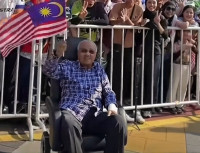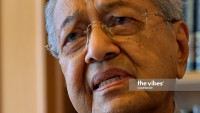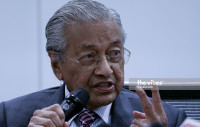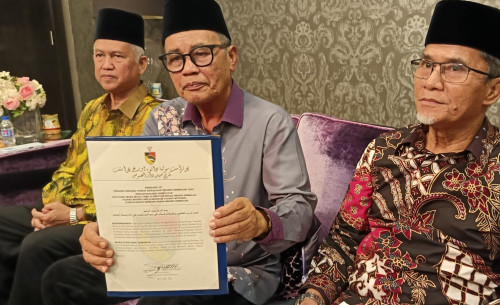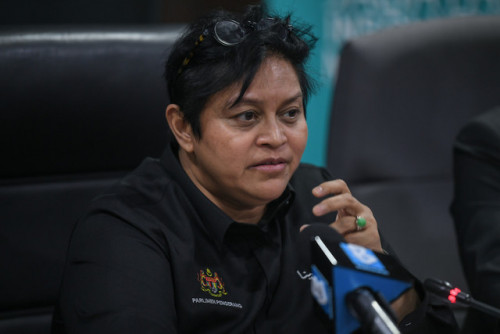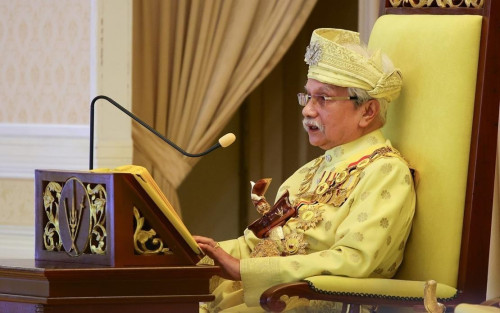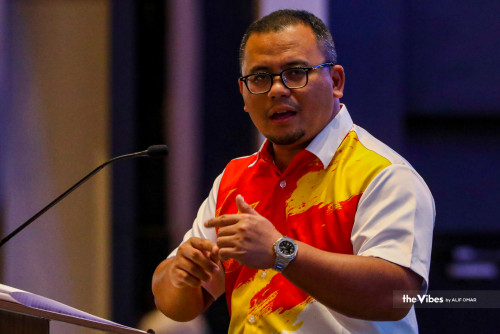

URIMAI - the newly formed rights party has come to the defence of former premier Tun Dr Mahathir Mohamed over the loss of Batu Puteh to Singapore.
Former Penang Deputy Chief Minister Dr. P Ramasamy who heads Urimai, posted that while Dr Mahathir’s decision to withdraw the appeal can be criticised as a strategic misstep, accusations of treachery are unwarranted.
Prime Minister Datuk Seri Anwar Ibrahim had earlier labelled the findings of the Royal Commission of Inquiry (RCI) on Batu Puteh, Middle Rocks and South Ledge as unveiling “treachery” against the country.
"Anwar should exercise caution in politicising the issue, especially when his government faces mounting challenges," said Ramasamy in a social media posting.
Batu Puteh’s sovereignty remains a sensitive matter, but moving forward requires measured diplomacy rather than divisive politics, he added.
The loss of sovereignty of Batu Puteh to Singapore was a significant blow to Malaysia, symbolically and politically, said Ramasamy.
However, it is crucial to acknowledge that the decision to bring the dispute before the International Court of Justice (ICJ) in The Hague, Netherlands, was a mutual agreement between both nations, he said.
"The ICJ did not act unilaterally or at the behest of Singapore. Once Malaysia and Singapore decided to jointly submit the case to the ICJ, its ruling became binding.
Neither party could later object to an unfavourable decision."
The ICJ ruled that Batu Puteh belonged to Singapore, Middle Rocks to Malaysia, and the sovereignty of the Southern Ledge would be determined by territorial waters.
Politically, Malaysia struggled to accept the decision, said Ramasamy.
From a historical perspective, Malaysia might have been able to challenge Singapore’s case more effectively.
For instance, the argument that Batu Puteh was terra nullius (no man’s land) is debatable.
While there was no permanent human settlement on the island, Johor fishermen reportedly sought refuge there during monsoons, potentially undermining the terra nullius claim, said Ramasamy.
The 2008 ICJ decision remains binding, and Malaysia must respect it while seeking alternative diplomatic avenues to revisit the issue, said Ramasamy. - December 8, 2024.