ASEAN finance ministers are set to meet next week in Kuala Lumpur as the global trade war intensifies, where discussions will focus on enhancing economic integration and financial resilience.
With the imposition of debilitating tariffs by the United States, ASEAN’s approach to navigating these turbulent times has gained unprecedented urgency.
In the face of escalating global inflationary pressures and the looming threat of recession, Malaysia's role as chair of the 12th ASEAN Finance Ministers and Central Bank Governors' Meeting (AFMGM) has become particularly crucial.
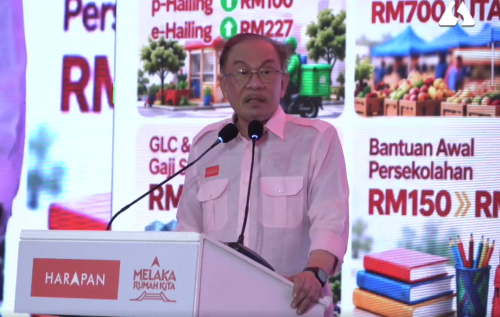
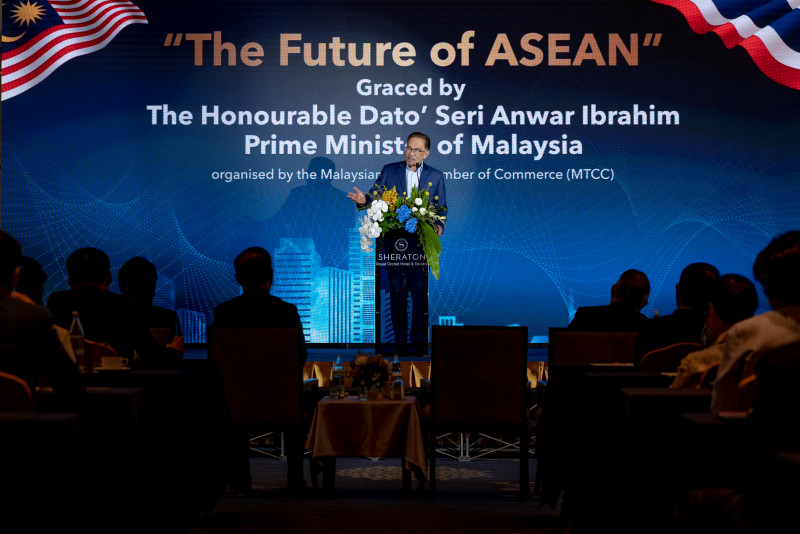
The country, under Prime Minister and Finance Minister Datuk Seri Anwar Ibrahim along with Finance Minister II Datuk Seri Amir Hamzah Azizan, will spearhead efforts to advance economic cooperation within the region.
Chairing a series of preparatory meetings starting tomorrow, Malaysia’s focus will be on amplifying financial access and fortifying financial systems to support sustainable economic growth in Southeast Asia.
Beyond the rhetoric, there is an urgent need for actionable steps to integrate the region’s financial systems, fostering smoother trade and investment flows.
This strategic integration could help strengthen Southeast Asia’s economic autonomy, potentially buffering the adverse impacts of the United States’ tariffs—baseline and reciprocal—that have affected 168 countries worldwide, Bernama cited today.
These tariffs have even extended to remote areas such as penguin and seal habitat islands in Antarctica.
With a combined gross domestic product (GDP) of RM3.8 trillion in 2023 and a population of 677 million, ASEAN stands as the world’s fifth-largest economic bloc.
To elevate its global standing, the grouping must work cohesively, recognising that some of its less developed members in the Indo-Chinese region have been disproportionately impacted by the tariffs.
Cambodia, for example, faces combined tariffs of 49%, followed by Laos (48%), Vietnam (46%), and Myanmar (44%).
Meanwhile, Thailand, Indonesia, Brunei, Malaysia, the Philippines, and Singapore are also experiencing varying tariff rates, with China being hit hardest, facing a 54% tariff.
Around 300 delegates, including ASEAN finance ministers, central bank governors, and representatives from international financial institutions and the private sector, will gather at the Kuala Lumpur Convention Centre (KLCC) for AFMGM.
In addition to the formal closed-door meetings, business conferences, exhibitions, and trilateral talks with dialogue partners China, Japan, and South Korea will take place, with a particular focus on bolstering ASEAN’s economic linkages.
The trilateral meeting is especially significant, given China’s retaliation to US tariffs, which includes a 34% levy on American imports, escalating tensions between the two global economic giants.
The collaboration between ASEAN and its three largest East Asian partners, China, Japan, and South Korea, will be pivotal in strengthening economic ties across the region.
As part of its agenda, Malaysia will also address its three priority economic deliverables (PEDs) for the region: digital economy, sustainable financing, and inclusive development.
These areas are vital for ASEAN’s long-term economic success and will be the focus of deliberations at the AFMGM.
A crucial aspect of the discussions will also centre on the ASEAN Power Grid (APG), an initiative launched in 1997 to connect the electricity infrastructure of member states.
Moving forward with this regional project will require additional financing, which will be a key point of emphasis.
In the digital economy sector, ASEAN members are working to accelerate the growth of a sustainable and inclusive regional capital market.
Discussions will also include the future action plan for the ASEAN Capital Markets Forum (ACMF) from 2026 to 2030.
Additionally, expanding ASEAN’s instant payment network connectivity will be discussed to further strengthen regional trade, particularly benefiting small businesses, which are integral to Southeast Asia’s trade economy.
With global economic instability, the outcomes of the AFMGM meeting will be closely watched as ASEAN strives to build a more resilient and integrated economic future. – April 6, 2025