
KUALA LUMPUR – The move to deny the issuance of foreign worker permits to ensure compliance with the new housing act is a welcome move, but unlikely to translate into meaningful change, said observers.
Institute of Clinical Research Malaysia’s Dr Arvinder-Singh HS expressed concerns to The Vibes that employers may show the Labour Department proper living conditions at first, and later fail to maintain such standards.
He added that this move may see employers hiring illegal foreign workers instead.
The solution, Dr Arvinder suggested, is a holistic approach involving foreign workers being educated on their rights and given an avenue to complain.
“When foreign workers come to Malaysia, they must know that they should keep their living spaces clean and not live in cramped quarters. Because with a vaccine or not, the coronavirus will continue to spread in the country.”
He also suggested that the federal government fund projects for workers' accommodations so the authorities have a right to conduct checks and ensure compliance.
“The government can provide a place and build worker hostels, which will be easier to monitor. If the government funds such a project, it has a right to ensure compliance with regulations.”
Meanwhile, North South Initiative director Adrian Pereira said factories have been profiteering by violating regulations on worker dormitories, and called for harsh penalties for offenders.
“These companies must be penalised, and the fines used to attend to migrant issues.
“Perhaps these companies can pay the fines into a fund for the purpose of managing migrant matters, and relevant non-governmental organisations should control the funds,” Pereira told The Vibes.
With regard to Human Resources Minister Datuk Seri M. Saravanan’s call to local councils to conduct raids on factories with sub-par accommodations, Pereira expressed concerns over possible corruption.
“With the amount of corruption and lack of integrity in the country, relevant ministries must form a task force to ensure no corruption happens during these inspections.”
He also urged the government to look into the issue of illegal factories as they may have similar or worse conditions than licenced ones, proposing that Malaysia learn from neighbouring Singapore.
In April, Singapore saw a surge of Covid-19 cases in foreign workers' hostels.
In response, the Singapore government ordered foreign workers to stay in their hostels – with limited permission to leave – until infection rates eased.
Also, employers who intend to build workers' dormitories in Singapore must ensure they have no Covid-19 cases in their existing dormitories.
Employers are responsible for ensuring their workers use contact-tracing devices and download apps that allow the authorities to monitor their health statuses.
Meanwhile, Malaysian Trades Union Congress deputy president Mohd Effendy Abdul Ghani welcomed Saravanan’s move to tackle the issue, but raised concerns over the lack of labour inspectors.
However, he said this can be offset by the minister’s call for local council authorities to conduct inspections.
“These employers can give you the best living conditions, but what matters are the inspections. There must be enough labour inspectors to perform checks.
“So, it is a good move to include local councils to enter these premises and conduct spot checks.”
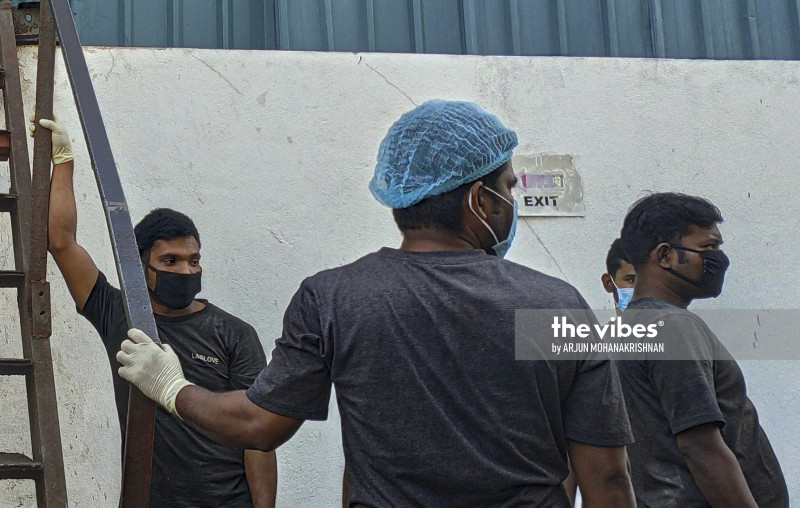
Yesterday morning, the Human Resources Ministry and Selangor Health Department raided a glove-making factory in Kajang.
Also present was Saravanan, who said the living conditions at the factory was the worst he had seen.
After the raid, he said that his ministry would no longer issue foreign workers' permits to employers unless they comply with housing regulations.
Additionally, he urged local councils to conduct more raids and inspections on factories with worker dormitories. – The Vibes, December 22, 2020