
THE Sabah portion of the long-anticipated Sabah-Sarawak power interconnection has been completed, but electricity supply from Sarawak remains delayed as work faces setbacks.
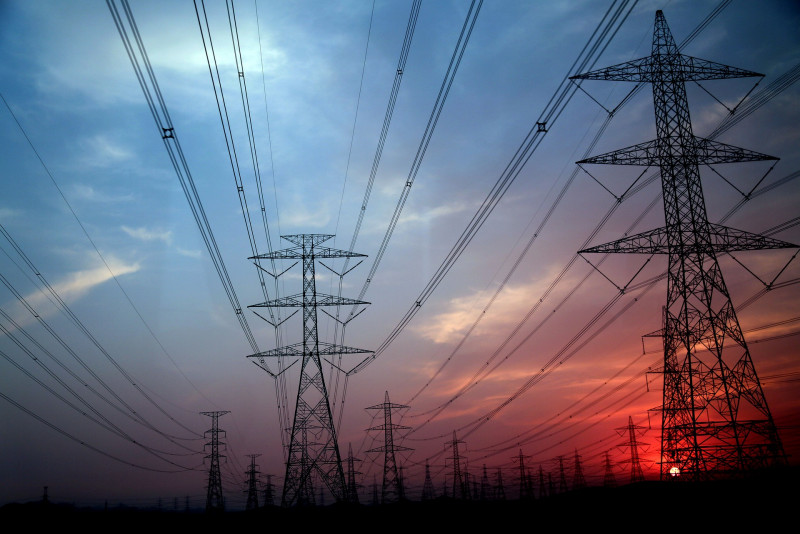
Sabah Electricity Chief Executive Officer Mohd Yaakob Hj Jaafar confirmed that Sabah had completed its 7km stretch of 275kV high-voltage transmission lines from the Mengalong Main Intake Substation (PMU) in Sipitang to the Sarawak border in September 2024.
“We have done our part here in Sabah. This PMU is the real gateway, the entry point for renewable energy from Sarawak and, in the future, from Apas Padas,” Yaakob said during his visit to the Sabah–Sarawak Grid Interconnection Project at the Mengalong Main Intake Substation (PMU) in Sipitang, some 140 kilometres to the south of Kota Kinabalu.
However, he said electricity imports are on hold pending completion of works in Sarawak by Sarawak Energy Berhad (SEB).
“We completed our side of the project and commissioned it in September 2024. However, we are still waiting for Sarawak Energy Berhad to complete their transmission line from the Northern Grid to Lawas,” he said.
“It was supposed to be completed last year, but we understand they are facing construction obstacles related to wayleave issues. So, we are still waiting,” Yaakob added.
He said the latest indication from Sarawak Energy is that supply could begin by the end of this year, though he admitted progress appears to be falling behind schedule.
Under a Power Exchange Agreement signed in January 2024, Sarawak Energy is expected to supply Sabah with an initial 30 megawatts (MW) of electricity, with plans to scale up to 50MW over five years and eventually up to 300MW some time last year.
“This is very important for Sabah Electricity to improve our reserve margin. Part of our generation comes from here, and part will be enhanced through imports from Sarawak,” Yaakob explained.
The Ministry of Energy Transition and Water Transformation (PETRA) has allocated approximately RM35 million for the interconnection project.
Energy Gateway for ASEAN
Looking beyond Sabah’s domestic supply, Yaakob said the interconnection positions the state as a potential gateway for regional power trade under the ASEAN Power Grid initiative.
“This involves connecting to the Philippines via Kudat to Palawan, and from Ladakh to Mindanao,” he said.
However, he cautioned that the connection to the Philippines remains uncertain.
“At the moment, the Philippines link is still unclear because many issues need to be worked out between the Malaysian and Philippines governments,” he said.
Sabah is also pursuing a feasibility study for a separate link to North Kalimantan, Indonesia, through Tawau.
“We have already started and appointed a consultant, with funding provided by USAID,” Yaakob said.
However, the study was disrupted after a policy shift in the United States.
“When President Trump came to power, all the grants that had been provided were withdrawn. So the feasibility study was put on hold for a while,” he revealed.
Sabah Electricity is set to meet Indonesian utility firm, Perusahan Listrik Negara (PLN), and the ASEAN Centre for Energy in Jakarta this week to discuss reviving the project, he said.
Meanwhile, Yaakob addressed growing safety concerns over accidents involving third-party contractors.
He said Sabah Electricity had recorded 14 incidents over the past two years, including fatalities involving telco contractors working near high-voltage lines.
“The main cause appears to be a lack of basic safety knowledge among contractors, especially when working around high-voltage areas,” he said.
Sabah Electricity is also working with the Malaysian Communications and Multimedia Commission (MCMC), telco companies, and the National Institute of Occupational Safety and Health (NIOSH) to improve safety training.
“We want all contractors to not only have the NIOSH card for telecommunications but also the NIOSH Tenaga Safety Passport (NTSP) for electrical safety, just like our own contractors,” Yaakob said. - May 15, 2025