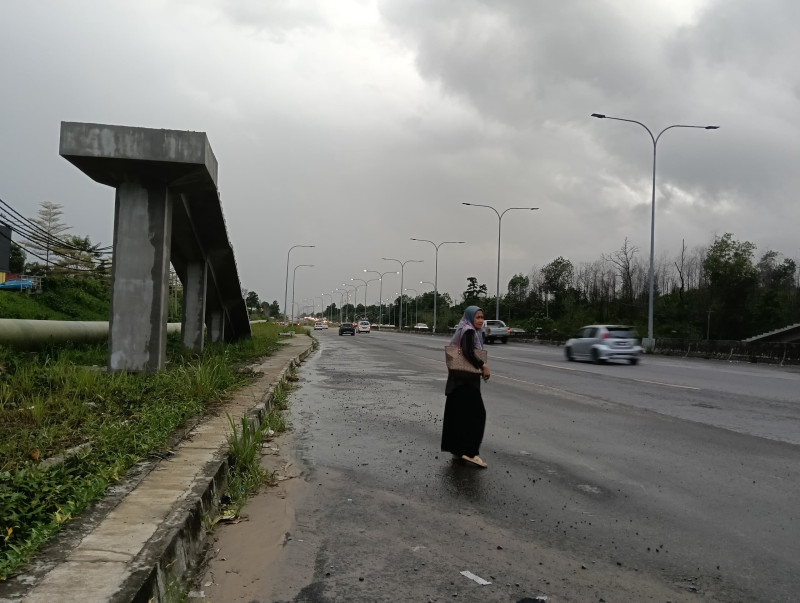
AN unfinished pedestrian bridge stands alone like a monument to misplaced priorities along the Tuaran-Tebobon Highway — a project that was supposed to improve lives but stands as a daily hazard for the very people it claims to serve.
For nearly nine years, work along this stretch has dragged on as part of the larger federal Pan Borneo Highway project.
Launched in 2016 with promises of transforming Sabah’s infrastructure and yet, for residents, it feels like nothing much has changed — except that their daily commute has become more dangerous than ever.
While the machinery roars on and lanes are widened for motorists, one thing has been consistently left hanging — public safety.
Every day, residents of Kampung Tebobon Baru, including children, parents, and workers, risk their lives crossing the highway.
And, a pedestrian bridge, built as part of the project, sits unfinished and fenced off, unusable until today.
“It shows where their priorities are,” says Aldrin Mohtar, a local who has watched his community suffer through this unsafe situation.
“Several people have already died here. But our safety seems to come last, if at all,” he said.
Based on a search, at least three fatal accidents — including the deaths of a mother, her child, and a teenager — have been reported along the Tuaran-Tebobon highway and nearby stretches in the past year alone.
But the bridge is just one part of a larger story — a story of how road projects in Sabah seem to follow a predictable pattern of poor planning, long delays, and little regard for safety.
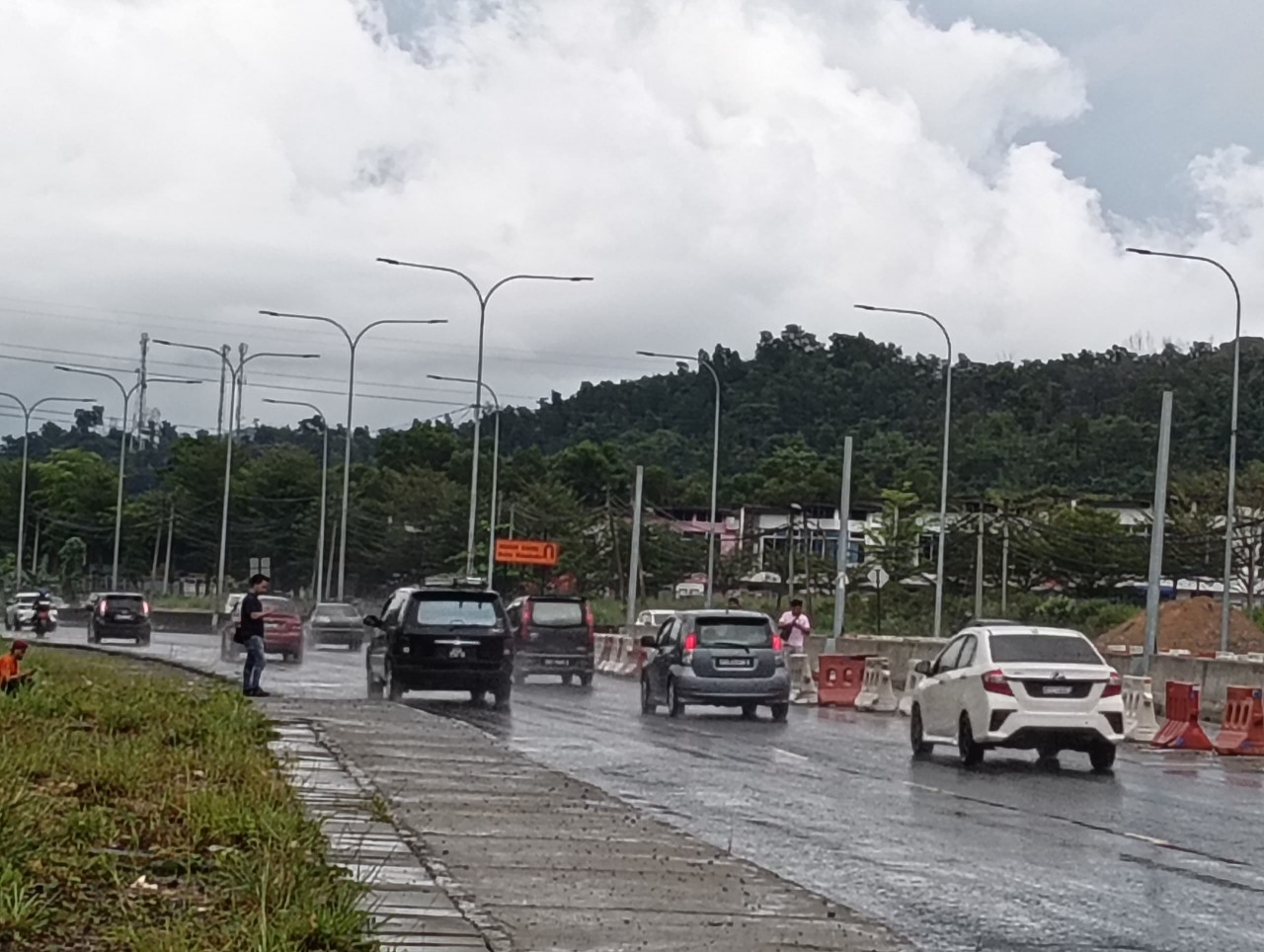
Businesses like Grand Merdeka Mall are feeling the pinch. Shop operator Jaliha Sali says customer numbers have dropped because road access has been rerouted further away.
Those who still come have no choice but to cross the dangerous highway on foot.
At night, the hazards multiply — broken streetlights, worn-out lane markings, and rain-soaked roads turn the highway into a death trap for motorists and pedestrians alike.
What’s worse is the deafening silence from those responsible.
Despite public complaints and even past interventions by the Sepanggar Member of Parliament, there is no clear data on accident numbers, no transparency on safety measures, and no deadline for completion.
Authorities now project the works may continue into 2026, extending the wait to a full decade.
The Tuaran-Tebobon stretch isn’t alone.
Over on the east coast, Jalan Bulan in Lahad Datu tells a similar story — road widening works that drag on without proper safety measures in place.
Residents there have also complained of dangerous road surfaces, poor traffic management, and lack of pedestrian crossings, leaving motorists and villagers to navigate half-completed lanes with no clear guidance.
Frustration in Lahad Datu has boiled over in recent months, with many questioning why projects meant to improve mobility seem to create more inconvenience and risk than progress.
Together, these two projects highlight what many Sabahans have come to expect: a pattern of poorly managed, contractor-driven works that prioritise machinery and deadlines over people’s safety and well-being.
And perhaps this is just how contractors roll in Sabah.
Unlike in Peninsular Malaysia, where detours are properly managed, roads are well-lit, and pedestrian safety is prioritised, in Sabah, safety often feels like an afterthought.
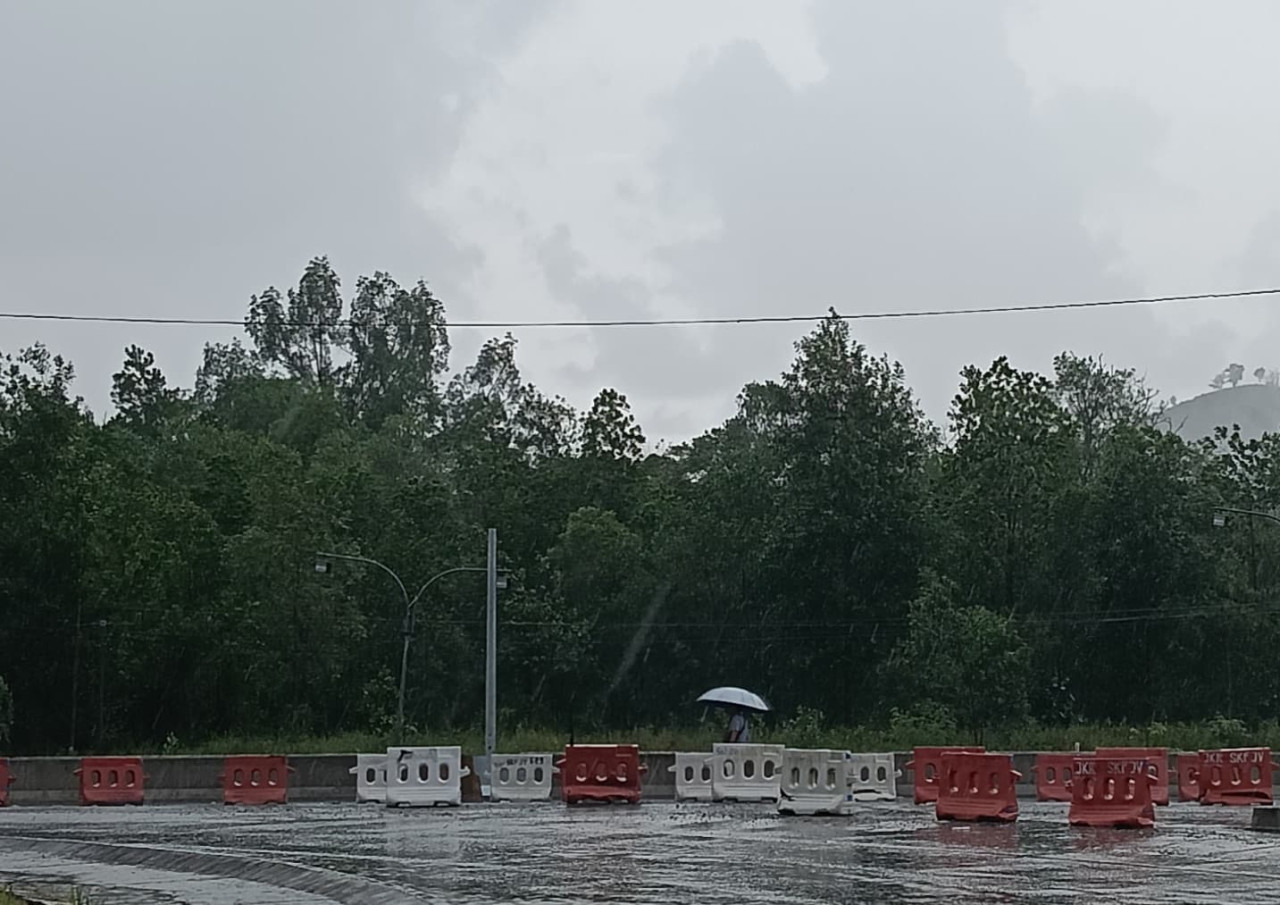
Contractors seem to get away with leaving potholes unpatched, roads poorly marked, and construction zones dangerously exposed — all under the banner of a federal project that seems more focused on completion certificates than community impact.
In the end, it is the people who pay the price — with their safety, their livelihoods, and their peace of mind.
The unfinished bridge on Tuaran-Tebobon is more than just an eyesore. It’s a symbol of everything that is wrong with how public projects are handled in Sabah.
It stands as a reminder that in the rush to build, those in charge have forgotten the very people these projects are supposed to serve.
Because building safer roads isn’t just about the finished product — it’s about keeping people safe while getting there.
Until safety is treated as a non-negotiable priority at every stage, not something to “deal with later,” Sabah’s road upgrades will continue to put lives on the line.
It is the people who continue to pay the price. - May 17, 2025