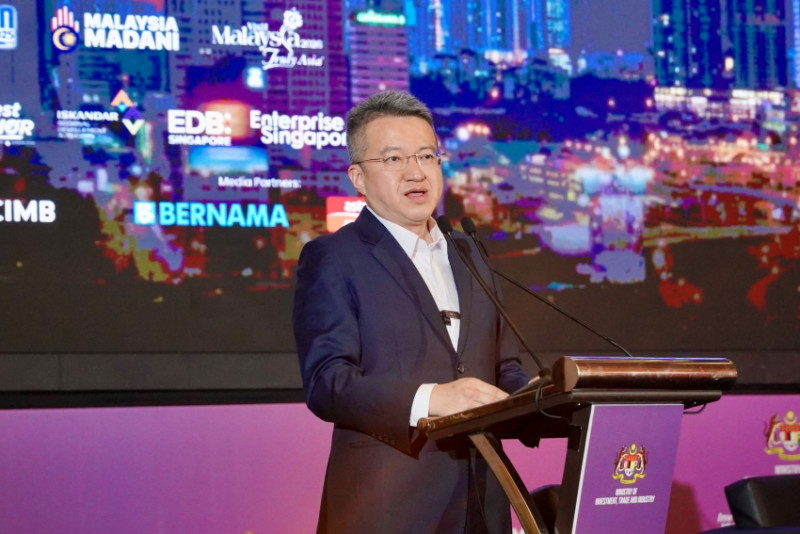
MALAYSIA’S ambition to lift female labour force participation hinges on a decisive shift towards a high-skilled and higher-wage economy, according to Deputy Minister of Investment, Trade and Industry, Liew Chin Tong.
Speaking at the Women Economic Forum ASEAN 2025, Liew said Malaysia’s continued reliance on low-skilled foreign labour has not only dampened wage growth but also acted as a structural barrier to women’s participation in the formal workforce.
“We must change this. Malaysia has a chance for a second economy to take off after decades of stagnation. With our economy moving up the value chain, we need more skilled workers and a higher wage level,” he said.
He argued that a tighter labour market would naturally compel employers to improve working conditions and pay, making it more feasible for women not only to join the workforce but to remain in it long term.
“A tight labour market will encourage employers to pay more attention and make it possible for women to sustain in the workforce, not just enter the workforce, but also sustain throughout the years,” Liew added.
He tied the issue directly to Malaysia’s ASEAN 2025 Chairmanship theme of 'Inclusivity and Sustainability', which underscores the need for equitable development and shared regional prosperity.
“Malaysia must put in more effort on female inclusion to create an environment in which women have equal opportunities, are valued, and can fully participate in all aspects of life, including the workplace and society,” he said.
Despite Malaysia’s impressive track record in some areas of women’s economic representation — including high female representation in public sector decision-making — Liew noted a persistent and troubling discrepancy in labour force participation rates.
While 65 per cent of Malaysian public university students are women, that educational advantage does not carry over into the workplace. Malaysia’s female labour force participation stands at just 56 per cent, compared to 82 per cent for men. The gap is also wider than in many neighbouring Southeast Asian nations.
“But Malaysia's success is interesting as the civil service is women and 42 per cent of women are at the decision level in the civil service, which is very high by the standards of developing nations and particularly by Muslim-majority developing nations,” he observed.
He further noted that beginning in 2023, Malaysia implemented a policy requiring that at least 30 per cent of public board members be women — a move intended to push gender equity into corporate governance and beyond.
Still, Liew’s message was clear: without systemic reforms to reshape Malaysia’s labour market and wage structures, the country will continue to underutilise one of its most educated and capable demographic groups. Ending the economic exclusion of women, he argued, is not only a social imperative but a necessary condition for national progress. - June 19, 2025