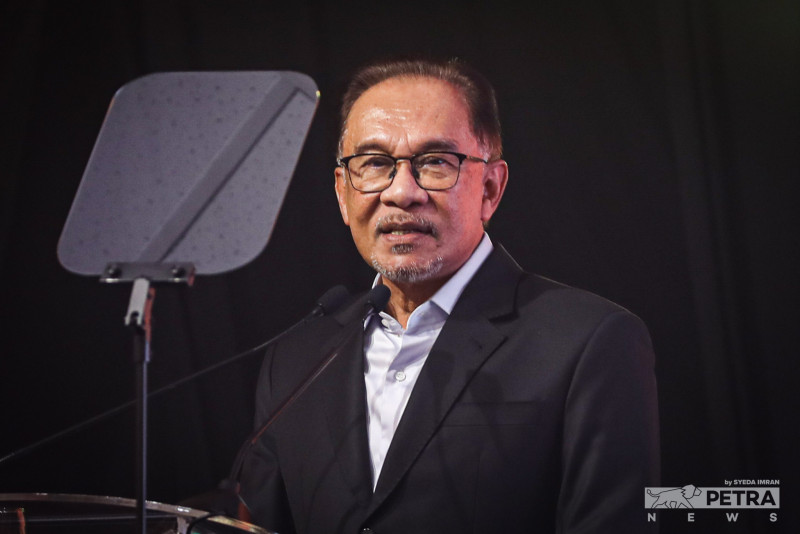
PRIME MINISTER Datuk Seri Anwar Ibrahim announced today that the government will exempt certain imported fruits—namely apples and oranges—from the Sales and Service Tax (SST), following public concern over the affordability of local and imported produce.
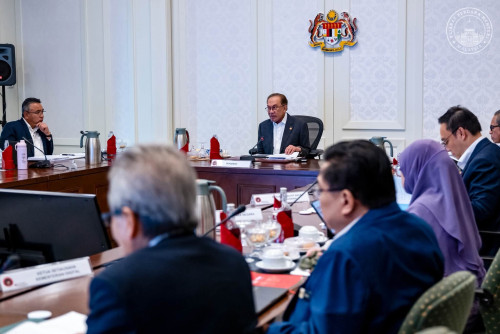
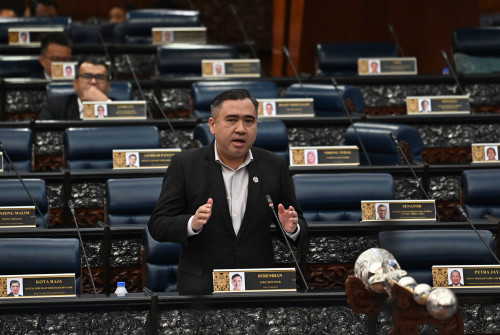
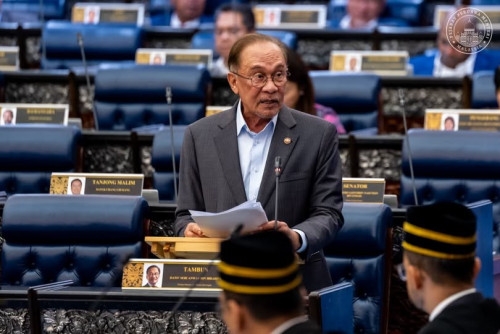
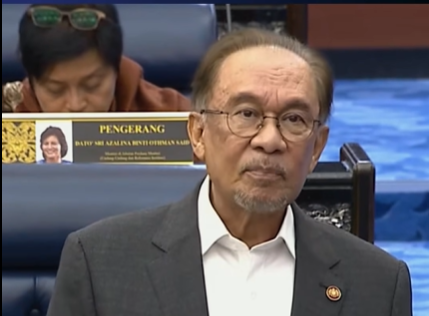
Speaking at the launch of the Kota MADANI development project, Anwar, who also serves as Finance Minister, said the exemption was decided during a recent Cabinet meeting after taking into account the needs of low-income households.
“Yesterday in the Cabinet meeting, we heard the people’s concerns. Some still want to eat apples and oranges because they’re cheaper,” he said. “So, although a small tax remains on other imported fruits, we are granting an exemption for apples and oranges.”
While emphasising the government's aim to promote local fruits such as guava, rambutan and durian, Anwar explained that the move was intended to ensure that the B40 income group still had access to affordable and nutritious food.
“We are still prioritising local fruits, which are rich in nutrients and readily available during their seasons,” he said. “Even avocado is now being grown in Sabah. We have so many fruits—langsat, duku, rambutan, durian. But I see that the B40 group still consumes imported apples and oranges, so we have reconsidered.”
The announcement follows earlier remarks by Deputy Prime Minister Datuk Seri Dr Ahmad Zahid Hamidi, who stated that the government was reviewing the proposed SST expansion to include certain imported goods, including fruits such as apples and oranges.
As part of broader economic reforms, Anwar also revealed that the government would raise the income threshold for micro enterprises and petty traders eligible for tax relief from RM500,000 to RM1 million.
“We are raising it because half a million is too low. This measure will encourage continued public support for the government’s reform agenda,” he said, adding that full details would be announced in due course.
Earlier this month, the government had announced a targeted revision of SST rates and an expanded scope of the Service Tax, set to take effect from 1 July 2025.
Kota MADANI Should Serve as National Blueprint for Urban Planning
Meanwhile, Anwar has called for the Kota MADANI smart city initiative in Putrajaya to be adopted as a model for urban planning across Malaysia, advocating for a people-centric, values-based approach to development.
Launching the project in Precinct 19 today, Anwar said urban planning should not be dictated solely by developers, but must instead be led by government bodies with a holistic vision that emphasises well-being, cultural identity, and quality of life.
“Do not simply submit to the developers. We are the ones who do the planning; the developers are just part of the process to provide input for improvement,” he said.
He urged state governments and local authorities to move away from dependence on developer-led proposals, which he warned are often shaped by commercial interests rather than public good.
“Do not let projects be decided solely by developers, because if so, they will naturally provide views and recommendations that are profit-driven,” he stressed.
The Kota MADANI project, a major smart city development, aims to integrate technological innovation with sustainable design while prioritising inclusivity and community needs. Anwar said it reflects the broader MADANI philosophy of governance, centred on compassion, accountability, and equitable growth.
He called for similar principles to be embedded in future developments nationwide, with local authorities assuming leadership roles in ensuring long-term urban resilience and liveability.
Anwar reiterated that the Kota MADANI smart city development must be centred on the needs of the people, particularly civil servants, despite the profit motives inherent in any large-scale development.
“No developer would undertake a RM4 billion project without considering profit, but the developers must meet the needs of the people,” he said during the launch of the project in Precinct 19.
He noted that the project could be fast-tracked since it involves government-owned land and is being executed through the Public Private Partnership Unit (UKAS).
“The Cabinet meeting yesterday was still discussing Kota MADANI because if we look at it in detail, the first is the needs of civil servants. We want them to work in comfort and to have housing security,” he said.
Addressing criticism over the launch of a new initiative while older projects remain incomplete, Anwar clarified that legacy developments were being finalised progressively, with most now at 96 to 98 per cent completion.
“But for upcoming (Kota MADANI) projects – the first phase involves 3,000 units – I’ve already told Fadlun (Putrajaya Corporation president Datuk Fadlun Mak Ujud) to hurry up, don’t take four or five more years. The civil servants are impatient, and so is the Prime Minister,” he added.
Kota MADANI will eventually feature 10,000 high-density residential units to house more than 30,000 residents. The project will also integrate artificial intelligence, smart digital infrastructure, and green mobility systems.
Public amenities planned include vertical schools, TVET institutions, health clinics, a mosque, fire and police stations, and financial institutions, all designed with cultural elements to reflect Malaysia’s architectural heritage. - June 26, 2025