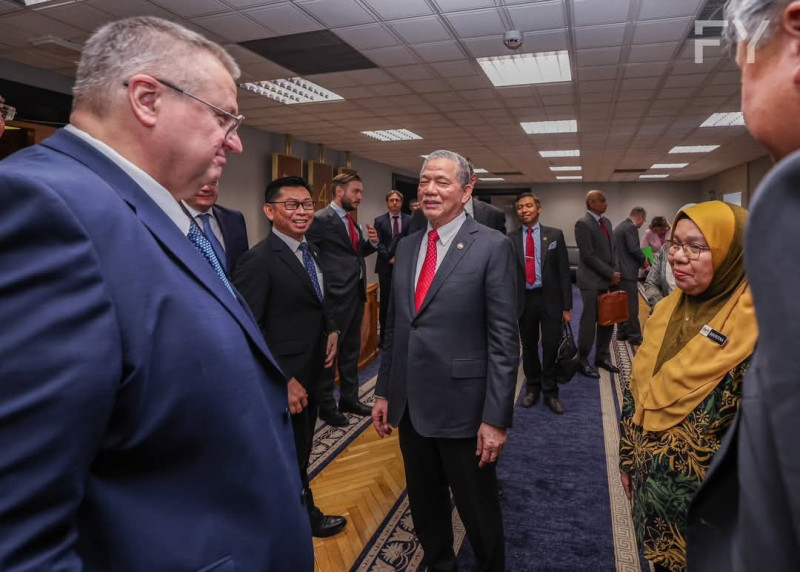
WHILE Deputy Prime Minister Datuk Seri Fadillah Yusof stood in the diplomatic spotlight during his recent official visit across Central Asia and Russia, a smaller, quieter team of Malaysian civil servants and diplomats was the engine that kept the entire mission running smoothly.
According to Bernama, from 21 to 28 June 2025, Fadillah’s working visit to the Republic of Uzbekistan and the Russian Federation was aimed at enhancing bilateral ties, exploring cooperation in clean energy and water technologies, and broadening Malaysia’s international partnerships. But behind the scenes, it was the foreign service officers in Tashkent and Moscow who ensured every moment of the visit unfolded with precision.
At the Malaysian Embassy in Uzbekistan, staff had been working for weeks in advance to deliver a seamless experience – from negotiating protocol with their Uzbek counterparts to arranging high-level engagements on oil and gas, aviation links, and economic diplomacy. All the while, they navigated unfamiliar terrain with calm efficiency.
“You’re coming here to work. God willing, all will go on smoothly,” one officer in Tashkent remarked quietly in preparation for the visit. They weren’t in the photographs, but they were everywhere: checking routes, managing language gaps, handling logistics, fine-tuning the order of proceedings, and keeping the wheels of diplomacy turning – often without sleep or rest.
Their efforts extended to the smallest details: names correctly pronounced, flags perfectly placed, meeting folders meticulously prepared. It was diplomacy in its purest, most invisible form – the sort that makes statecraft look effortless.
Even as one leg of the visit wrapped up in Tashkent, momentum was already building nearly 3,000 kilometres away in Moscow. There, the Malaysian Embassy had been preparing for a packed schedule of bilateral meetings focused on scientific, economic and strategic cooperation – a delicate diplomatic balancing act, particularly amid shifting global alliances and growing geopolitical uncertainty.
From navigating Moscow’s notorious traffic to negotiating with senior Russian officials, embassy staff worked around the clock. They stayed five steps ahead, responded calmly under pressure, and carried the quiet hallmark of Malaysian hospitality – even in environments shaped by Cold War shadows.
What many may not realise is that both Tashkent and Moscow are designated hardship postings, marked by challenging living conditions, cultural isolation, extreme weather, language barriers, and occasional movement restrictions due to political sensitivities. Yet these challenges rarely dampen morale.
Instead, what shines through is a quiet determination and profound sense of duty. These are not diplomats chasing headlines. These are public servants who, as one observer put it, “lay the tracks for Malaysia’s foreign policy train”.
The timing of the visit gave their work added resonance, coinciding with United Nations Public Service Day on 23 June – a global recognition of public servants who contribute to the common good. While others marked the occasion with speeches and ceremonies, Malaysia’s foreign service officers did what they always do: serve their nation from the field, away from the spotlight.
In a world where diplomacy is often reduced to grand statements and symbolic handshakes, these officers are the steady hands who ensure substance follows ceremony. They turn high-level aspirations into on-the-ground realities – not for applause, but out of loyalty, integrity, and purpose.
Whether in the snow-laced streets of Moscow or the summer plains of Tashkent, Malaysia’s foreign service carries the national flag with dignity. Often unseen, often unsung, they are the custodians of Malaysia’s voice abroad – and they keep it steady. - June 30, 2025