A SABAH opposition leader has expressed concerns that Sabah’s new carbon law could be legally undermined unless the state government takes a firm and constitutional position on federal maritime laws that encroach on Sabah’s seabed and waters.
Mohd Assaffal P. Alian (Tungku-Warisan) said the state’s failure to formally reject the Territorial Sea Act 2012 (TSA) and Continental Shelf Act 1966 through the Legislative Assembly could render the newly approved Climate Change and Carbon Governance Enactment 2025 bill ineffective, particularly over marine-based carbon rights.
“When we talk about the state government’s position, it must be constitutional, not just an announcement.
“Malaysia was formed through a constitutional process, and our rights are protected constitutionally.
“As long as this House does not make a decision to reject the TSA and declare that the Continental Shelf Act is no longer applicable after the Emergency Ordinance was lifted, the federal government will continue to believe those laws are still in effect.”
Assafal’s concern arose during debate on the landmark carbon bill, which asserts state ownership over all carbon rights in Sabah, including those found in marine and offshore zones.
Assaffal warned that unless Sabah asserts jurisdiction over its seabed, the carbon framework may not stand in contested waters.
“Carbon is not just on land. Carbon is also found in the sea, perhaps in even greater quantity.
“And if the federal government uses the TSA, Act 750, to challenge our rights over the sea, what will happen?” he said.
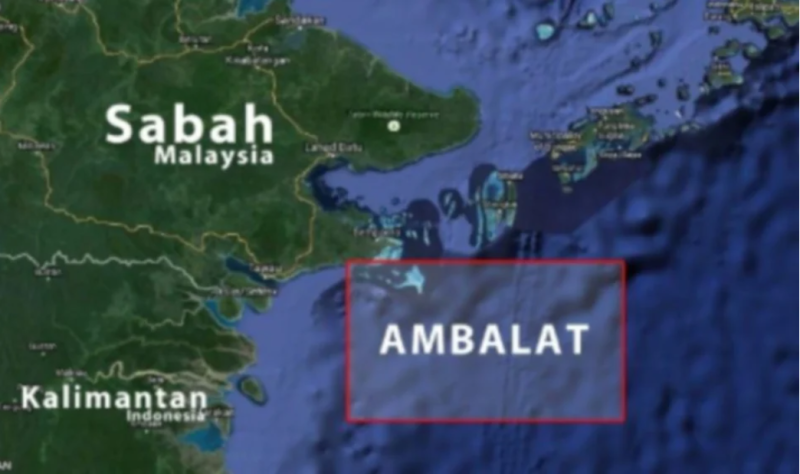
His concern came after Prime Minister Datuk Seri Anwar Ibrahim’s recent agreement with Indonesian President Joko Widodo to jointly develop the Ambalat block, a disputed maritime area off Sabah’s east coast, despite no legal resolution over the boundary.
Assaffal urged the state government to demand the declassification of the Sulawesi Sea Treaty, which he claimed was the basis for the proposed Joint Development Agreement between Malaysia and Indonesia.
“I urge the government to request the federal government to declassify the contents of the Sulawesi Sea Treaty because this treaty is the root or the basis for the Joint Development Agreement.
“If we don’t take a strong position, this matter will face serious challenges. We may control the terrestrial, but not the ocean.
“And the worst part is, the ones issuing licences for carbon trading later could be the federal government, because they control Malaysia’s airspace.
“We must foresee this. If we don’t address this now, God save Sabah,” he said.
In response, Assistant Minister in the Chief Minister’s Department, Datuk Abidin Madingkir, said the state maintains that Sabah’s continental shelf falls under state jurisdiction, citing the North Borneo (Alteration of Boundaries) Order in Council 1954.
“The Sabah government holds the position that land under the Sabah Land Ordinance includes the continental shelf, in line with the interpretation under the 1954 Order in Council, which recognises that the continental shelf is part of the state’s territory,” he said.
He added that the Territorial Sea Act and Continental Shelf Act remain unresolved matters under the MA63 Implementation Council, and are currently categorised as “agree to disagree”.
“Until this matter is finalised, the state government maintains that the continental shelf is under Sabah’s jurisdiction, and any carbon activity there must comply with this enactment,” he said.
Assaffal, however, stressed that verbal positions were not enough and called for a formal motion in the Assembly to reject both federal Acts.
“If it belongs to us, then it is ours — even if what they are doing goes against the Constitution.
“We’ve never taken a strong position on the TSA. And we’ve never decided to reject it. What’s most important is that we reject it in this august House — not just make press statements that have no legal effect,” he said.
He ended with a warning that the failure to act could not only jeopardise Sabah’s carbon market but its sovereignty over maritime resources.
“We inherited these boundaries from the British and brought them into Malaysia. And now we don’t even know what’s happening.”
“When I raised Ambalat in the past, I was accused of spreading lies. But today, it’s back. And if we don’t learn from what’s happening, we’ll lose more than just our rights. We’ll lose our future,” he said.
The Ambalat Block is a disputed maritime area in the Celebes Sea, located off Sabah’s southeast coast near Indonesia’s North Kalimantan. Rich in oil and gas, the area has been claimed by both Malaysia and Indonesia, with Malaysia relying on its 1979 map and Indonesia citing colonial-era treaties and UNCLOS provisions.
The dispute escalated in the 2000s when both countries issued overlapping oil concessions, leading to naval standoffs. While conflict was avoided, the issue remains unresolved. In recent years, both sides have explored cooperation, including a proposed Joint Development Authority (JDA) to manage resources in the area.
The Sulawesi Sea Treaty, signed in June 2023 between Malaysia and Indonesia, defines only the 12-nautical-mile territorial sea boundary in the Sulawesi Sea.
It does not cover the disputed Ambalat blocks, which lie within Malaysia’s claimed 200-nautical-mile Exclusive Economic Zone (EEZ). However, concerns persist that the treaty laid the groundwork for a Joint Development Authority (JDA) over the Ambalat area.
Tungku assemblyman Datuk Mohd Assaffal P. Alian had raised concerns in 2023, urging the federal government to declassify the treaty.
He warned that Sabah’s maritime rights could be sidelined and said the treaty appeared to be the “root or basis” of the proposed JDA.
Without transparency, he argued, Sabah risked losing control over waters it inherited during the formation of Malaysia in 1963. - July 8, 2025













.jpeg)