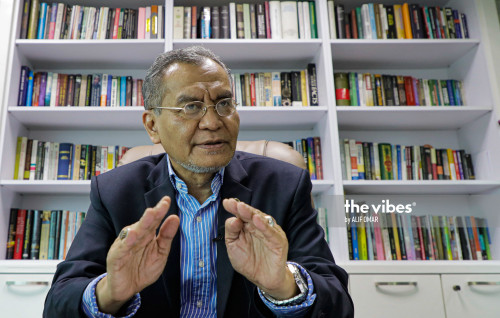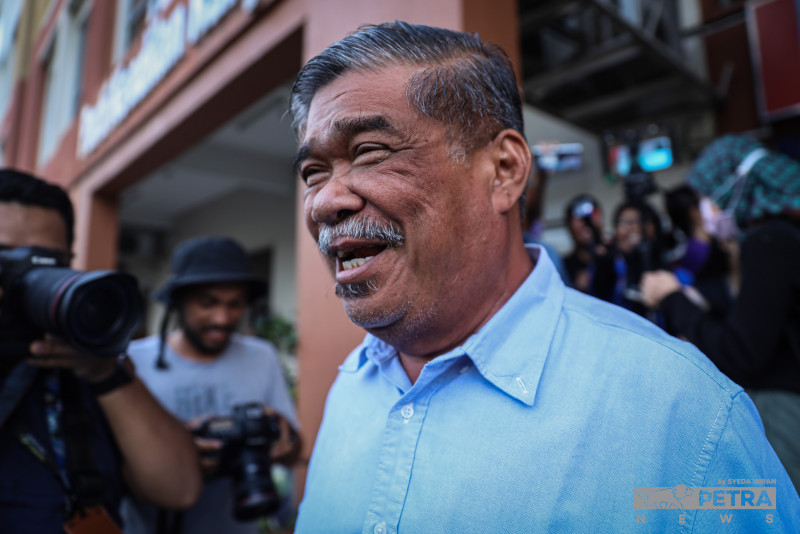
THE strong sense of tribal loyalties in Sabah continues to shape electoral outcomes, to the point where even independent candidates, often written off elsewhere in Malaysia, can still win without any party backing, said Amanah president Datuk Mohamad Sabu.
Mohamad said the deep-rooted communal voting patterns in Sabah set it apart from Peninsular Malaysia, where political success is usually tied to coalition machinery and party branding.
He also drew a direct comparison, noting that while tribal identity in the Peninsula has largely faded from electoral influence, it remains a decisive factor in Sabah.
“In Sabah, independent candidates can still win, but in the peninsula, they could still win in the 1960s, but by the 1970s, they were becoming rare.
“In the peninsula, independents usually lose their deposits, but in Sabah it is still the same because the spirit of tribal representation still exists.
“So, in this instance, the old Barisan Nasional alliance still looks at this, the same with Warisan and other old parties.
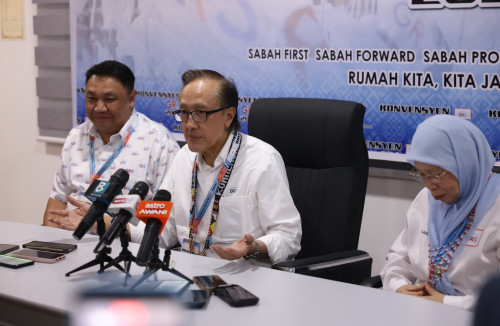
“Tribal-based politics are still seen as major, particularly in the villages,” he said during the launch of the party machinery in Kota Kinabalu.
He pointed to ethnic-based voting blocs like Bajau, Iranun, Kadazan, and Dusun as the reason why some leaders contest both state and parliamentary seats in overlapping areas, a practice that continues to be viable because of deep tribal affinity.
This is why in such areas, the leaders are comfortable and allowed to contest both parliament and state seats, and they were able to win both, he said.
Mohamad did not frame the practice as problematic, but rather as a political reality that any serious contender must acknowledge when competing in Sabah.
However, Mohamad later issued a warning against the rise of sectarian politics and racial fearmongering, particularly ahead of polls.
“Sectarian ideology destroyed Iraq, and now Syria is falling apart for the same reason. We must not allow that poison to enter our political bloodstream.”
He also sought to debunk claims that the Chinese community is poised to dominate Malaysian politics, calling such rhetoric dishonest and out of step with demographic realities.
Mohamad said the Malays have outnumbered the Chinese in terms of birthrate, citing that many Chinese prefer to get married late or do not get married at all.
He noted however the racial narratives still resonate strongly among Malaysians than actual policies or governance.
He reiterated Amanah’s guiding philosophy of Islam rahmatan lil alamin — Islam as a mercy to all — as the party’s antidote to division.
“Islam is not just for Arabs or Malays. It is for all of humanity. Let’s not fall into the trap of racial or sectarian politics. Let Islam be a mercy for all, not a tool for division,” he said.
On another development, he said Amanah wants to contest in at least five seats in the Sabah election.
Mohamad said nothing is finalised yet as talks are still ongoing between component parties in Pakatan Harapan (PH).
“We are eyeing five seats (in PH), but at this moment, around two seats have been finalised at the PH and Barisan Nasional (BN)… Whether or not we get the seats mentioned will be determined through discussions,” he said.
The seats are believed to be Tanjung Aru, Sulabayan, and Lumadan, while it could not be ascertained for the other two seats.
When asked about the growing sentiment towards local parties, Mohamad said the party would field Sabahan candidates and machinery, adding that such matters are just views and notions.
Amanah has yet to win any seats in Sabah but is aiming to establish a foothold. The party currently has 18 divisions across Sabah.
Initially, the party had announced plans to contest in Tanjung Aru, Karambunai, Lumadan, and Sulabayan. - July 19, 2025