MALAYSIA has struck a compromise with the United States to reduce a punitive tariff from 25 per cent to 19 per cent, following months of high-stakes negotiations triggered by President Donald J. Trump’s sweeping retaliatory trade measures against countries with significant trade surpluses with Washington.
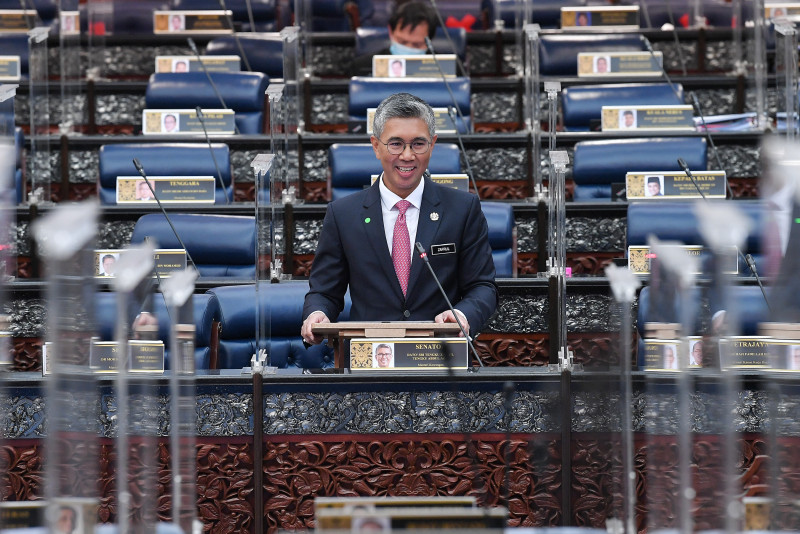
Investment, Trade and Industry Minister Tengku Zafrul Abdul Aziz told Parliament today that the move follows the inclusion of Malaysia in a list of targeted nations unveiled by President Trump during a “Liberation Day” speech on 2 April 2025.
The list targeted countries with a trade surplus with the US, and Malaysia ranked 15th with a surplus of USD 24.8 billion. Originally, a 24 per cent retaliatory tariff was slated to take effect on 9 April, but enforcement was delayed by 90 days to allow room for negotiations.
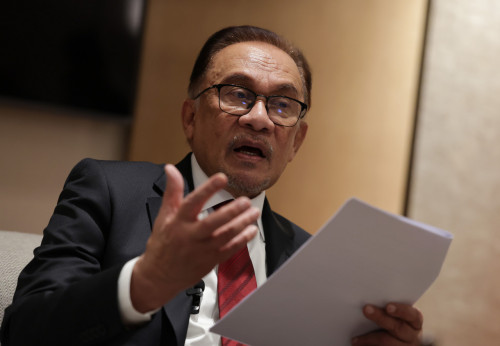
The Malaysian government, led by Prime Minister Datuk Seri Anwar Ibrahim under the Madani administration, opted for dialogue rather than retaliation.
Formal discussions commenced on 6 May, seeking what officials described as a "mutually beneficial" arrangement. However, on 7 July, President Trump unexpectedly announced a steeper tariff of 25 per cent, to be imposed from 1 August, intensifying pressure on Kuala Lumpur to reach a resolution before the 31 July deadline.
Malaysia submitted its final proposal on 29 July, culminating in direct talks between Anwar and Trump on the eve of the deadline.
A revised tariff rate of 19 per cent was announced on 1 August, placing Malaysia on par with fellow ASEAN members such as Indonesia, Thailand, the Philippines, and Cambodia. Vietnam was subject to a 20 per cent tariff, while Brunei faced 25 per cent, Laos and Myanmar 40 per cent, and Singapore retained the lowest rate at 10 per cent, reflecting its trade deficit and liberal market access.
While Malaysia had hoped for a lower figure, the government considers the outcome a “reasonable compromise” that safeguards national policy objectives and sovereignty.
The Minister said the negotiations extended beyond tariffs to encompass non-tariff barriers, digital trade, technology transfer, rules of origin, national security, and commercial arrangements.
Under the agreement, Malaysia committed to remove or reduce import tariffs on 98.4 per cent of U.S. goods. The government also pledged exemptions on sales tax for selected U.S. agricultural products and to streamline imports of halal-certified meat, provided they comply with domestic halal standards.
Additional provisions include the simplification of certification and regulatory processes, regional disease recognition for livestock, and enhanced alignment with international industrial product standards.
However, Malaysia will not grant blanket exemptions for import licensing or liberalise foreign equity participation in strategic sectors.
In digital trade, Malaysia agreed not to introduce discriminatory digital services taxes against U.S. firms and to eliminate certain operational levies and licensing restrictions, while maintaining statutory protections for national security and intellectual property.
On security, Malaysia will bolster export controls on sensitive technologies and preserve open access to critical minerals without offering exclusive U.S. privileges.
In return, the United States agreed to support key commercial transactions and investment deals. These include a US$19 billion purchase of Boeing aircraft by Malaysia Airlines and major contracts in semiconductors, aerospace, telecommunications, and renewable energy.
Tengku Zafrul underscored that the final accord does not erode core domestic priorities, including the empowerment of local vendors and Bumiputera participation, the protection of critical industries, and the preservation of halal certification protocols.
The negotiations also catalysed institutional reform, prompting the streamlining of bureaucratic processes that have long hindered trade efficiency.
Malaysia’s improved position in the latest World Competitiveness Ranking reflects these efforts, and Putrajaya views the episode as a case study in reconciling sovereignty with global trade integration.
"The United States recognises Malaysia’s role as a dependable partner in international supply chains," Tengku Zafrul said. "This outcome affirms Malaysia’s ability to uphold strategic policies while engaging in meaningful, high-quality trade negotiations."
Looking forward, the government remains alert to further changes in U.S. trade policy, noting America’s continued position as Malaysia’s largest export destination and a major source of foreign direct investment.
MITI officials have pledged to monitor the evolving landscape to shield the domestic economy and employment from future external shocks - August 4, 2025