THE government is now moving to mitigate further risks by strengthening export diversification and boosting local industrial resilience having successfully negotiated a reduced reciprocal tariff rate of 19% with the United States following recent trade tensions.
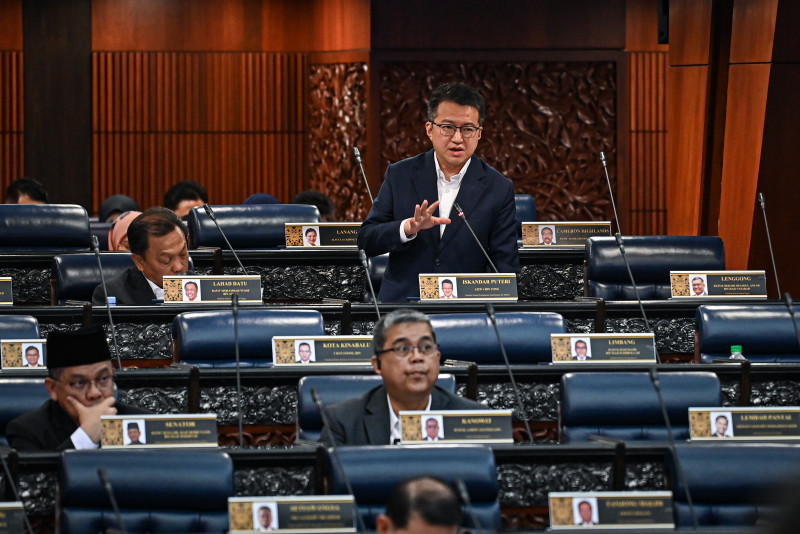
Responding to a question in the Dewan Rakyat from Tanjung Piai MP Wee Jeck Seng on 6 August, Deputy Minister of Investment, Trade and Industry (MITI) Liew Chin Tong said the 1 August Executive Order issued by the White House represents “a significant achievement for the Government,” given the “complex and time-sensitive nature” of the negotiations.
“Malaysia’s exports to the United States made up 13.2% of total exports in 2024, which amounted to RM1.508 trillion,” the deputy minister stated.
He added that early-stage mitigation measures and strategic planning have been rolled out to minimise the impact of the new tariffs on Malaysia’s trade and industry sectors, particularly for small and medium enterprises (SMEs).
To cushion the impact further, the Ministry, along with its trade promotion agency MATRADE, is actively exploring new, non-traditional export markets. These include emerging economies in Central Asia, South Asia, the Middle East, Africa, and within ASEAN. The move is part of a broader diversification strategy aimed at reducing dependency on any single market.
In line with efforts to reposition Malaysia as an “indispensable middle” player in global supply chains, the Government is committed to enhancing domestic technological capabilities, particularly in strategic sectors such as semiconductors.
The minister stressed the need for a paradigm shift in how local SMEs are perceived: “There must be a change in mindset, as local companies have long been viewed merely as support to foreign multinational corporations (MNCs).
“The new thinking highlights their potential to evolve into technology-based global MNCs.”
The Government is also pushing a broader industrial transformation agenda—from being known for “Made in Malaysia” products to goods and innovations that are “Made by Malaysia”.
As part of this initiative, the RM25 billion GEAR-uP programme under the Ministry of Finance aims to empower high-growth and high-value sectors such as semiconductors and the energy transition. It also seeks to uplift marginalised communities and nurture local talent.
Additionally, a New Investment Incentive Framework (NIIF) will be introduced in the third quarter of 2025, focusing on attracting high-value investments and ensuring they create quality employment opportunities while supporting the development of local ecosystems and technologies.
To ensure SMEs benefit from both domestic and foreign investment, the Government is also reviewing localisation requirements for foreign investors to help create a more resilient and inclusive industrial environment. - August 6, 2025