CHILDREN barely in their teens are regularly spotted riding motorcycles to school and local shops, particularly within residential areas—an alarming trend that, according to authorities, is fast becoming normalised in many Malaysian communities.
What was once regarded as unlawful and socially unacceptable is now viewed by some as routine, with parents reportedly allowing their children to operate motorcycles illegally, often without helmets, and in blatant disregard of road rules such as traffic signals.
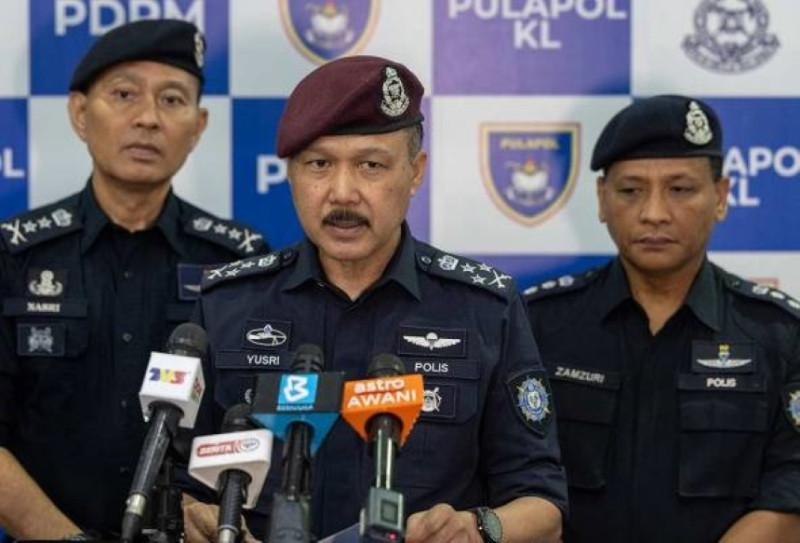
Datuk Seri Mohd Yusri Hassan Basri, Director of the Royal Malaysia Police’s Traffic Investigation and Enforcement Department (JSPT), described the situation as a “serious form of parental neglect” and warned that such practices are not only illegal but expose children to fatal accidents and lasting trauma.
“I consider those who allow their children to ride motorcycles or drive vehicles without a licence to be neglecting their parental responsibilities in a serious way,” he told *Harian Metro*. “It may be convenient for parents to send their child on errands or to school, but such actions violate the law and put both the child and other road users at risk.”
Mohd Yusri further warned that these early transgressions could shape children’s attitudes towards law and authority. “Allowing minors to ride without a licence is not just a technical offence; it fosters a mindset that may lead to repeat offences such as illegal racing, drug abuse, or theft. They may grow up with the belief that laws can be broken if one simply avoids being caught,” he said.
Citing psychological studies, he explained that minor rule-breaking, when condoned by parents, can become a “gateway” to more serious offences, particularly when the child associates with peers engaging in risky behaviours like illegal racing or vandalism. This early disregard for rules, he added, may erode respect for school discipline, workplace ethics, and national laws later in life.
There are also emotional and legal consequences. Involvement in accidents—especially those resulting in injury or death—can leave children with lasting guilt or trauma. Moreover, being charged for road offences could hinder future education and career opportunities, particularly in professions requiring clean legal records.
Despite enforcement efforts, Mohd Yusri noted that awareness among parents remains lacking. Many downplay the risks, especially when the child is only riding within their neighbourhood. Common excuses offered include claiming the vehicle was meant for school use or denying any knowledge that the child was using it at all.
He acknowledged that some parents, overwhelmed by daily responsibilities, opt for convenience over compliance and are disengaged from road safety awareness campaigns. As such, JSPT is ramping up both enforcement and education efforts.
Parents who permit their children to ride without licences may be prosecuted under Section 39 of the Road Transport Act 1987, which carries a fine of at least RM2,000 or a jail term of not less than six months—or both. Underage riders themselves can be charged under Section 26(1) of the same Act, facing fines from RM1,000 and imprisonment. Repeat offences attract harsher penalties.
Furthermore, under Section 31(1)(a) of the Child Act 2001, parents can also be charged for neglect or exposing a child to risk, which carries a minimum fine of RM2,000 or a minimum jail sentence of six months—or both.
“Harsher penalties must be imposed on parents who permit their underage children to operate motor vehicles without licences. This is not merely a traffic issue, but a reflection of systemic gaps in education, supervision, and our culture of road safety,” he said.
According to Mohd Yusri, more than 917,000 summonses were issued over the past three years for driving without a licence. In 2023 alone, there were 329,188 cases, followed by 367,856 in 2024. As of June 2025, the figure has already reached 220,306, indicating a steady annual increase.
Offences by parents allowing their children to drive also rose, with 6,587 cases recorded in 2024 compared to 6,178 in 2023. In the first half of 2025, 3,863 summonses have already been issued under this category.
While enforcement remains a key strategy, JSPT is also focused on advocacy. Officers frequently visit schools to deliver talks and road safety education, particularly targeting students aged 13 to 17. The department also noted a worrying trend: motorcycle accidents involving youths aged 16 to 35 continue to rise and contribute significantly to road fatalities.
In response, a broad public awareness campaign has been launched, bearing the message *“Jangan Normalisasi Anak Memandu Tanpa Lesen”*—or *“Do Not Normalise Children Driving Without a Licence”*. The campaign spans social media, traditional media, and features engagement with celebrities and influencers to capture the attention of younger audiences.
Mohd Yusri emphasised that normalising illegal behaviour at a young age can have long-term ramifications for both individuals and society. “We must change public perception and reinforce that breaking the law is not a rite of passage, but a dangerous detour with lasting consequences,” he said. - August 18, 2025







_Datuk_Rusdi_Mohd_Isa._Facebook_pic..png)